Ports and coastal facilities are among the most punishing places on earth for electrical equipment. Salt-laden air drifts across quays and into warehouses, storms drive rain sideways into open sheds, and humidity rarely drops for long. Lighting that would last for years in an inland factory can corrode and fail within months beside the sea. That is why port operators, logistics companies, and marine contractors increasingly turn to a specialist led tri-proof light supplier when they plan lighting for warehouses, workshops, terminals, and service buildings along the waterfront.
LED Tri-Proof Lighting for Ports, Docks, and Coastal Facilities: Why Operators Choose KML as Their LED Tri-Proof Light Supplier
According to KML, the annual failure rate of lamps damaged by salt spray corrosion can reach as high as 42 percent in poorly specified port lighting, and frequent maintenance at height is both costly and risky. Those figures explain why coastal operators cannot afford to treat lighting as a simple commodity. Tri-proof fixtures, designed to resist water, dust, and corrosion, are a natural fit for the enclosed and semi-open spaces found around ports. This article explores the challenges of coastal environments and explains how the right fixtures and partner help operators achieve reliable, efficient lighting year after year.
Understanding the Coastal Corrosion Challenge
Salt is the defining enemy of coastal lighting. Tiny droplets of seawater carried by the wind settle on surfaces and leave behind salt deposits that attract moisture and accelerate corrosion. Metal housings, screws, brackets, and cable glands are particularly vulnerable, and once corrosion starts, seals can loosen and allow moisture inside. Over time, this leads to flickering, short circuits, and complete failure. Fixtures for coastal use therefore need corrosion-resistant materials, protective coatings, and well-designed seals that stay tight despite constant exposure to salty, humid air. Ordinary indoor fixtures simply are not built to cope with these conditions.
Where Tri-Proof Fixtures Fit Around a Port
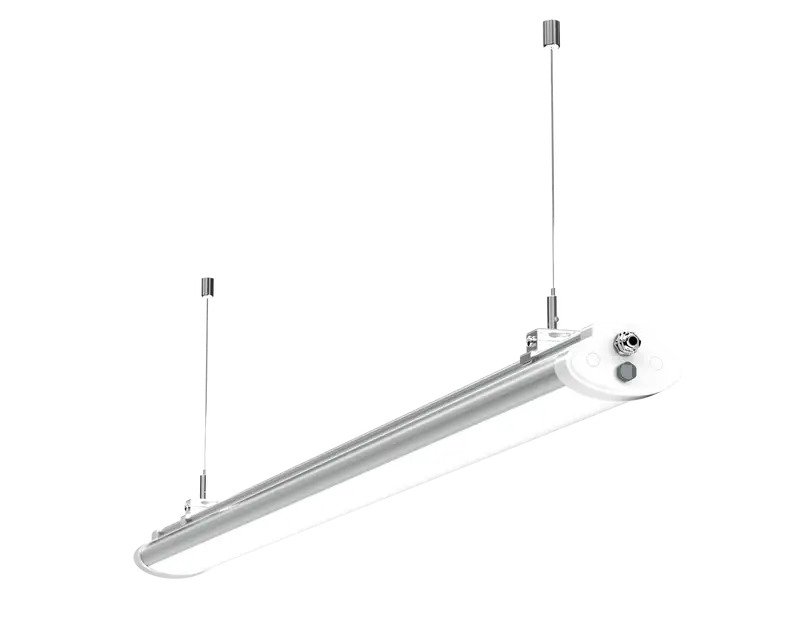
Ports contain a wide variety of spaces beyond the open quay. Cargo sheds, cold storage units, customs inspection halls, maintenance workshops, vehicle parks, staff facilities, and covered walkways all need dependable lighting. Many of these areas are partly open to the elements or exposed to spray when doors are open. Tri-proof fixtures provide the protection needed in these spaces while delivering bright, efficient light. For open quays and container yards, high-power floodlights take over, and KML offers both product families so operators can source lighting for the entire site from a single partner with consistent quality standards.
Choosing Materials That Resist Salt and Humidity
Material selection is one of the most important decisions in coastal lighting. Housings should be made from robust materials with good UV and chemical resistance, while metal components need protective treatments that withstand salt exposure. Diffusers must remain clear and strong without yellowing or cracking under sunlight and sea air. Fasteners and mounting hardware deserve special attention, because corrosion often begins at these small points. Buyers should ask suppliers detailed questions about materials and finishes rather than relying on general claims of weather resistance. Investing in the right materials at the outset prevents expensive problems later.
Sealing and Protection Ratings Matter
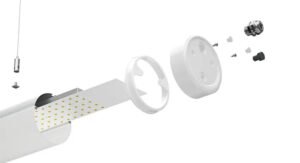
Even the best materials cannot protect a fixture if water finds its way inside. Coastal fixtures should carry appropriate IP ratings for the exposure they will face, with durable gaskets and well-designed cable entries that keep moisture out over many years. Wind-driven rain, wash-downs, and condensation in humid sheds all test seals continuously. KML’s high-power outdoor floodlights, for example, offer IP66 protection and corrosion-resistant housings suited to high-salt environments. Applying the same attention to sealing in tri-proof fixtures ensures that indoor and semi-open areas of the port remain reliably lit.
Coping with Wide Temperature Ranges
Coastal facilities may experience intense summer heat, freezing winter winds, and rapid temperature changes when storms roll in. These swings cause materials to expand and contract, stressing seals and joints. LED drivers must also operate reliably across the full temperature range. KML’s outdoor products are designed to operate in temperatures from minus 40 to plus 50 degrees Celsius, reflecting the engineering needed for extreme environments. For tri-proof fixtures in port warehouses and workshops, buyers should check operating temperature ranges and choose products with effective thermal management.
Safety for Round-the-Clock Operations
Ports rarely sleep. Ships arrive and depart at all hours, and cargo handling continues through the night. Good lighting is essential to protect workers from moving vehicles, cranes, forklifts, and trip hazards on wet surfaces. LED tri-proof fixtures provide bright, uniform, flicker-free light that improves visibility in sheds, workshops, and walkways. Neutral to cool white light with good color rendering helps workers read labels, identify hazards, and inspect cargo accurately. Reliable lighting also supports security, helping prevent theft and unauthorized access in busy port areas.
Reducing Energy and Maintenance Costs
Port lighting often runs continuously, making energy efficiency a major priority. LED tri-proof fixtures use far less electricity than older fluorescent or metal halide lighting, and smart sensors can dim lights in quiet areas. Maintenance savings can be even more significant, since replacing corroded fixtures in harsh coastal conditions is labor-intensive and sometimes dangerous. KML designs products for durability exceeding 100,000 hours and tests them through IQC, IPQC, and OQC inspections with burn-in testing of at least eight hours, helping reduce the frequency and cost of maintenance.
Certifications and Documentation for Port Projects
Port authorities and logistics companies often operate under strict safety and procurement rules. Lighting must meet electrical standards, and suppliers must provide documentation that supports approvals. KML’s products carry international certifications including CE, RoHS, ETL, DLC, TUV, CB, SAA, CCC, and CQC depending on the model and market. Each shipment includes test reports and certificates of conformity, and complete customs documentation helps deliveries clear smoothly. This level of documentation saves time for contractors and helps projects move forward without compliance delays.
Partnering for Long-Term Reliability
Coastal lighting projects succeed when durable products are matched with careful design and dependable support. KML offers free initial design consultation, DIALux lighting simulations, samples in about seven days, and bulk orders within about thirty days, supported by a 12,000 square meter production base and an on-time delivery rate of around 99 percent. Its 24-hour after-sales service covers replacements and fault analysis. For port operators who need lighting that stands up to salt, storms, and constant use, choosing an experienced supplier is the surest way to keep the waterfront safely and efficiently lit.