Water pressure problems rarely stay confined to a single faucet or fixture. In a commercial building, a sudden pressure drop can slow down cleaning operations, disrupt equipment performance, affect upper-floor restrooms, and make daily water use less predictable. In industrial facilities, inconsistent flow can interfere with production processes that depend on a steady water supply.
For facility managers across Connecticut, fluctuating water pressure deserves more than a quick adjustment to a valve or a temporary plumbing fix. The underlying cause could be changing municipal supply conditions, undersized piping, elevation differences, simultaneous water demand, or a booster pump system that no longer matches the building’s requirements.
The right solution begins with identifying when and where pressure changes occur. From there, facilities can evaluate their plumbing infrastructure, pressure regulation equipment, storage arrangements, and water booster pump requirements to develop a more reliable system.
This guide explains the common causes of fluctuating water pressure in Connecticut fire pump facilities, the steps professionals can take to diagnose the problem, and the equipment considerations that support consistent water delivery.
Why Does Water Pressure Fluctuate in Connecticut Facilities?
Water pressure is not necessarily constant throughout a building or across every hour of the day. A facility may experience adequate pressure during quiet periods but struggle when multiple fixtures, production lines, or water-consuming systems operate simultaneously.
Understanding the difference between normal demand-related changes and a persistent system problem is essential.
1. Changes in Municipal Water Supply
Many commercial and industrial properties depend on municipal water distribution networks. The pressure reaching a building can vary with local demand, supply conditions, distribution infrastructure, and the property’s location within the network.
For example, a facility may experience reduced incoming pressure when nearby properties use substantial amounts of water during peak periods. A building located at a higher elevation or near the end of a distribution area may also face different pressure conditions from a property closer to a supply main.
Connecticut fire pump facilities should not automatically assume that every pressure problem originates inside the building. Comparing incoming pressure with pressure at different internal locations can help determine whether the issue begins at the municipal connection or develops farther downstream.
2. Simultaneous Water Demand
A building’s water requirements can change considerably throughout the day.
Consider a commercial property where restrooms, kitchens, cleaning equipment, and process-water systems operate at the same time. If the water distribution system cannot accommodate the combined demand, pressure may fall at certain fixtures or equipment connections.
The same problem can affect manufacturing plants, warehouses, healthcare buildings, hotels, and multi-story commercial properties.
A system that performs well during low-demand periods may still be inadequate for actual operating conditions. This is why water pressure should be evaluated alongside flow requirements rather than treated as an isolated measurement.
3. Undersized or Restricted Piping
Water loses pressure as it moves through pipes, fittings, valves, meters, and other components. These losses increase with flow and depend on factors such as pipe diameter, length, material, internal roughness, and the number of restrictions in the system.
Older facilities may have piping that was appropriate for their original use but no longer meets current demand following an expansion or equipment upgrade.
Mineral buildup, corrosion, partially closed valves, and clogged strainers can create additional restrictions. If the pressure problem affects a particular wing, floor, or group of fixtures, investigating the piping serving that area may help identify the cause.
4. Elevation Differences Across Floors
Water must overcome the effects of gravity as it travels upward through a building. As a practical rule, static pressure decreases by approximately 0.433 psi for every foot of elevation gained, before accounting for friction losses and other system effects.
For instance, a fixture located 40 feet above the incoming supply point could experience approximately 17.3 psi less static pressure than a fixture at the lower elevation, assuming the same connected water column and ignoring other losses.
This makes elevation an important consideration for Connecticut office buildings, hospitals, educational facilities, and other multi-story properties. A pressure level that works on the ground floor may not provide adequate service on upper floors during periods of high demand.
5. Booster Pump or Pressure Control Problems
A water booster pump system helps increase pressure when the available incoming supply cannot meet a building’s distribution requirements. However, a poorly selected, incorrectly configured, or aging system can contribute to pressure fluctuations rather than resolve them.
Potential issues include an undersized pump, inappropriate control settings, a failing pressure sensor, a malfunctioning variable-frequency drive (VFD), or a pressure tank that is not operating as intended.
A pump may also cycle too frequently if its controls or supporting equipment cannot respond properly to changing demand. Identifying the relationship between pump operation, system pressure, and water consumption is essential before selecting replacement equipment or modifying settings.
How Can Facilities Diagnose the Source of Pressure Fluctuations?
Installing a larger pump is not always the right answer. Before changing equipment, facility managers should establish whether the pressure loss originates at the water service connection, within the building’s distribution network, or at a specific piece of equipment.
A structured assessment can prevent unnecessary replacements and help identify the most effective correction.
Measure Static Pressure and Flowing Pressure
Static pressure is measured when water is not flowing through the point being tested. Flowing, or residual, pressure is measured while water is being used.
Both readings matter. A building may show acceptable static pressure but experience a substantial drop when several fixtures operate simultaneously. That pattern can indicate inadequate supply capacity, excessive friction losses, or a restriction somewhere in the distribution system.
A qualified plumbing or pump professional can take readings at the incoming service, pump suction and discharge, and representative outlets. Comparing the results under different operating conditions helps identify where pressure deteriorates.
Record Pressure at Different Times
A single pressure reading may not reveal an intermittent problem. Facilities should document measurements during low-demand periods, peak occupancy, production cycles, and other periods when complaints are most common.
For example, if pressure falls consistently during a morning production shift, the issue may be linked to simultaneous equipment demand. If incoming pressure drops at the same time, the facility may need to coordinate with its water utility before making internal system changes.
Inspect Valves, Filters, and Backflow Devices
Partially closed isolation valves, clogged strainers, fouled filters, and restricted backflow prevention assemblies can reduce the pressure available downstream.
These components should be inspected and tested by qualified personnel in accordance with applicable requirements. A pressure difference across a component under flow can help reveal whether it is contributing to the problem.
Review Pump Controls and Operating History
For facilities with booster pumps, the investigation should include pressure setpoints, sensor accuracy, pump cycling, alarms, motor performance, and VFD operation.
If the system uses multiple pumps, professionals should also check whether the pumps stage correctly as demand increases. A control sequence that fails to bring additional capacity online when needed can cause avoidable pressure swings.
Where practical, temporary pressure loggers or building management system data can help establish patterns that are difficult to capture through manual measurements alone.
7 Practical Ways to Stabilize Water Pressure
Once the cause is understood, facilities can select a solution based on their actual supply conditions, required flow rates, building layout, and operational priorities.
1. Correct Restrictions in the Water Distribution System
Start with the simplest confirmed causes. Cleaning clogged strainers, servicing pressure regulators, repairing defective valves, and replacing severely corroded or undersized piping can restore pressure that the existing supply system should already be delivering.
If the problem is concentrated in one section of the property, investigate that branch before upgrading the entire system.
For older Connecticut fire pump commercial buildings, plumbing modifications and additions deserve particular attention. New fixtures, renovated restrooms, added production equipment, or changes in building occupancy can increase demand beyond the original system’s design capacity.
2. Evaluate a Commercial Water Booster Pump System
When incoming water pressure cannot reliably satisfy the building’s requirements, a properly designed water booster pump system may provide the additional pressure needed for distribution.
A booster pump increases pressure by adding energy to the water. The required increase depends on the incoming supply, the highest or most demanding outlets, friction losses, equipment requirements, and the desired residual pressure during peak flow.
Consider a multi-story commercial facility where upper-floor fixtures experience poor flow during busy periods. A correctly sized booster system may help maintain the required pressure across the building, provided the incoming supply, suction conditions, controls, and applicable utility requirements support its operation.
The goal is not to select the most powerful pump available. It is to select equipment that delivers the required flow at the required pressure across the expected operating range.
Connecticut fire pump facilities should also consult their water utility and qualified design professionals before installing a booster pump directly on a public water connection. Suction-side pressure protection, backflow prevention, and any applicable approvals must be addressed.
3. Consider Variable-Speed Booster Pumps
Water demand rarely remains constant throughout the day. A facility may need substantial flow during production hours but much less overnight or during weekends.
Variable-speed booster pumps use a VFD to adjust motor speed in response to system demand and pressure feedback. When correctly selected and configured, they can help maintain a more consistent discharge pressure as flow requirements change.
These systems can offer several operational benefits:
-
More consistent pressure: The pump adjusts output as demand changes rather than operating only at a fixed speed.
-
Reduced unnecessary energy use: Lower demand may allow the system to operate at a reduced speed instead of throttling excess pressure.
-
Smoother operation: Appropriate controls can reduce frequent starts and stops, depending on system design.
-
Better system visibility: Compatible controllers can provide pressure readings, operating status, fault notifications, and performance information.
However, variable-speed technology does not compensate for every underlying problem. Incorrect sensor placement, poor control tuning, insufficient pump capacity, and inadequate suction supply can still produce unstable pressure. System design and commissioning remain essential.
4. Review Pressure Tanks and System Storage
Hydropneumatic pressure tanks can help manage short-term changes in demand and reduce frequent pump cycling in appropriately designed systems.
A tank stores a volume of water under pressure, allowing the system to respond to certain demand changes without immediately starting a pump. Its effectiveness depends on the tank’s size, precharge, operating pressure range, drawdown capacity, and the characteristics of the pump and controls.
For facilities with highly variable demand, a pressure tank may complement a booster system. Larger storage arrangements may be appropriate in specific applications where supply limitations, demand patterns, or resilience requirements justify them.
Storage should not be added simply because pressure fluctuates. A qualified professional should determine whether the actual issue involves short-duration demand peaks, inadequate supply, or a different system limitation.
5. Separate Pressure Zones in Multi-Story Buildings
A single pressure setting may not serve every floor efficiently in a tall building. Lower floors may receive excessive pressure when the system is adjusted to meet the requirements of upper floors.
Separate pressure zones can help address this challenge. Depending on the building, the design may use dedicated booster arrangements, pressure-reducing valves, intermediate storage, or other engineered distribution strategies.
The objective is to provide adequate pressure at the highest and most demanding outlets without subjecting lower-level piping and fixtures to unnecessarily high pressure.
Any pressure zoning project should account for fire protection requirements where applicable, potable water safety, control coordination, and the applicable Connecticut building and plumbing codes.
6. Install or Service Pressure-Reducing Valves Where Needed
Low pressure is not the only concern. Excessive pressure can damage plumbing components, contribute to leaks, increase water consumption, and create problems with valves and fixtures.
A pressure-reducing valve (PRV) lowers downstream pressure when incoming pressure exceeds the required operating level. A malfunctioning, incorrectly adjusted, or undersized PRV can also contribute to pressure instability.
The 2021 International Plumbing Code, for example, specifies pressure-reduction provisions for building distribution systems when static pressure exceeds 80 psi. The code edition and requirements currently applicable to a particular Connecticut project must be verified before work begins.
Pressure-reducing valves should be selected and maintained according to system conditions and manufacturer requirements. A PRV is not a substitute for a booster pump when the underlying problem is insufficient pressure.
7. Upgrade Controls and Monitor System Performance
Modern pump controllers and pressure-monitoring equipment can help facilities move from reactive repairs toward condition-based maintenance.
Depending on the installation, a monitoring setup may track:
-
Incoming and discharge pressure.
-
Flow rate and pump operating speed.
-
Motor current, runtime, and start frequency.
-
Pressure alarms and recurring faults.
-
Changes in performance during peak demand.
Connected monitoring can make recurring issues easier to diagnose and help maintenance teams identify abnormal operation before it causes a significant disruption. However, remote monitoring is only as useful as the accuracy of its sensors, the quality of its alarm thresholds, and the team’s response procedures.
For facilities with an existing building management system, integrating suitable pump and pressure data can also improve visibility across mechanical equipment.
Connecticut-Specific Considerations for Commercial and Industrial Properties
Water pressure solutions must account for more than the pump itself. Connecticut facilities need to consider local utility conditions, applicable regulations, seasonal operating conditions, and the demands of the building’s intended use.
Verify Local Water Utility Conditions
If pressure fluctuates at the service connection, facility managers should contact their water utility to ask about reported pressure issues, nearby infrastructure work, service restrictions, and available pressure information.
Connecticut regulations establish standards for public water system pressure under normal conditions, with specified exceptions for certain fluctuations and other circumstances. The applicable requirements and the utility’s responsibility should be assessed against the actual conditions at the property.
If the incoming supply is inadequate, an internal pump upgrade alone may not resolve the underlying problem. Coordination with the utility and a qualified plumbing or engineering professional can help determine an appropriate approach.
Account for Seasonal Conditions
Connecticut’s seasonal temperature changes can affect facility operations, especially where piping, pump rooms, or water supply lines are exposed to cold conditions.
During winter, freezing or partially frozen piping can restrict flow and potentially damage plumbing components. Facilities should inspect vulnerable areas, maintain suitable freeze protection, and address unexplained pressure changes promptly.
Seasonal occupancy can also change demand. Educational facilities, hotels, recreational properties, and seasonal businesses may need to assess whether their systems perform adequately during periods of peak use after extended periods of lower demand.
Distinguish Domestic Water Pressure from Fire Protection Requirements
Commercial properties may have separate domestic water and fire protection systems, or arrangements in which water supply conditions affect both systems. These applications must not be treated as interchangeable.
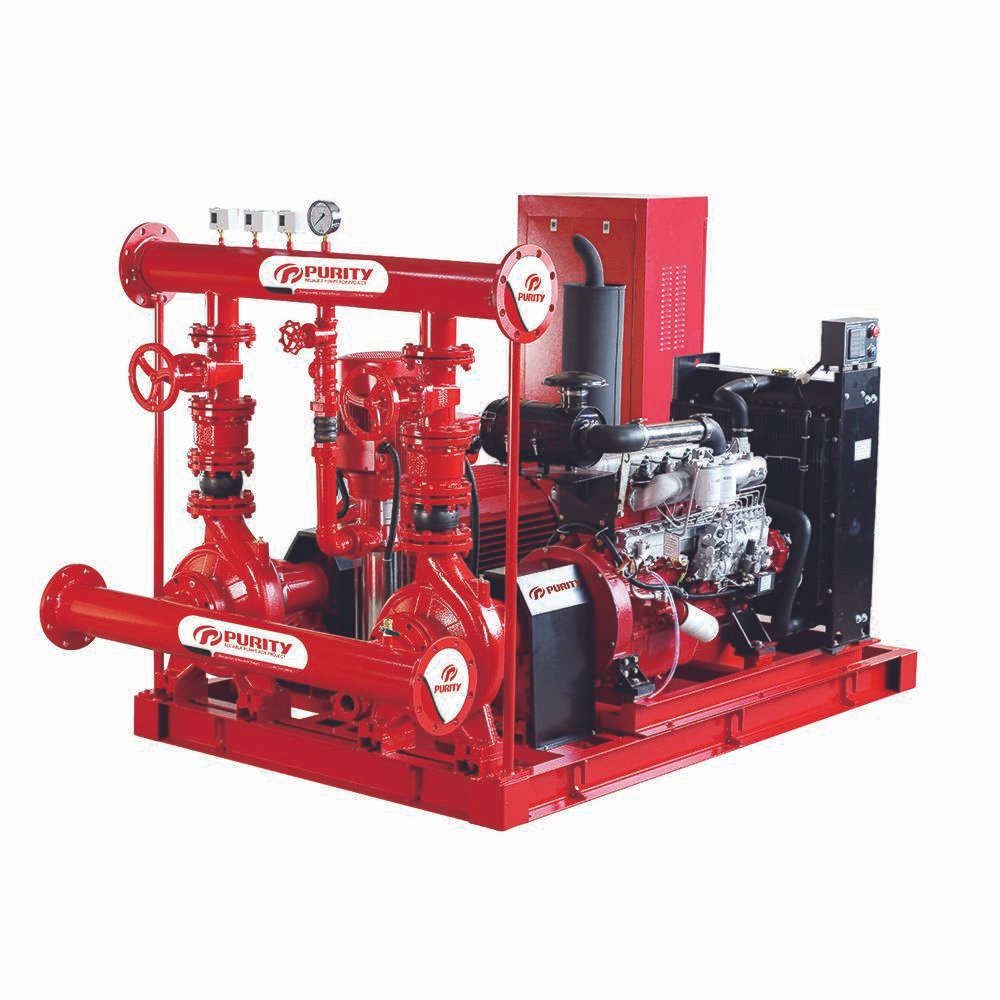
A domestic water booster pump is selected to meet plumbing and process-water requirements. A fire pump is designed for the specific flow and pressure requirements of a fire protection system and must comply with the applicable fire protection standards and approvals.
If pressure fluctuations coincide with concerns about fire pump performance, facility managers should have the fire protection system evaluated by appropriately qualified professionals. Domestic booster adjustments should never compromise fire protection performance.
Building a Preventive Water Pressure Maintenance Plan
Recurring pressure fluctuations are easier to manage when facilities establish a baseline and review performance regularly instead of waiting for complaints.
A practical maintenance plan should include the following activities.
Monitor pressure and flow
Record incoming and discharge pressure, along with flow conditions, at representative operating points. Compare results with established system requirements.
Inspect pumps and controls
Review pump operation, control settings, pressure sensors, VFD performance, alarms, and unusual cycling according to manufacturer recommendations.
Check piping and valves
Inspect accessible piping, strainers, pressure regulators, isolation valves, and other components for restrictions, leakage, or signs of deterioration.
Document recurring problems
Maintain records of pressure complaints, operating conditions, corrective work, and equipment performance. Use the records to prioritize repairs and future upgrades.
The inspection frequency should reflect the equipment manufacturer’s guidance, operating conditions, the consequences of failure, and any applicable code or regulatory requirements.
Frequently Asked Questions
1. What causes fluctuating water pressure in Connecticut commercial buildings?
Common causes include variations in municipal supply pressure, high simultaneous water demand, undersized or restricted piping, elevation differences, faulty pressure regulators, and poorly configured or inadequately sized booster pump systems. Measuring pressure at multiple locations helps identify the source.
2. Can a water booster pump solve low pressure on upper floors?
A properly designed booster pump system can help provide the additional pressure needed on upper floors. However, the design must account for incoming pressure, elevation, friction losses, peak flow, and the required pressure at the highest outlets. Pressure zoning may also be necessary in taller buildings.
3. Are variable-speed booster pumps suitable for industrial facilities?
Variable-speed booster pumps can be suitable for facilities with changing water demand because they adjust pump output in response to pressure feedback. Proper sizing, controls, suction conditions, and commissioning are necessary to achieve stable performance.
4. How can facility managers tell whether the problem is inside the building or in the municipal supply?
Compare pressure at the incoming service connection with pressure at downstream locations under both static and flowing conditions. If incoming pressure drops during the same periods as internal pressure, utility-side conditions may be contributing. If incoming pressure remains stable but pressure drops farther downstream, investigate internal restrictions, piping capacity, and pump operation.
5. When should a facility consider replacing its existing booster pump?
Replacement may be worth evaluating when the pump cannot meet current flow and pressure requirements, suffers recurring mechanical or control failures, or no longer suits the facility’s operating conditions. A professional assessment should determine whether repairs, control upgrades, or replacement offer the most appropriate solution.
Improve Water Pressure Reliability with the Right Equipment
Fluctuating water pressure can affect everything from routine facility operations to equipment performance and occupant comfort. For Connecticut commercial and industrial properties, the most effective response begins with accurate pressure measurements, a clear understanding of peak demand, and an assessment of the complete water distribution system.
Correcting restricted piping, reviewing pressure regulation, optimizing pump controls, and evaluating appropriately sized booster pump systems can help facilities achieve more dependable water delivery. Preventive maintenance and ongoing performance monitoring can then help identify developing issues before they lead to more serious interruptions.
Callaghan Pump & Controls, Inc. supplies pump solutions for commercial, industrial, and municipal applications. Facilities evaluating water pressure challenges can explore suitable water booster pump options and equipment requirements to help identify a system that aligns with their operating needs.
The key is to address the cause of pressure fluctuations, not simply increase pump output. A well-matched system can support consistent water delivery while accounting for building demands, operating conditions, and applicable requirements.