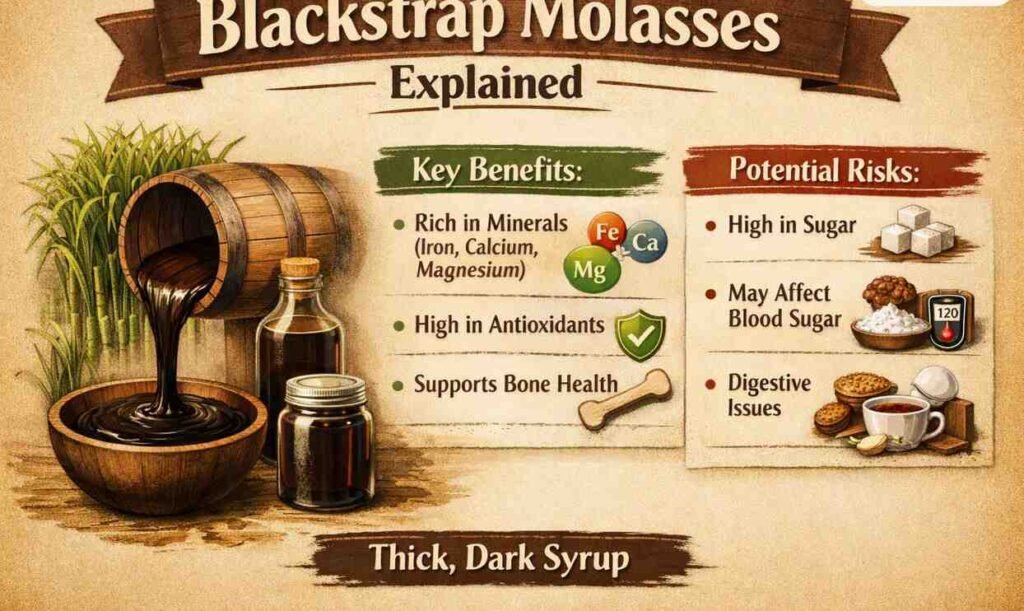
Blackstrap molasses is a thick, dark syrup produced during the processing of sugarcane or sugar beets. Unlike refined sugar, which undergoes extensive processing to remove many of its naturally occurring compounds, blackstrap molasses retains several minerals and other nutrients. Its strong flavor, dark color, and nutritional profile have made it popular in food preparation, agriculture, animal nutrition, and traditional wellness practices.
Although blackstrap molasses can be a useful ingredient, it is important to understand both its potential benefits and its limitations. Like any concentrated sweetener, it should be consumed appropriately and as part of a balanced diet.
What Is Blackstrap Molasses?
Molasses is produced when sugarcane or sugar beets are processed to extract sugar. During repeated boiling and crystallization, sugar crystals are separated from the remaining syrup. Blackstrap molasses is generally obtained during the final stages of this process.
Because much of the sucrose has already been removed, blackstrap molasses has a distinctive bittersweet taste and contains less sugar than lighter forms of molasses by volume. Its dark appearance comes from the concentration of plant compounds and minerals during processing.
The exact nutritional composition can vary depending on the source crop, production method, and manufacturer. However, blackstrap molasses is commonly recognized as a source of minerals such as iron, calcium, magnesium, and potassium.
Nutritional Benefits of Blackstrap Molasses
One reason blackstrap molasses attracts attention is its mineral content. While it should not be considered a substitute for a balanced diet, it can contribute small amounts of important nutrients when used as a food ingredient.
Iron is one of the better-known minerals found in blackstrap molasses. Iron plays an essential role in the formation of hemoglobin, the protein responsible for transporting oxygen throughout the body. However, the amount of iron supplied by a serving depends on the specific product, so blackstrap molasses should not automatically be considered a treatment for iron deficiency.
Blackstrap molasses also contains calcium, which contributes to normal bone and dental health. supports numerous physiological processes, including normal muscle and nerve function. Meanwhile, potassium is an important electrolyte involved in fluid balance and normal muscle and nerve activity.
The nutritional value of blackstrap molasses is therefore different from that of refined table sugar. Nevertheless, its nutrient content does not eliminate the need to moderate overall sugar intake.
Common Uses of Blackstrap Molasses
Blackstrap molasses has many applications beyond simply being used as a sweetener. In the kitchen, it can add a rich, complex flavor to baked goods, sauces, marinades, dressings, and beverages.
Its deep flavor works particularly well in recipes that benefit from caramel-like, smoky, or slightly bitter notes. It can be incorporated into gingerbread, cookies, barbecue sauces, baked beans, and homemade bread.
Some people also mix small quantities of blackstrap molasses into warm water, milk alternatives, oatmeal, or smoothies. Because the flavor is strong, only a modest amount may be needed in many recipes.
Outside the kitchen, molasses is also used in **agriculture and animal nutrition**. Depending on the application, molasses may serve as an energy source or help improve the palatability of certain feed products. Agricultural uses can differ significantly from food applications, so products intended for animals or farming should not automatically be assumed to be suitable for human consumption.
Blackstrap Molasses in Agriculture
Molasses has long been used in agricultural applications because it contains fermentable sugars and can be incorporated into certain soil, compost, and microbial management practices. Some gardeners use diluted molasses as part of homemade gardening solutions.
However, claims that molasses universally improves soil quality or dramatically increases plant growth should be treated cautiously. Results can depend on soil conditions, microbial populations, application rates, climate, and other factors.
For commercial agriculture, blackstrap molasses may also be used as an ingredient in animal feed or fermentation processes. Its carbohydrate content makes it useful in applications where an accessible energy source is required.
Potential Risks and Side Effects
Despite its nutritional advantages, blackstrap molasses is not a risk-free food. It remains a concentrated sweetener and contains carbohydrates and sugars. People who need to monitor their sugar or carbohydrate intake should consider portion size carefully.
Excessive consumption may contribute significantly to daily sugar intake. Individuals with diabetes or other conditions requiring careful blood glucose management should discuss suitable portions with a qualified healthcare professional.
Another consideration is digestive tolerance. Consuming a large quantity of molasses may cause digestive discomfort in some people, particularly because of its concentrated nature.
People with specific mineral-related dietary restrictions should also pay attention to the nutritional label. While minerals such as potassium, calcium, magnesium, and iron can be beneficial, more is not necessarily better for everyone.
It is also important to distinguish blackstrap molasses from health supplements marketed with strong disease-prevention or treatment claims. Scientific evidence does not support treating blackstrap molasses as a cure for medical conditions.
How to Choose Quality Blackstrap Molasses
When purchasing blackstrap molasses, consumers should examine the ingredient list and nutrition information. A product with a simple ingredient profile may be preferable when the goal is to use molasses as a culinary ingredient.
Organic, unsulfured, or sulfured varieties may be available depending on the manufacturer and market. These terms can describe different production methods or processing characteristics, so consumers should read the product label rather than assuming that one type is automatically healthier.
Storage instructions should also be followed carefully. Keeping the container properly sealed and stored according to the manufacturer’s recommendations can help preserve quality.
Final Thoughts
Blackstrap molasses is more than a traditional sweetener. Its distinctive flavor and mineral content make it a versatile ingredient for cooking, food production, agriculture, and selected animal-feed applications. It provides minerals such as iron, calcium, magnesium, and potassium, although the actual nutritional contribution depends on the product and serving size.
At the same time, blackstrap molasses should not be viewed as a miracle food or medical treatment. It still contains sugars and should be consumed in moderation. Understanding its nutritional profile, practical applications, and potential limitations allows consumers to use blackstrap molasses more responsibly.
Whether added to baked goods, sauces, beverages, or agricultural formulations, blackstrap molasses can be a useful and distinctive product when its benefits and limitations are considered together.
Article Post by: moltaraindo.com