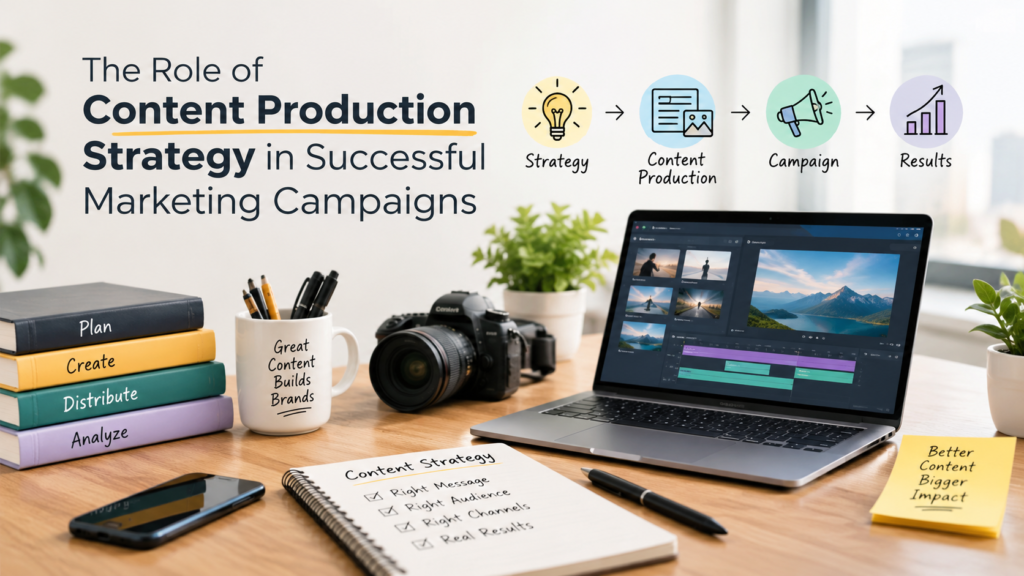
Every marketing campaign runs on one hidden engine: content that ships on time. Great ideas fail when nobody has a clear system to make them real. This is where a content production strategy comes in. It turns big marketing goals into content that actually gets made, published, and measured. Let’s break down what it means, why it matters, and how to build one that works.
What Is a Content Production Strategy?
A content production strategy is the plan for how content actually gets created and delivered. It answers who makes what, how often, and to what standard. Think of it as the engine room behind your bigger marketing plan. Your campaign sets the destination. Your production strategy builds the vehicle that gets you there.
Without this layer, even the best content marketing strategy stays stuck on paper. Teams end up guessing who owns each task. Deadlines slip, quality drops, and campaigns lose momentum fast.
Why Content Production Strategy Matters to Marketing Campaigns
A solid production strategy matters because campaigns live or die on execution speed. Great strategy without reliable output is just a slide deck. Here’s what changes when production is treated as its own discipline, not an afterthought.
- Strategic alignment: Every asset ties back to a real campaign goal, not just a content calendar slot.
- Consistent messaging: Clear standards keep tone and facts aligned across every writer and channel.
- Faster execution: Defined roles and steps remove the guesswork that slows teams down.
- Better resource allocation: Teams know exactly where time and budget should go each month.
- Reduced duplication: Shared briefs and asset libraries stop teams from remaking the same content twice.
- More content reuse: One strong asset gets reshaped into several formats, instead of starting from zero.
- Consistent customer experience: Audiences get the same voice and quality, no matter the channel.
- Better measurement: Clear production stages make it easy to track what’s working and what’s stuck.
Research from Semrush backs this up directly. A large majority of highly successful companies, around 80% of those surveyed, have a documented content marketing strategy. A documented strategy only pays off, though, if production can actually keep up with it.
How Content Production Supports Every Campaign Stage
Content production supports every campaign stage by matching output to what each stage needs. A single content type can’t serve every part of the customer journey. Production strategy makes sure the right content shows up at the right moment.
Awareness Content
Awareness content introduces your brand to people who don’t know you yet. This stage needs light, easy content: blog posts, short videos, and social posts. Production here should focus on speed and reach, not heavy detail.
Consideration Content
Consideration content helps people compare you against other options. This stage needs deeper guides, comparisons, and case studies. Production requires more research time and tighter editorial review at this point.
Conversion Content
Conversion content pushes a ready buyer toward a final decision. This stage needs landing pages, demos, and strong calls to action. Production should prioritize clarity, trust signals, and fast page load times.
Retention Content
Retention content keeps existing customers engaged after they buy. This stage needs newsletters, tutorials, and loyalty-focused updates. Production here should run on a steady, predictable schedule.
Each stage needs a different content development strategy underneath it. Matching format to funnel stage is what separates content that performs from content that simply exists.
What Should a Content Production Strategy Include?
A complete content production strategy should include eleven core building blocks. Skipping any one of them creates a weak link in your process. Here’s what belongs in a strategy built to last.
Campaign Objectives
Start with the exact goal each content piece supports. Vague goals like “raise awareness” don’t guide real production decisions.
Audience Insights
Know who you’re writing for, and what problem they’re trying to solve. This shapes tone, format, and even publishing time.
Content Requirements
Define what each piece needs to include, from length to must-have information. This keeps writers aligned before drafting starts.
Formats and Channels
Decide which formats fit which channels best. A LinkedIn post and a blog article need very different structures.
Production Resources
List the tools, budget, and time each content type realistically requires. This prevents last-minute resource scrambles.
Roles and Ownership
Assign clear owners: writer, editor, SEO reviewer, designer, and final approver. Confusion over ownership is one of the biggest delays in content teams.
Editorial Standards
Set rules for tone, grammar, fact-checking, and brand voice. This is your editorial strategy in action, applied consistently.
Asset Management
Store finished content, images, and briefs in one organized system. This avoids duplicate work and lost files.
Approval Process
Map out how many review rounds each piece needs before it goes live. Too many rounds slow things down; too few hurt quality.
Distribution Requirements
Decide how and where each piece will be shared once it’s ready. Production without a distribution plan wastes good work.
Measurement Framework
Track both content performance and production health, like turnaround time and revision rounds. This closes the loop back to strategy.
Agencies that manage multiple client campaigns, such as Sastre Agency, often lean on this exact structure to keep several content streams organized without losing quality control. It’s a practical example of how a documented production framework supports steady output at scale, rather than a one-off content push.
How Content Production Strategy Creates a Continuous Improvement Loop
Content production strategy creates a continuous improvement loop through one repeating cycle. That cycle is: plan, produce, publish, measure, learn, refine, and produce again. Each round should make the next one faster and sharper.
This isn’t a one-time setup. It’s an ongoing system that gets better with every campaign cycle. CMI’s own research supports revisiting core strategy elements regularly, not treating them as fixed once written. Teams that skip the “learn and refine” step tend to repeat the same production mistakes campaign after campaign.
Workflow health matters here too. Around 32% of marketers rate their content creation workflow as only fair or poor, which points to real room for a tighter, more repeatable process. A content production workflow built on this loop closes that gap over time, instead of leaving it to guesswork.
This loop applies whether you’re running an effective content production strategy for businesses of any size, or scaling a content production strategy for digital marketing campaigns across several channels at once. The steps stay the same. Only the volume changes.
FAQs
What is the difference between content strategy and content production strategy?
Content strategy sets the overall direction: goals, audience, and messaging. Content production strategy focuses on execution: who makes content, how, and how fast. One is the plan; the other is the engine that builds it.
What should a content production strategy include?
It should include campaign objectives, audience insights, formats, roles, editorial standards, an approval process, and a measurement framework. Together, these turn strategy into content that actually ships.
How can businesses scale content production?
Start with clear roles, reusable templates, and a shared asset library. A strong content calendar planning system also helps teams scale output without losing consistency or quality.
How can AI support content production?
AI can speed up drafting, repurposing, and research steps within a workflow. Businesses using AI report stronger SEO results from their content, with the biggest gains coming from human-reviewed AI drafts rather than fully automated output. Human review still matters at every stage.
How do you measure content production effectiveness?
Track turnaround time, revision rounds, and how much content gets reused across formats. Pair these production metrics with standard performance data like traffic and conversions for a complete view.