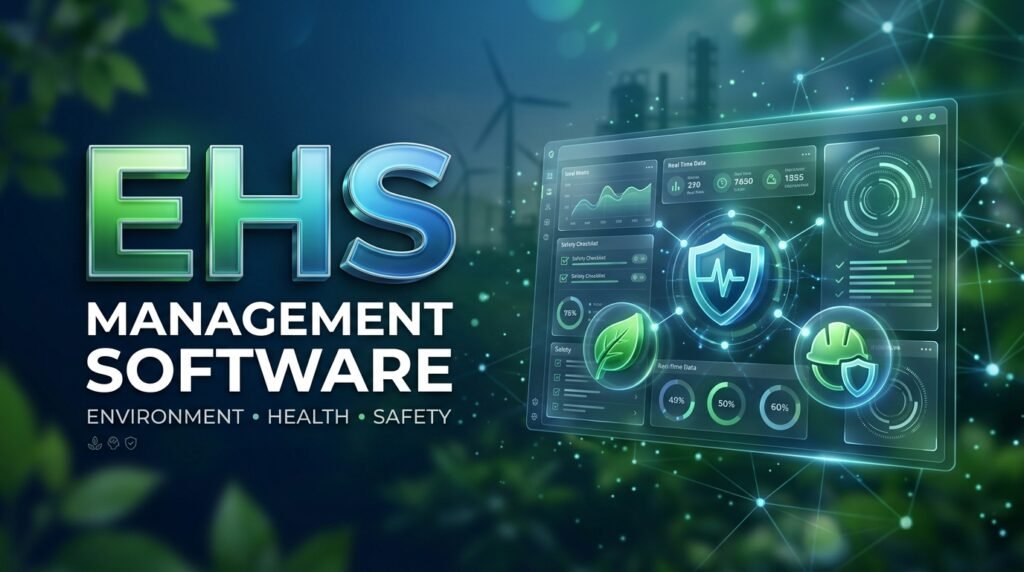
Keeping employees safe and managing environmental responsibilities require consistent planning, accurate records, and regular follow up. EHS Management Software helps businesses organize environmental, health, and safety activities through a centralized digital platform. Whether you manage a warehouse, factory, construction site, office, or industrial facility, the right system can help your team record hazards, investigate incidents, monitor corrective actions, and maintain important compliance documents. Instead of relying on scattered spreadsheets and paper forms, businesses can use digital tools to keep safety information organized and make informed decisions about workplace risks.
What Is EHS Management Software
EHS stands for Environmental, Health, and Safety. EHS Management Software is designed to help organizations manage processes related to employee safety, environmental responsibilities, workplace risks, and applicable regulatory requirements.
Depending on the platform, businesses may use it to manage
- Workplace inspections
- Hazard identification
- Risk assessments
- Incident and near miss reporting
- Corrective action tracking
- Safety training records
- Environmental monitoring
- Compliance documentation
- Safety audits
- Performance reports
These features help safety teams coordinate their responsibilities and maintain a clearer record of what has been reported, investigated, and resolved.
The specific features needed will depend on the company’s industry, workplace conditions, and compliance obligations.
Why Workplace Safety and Compliance Matter
Workplace safety and compliance are essential responsibilities for businesses of every size. Employees may encounter different hazards depending on their roles and working environments.
A warehouse may have moving vehicles, heavy loads, and storage hazards. A manufacturing facility may involve machinery, chemicals, heat, and noise. Construction workers may face risks associated with working at height, electrical equipment, and changing site conditions.
Environmental responsibilities can also vary. Some businesses need to monitor waste handling, chemical storage, emissions, water usage, or other environmental factors.
Managing these responsibilities manually can become difficult when records are spread across departments.
EHS software can help bring the relevant activities into one organized system, making it easier for teams to identify issues and follow up on required actions.
How EHS Software Supports Daily Operations
EHS software can connect different safety processes rather than treating each task as a separate activity.
For example, an employee may report a damaged machine guard during a workplace inspection. The finding can be recorded, assigned to the maintenance team, and tracked until the necessary corrective action is completed.
The safety team can then review the evidence and confirm whether the issue has been addressed.
This creates a clearer process for managing workplace hazards.
A centralized platform can also help managers see which inspections are scheduled, which incidents require investigation, and which corrective actions remain open.
Environmental Health and Safety Software for Risk Management
Environmental health and safety software supports the management of risks that affect employees, workplaces, and the surrounding environment.
An organization may need to assess the risks associated with chemical handling, waste disposal, equipment operation, workplace exposure, or environmental incidents.
A digital system can help record these risks and document the measures used to control them.
For example, a facility that stores chemicals may need to maintain relevant safety information, inspection records, handling procedures, and corrective actions.
Keeping these details organized helps authorized employees find the information they need and review whether established controls remain suitable.
However, software should support the organization’s risk management process rather than replace professional assessments or practical safety controls.
Workplace Safety Software for Hazard Reporting
Employees are often the first people to notice unsafe conditions because they work directly with equipment, materials, and workplace processes.
Workplace safety software can provide a structured way to report hazards and near misses.
Employees may use the system to report issues such as
- Wet or slippery floors
- Damaged equipment
- Exposed wiring
- Blocked emergency exits
- Missing protective equipment
- Unsafe material storage
- Poor ventilation
- Chemical leaks
Once a report is submitted, the responsible team can review the details and decide what action is needed.
A simple reporting process is important. If employees find it difficult to submit reports, hazards may remain undocumented until a more serious problem occurs.
Safety Management Software for Inspections
Regular inspections help organizations identify problems before they cause injuries, environmental harm, or operational disruption.
Safety management software can support digital checklists, inspection schedules, photographs, notes, and follow up tasks.
For example, a safety officer inspecting a production area may discover that a machine requires maintenance or that a walkway is obstructed. The finding can be documented immediately and assigned to the relevant person.
Digital inspection records also make it easier to compare findings over time.
If the same problem appears repeatedly, managers can investigate whether the current procedures are effective or whether stronger controls are required.
Risk Management Software for Better Risk Control
Identifying a hazard is only one part of managing risk. Organizations also need to evaluate the likelihood and potential consequences of an event and determine suitable controls.
Risk management software can help businesses document their risk assessments, assign responsibilities, and review control measures.
For example, a construction company may identify working at height as a significant risk. Its assessment may include details about access equipment, fall protection, employee training, supervision, and inspection requirements.
The system can help keep the assessment and related actions organized.
Risk assessments should also be reviewed when working conditions change, new equipment is introduced, or an incident reveals a weakness in existing controls.
Incident Management Software for Investigations
Workplace incidents need to be recorded and investigated so organizations can learn from what happened.
Incident management software can provide a structured process for documenting injuries, near misses, property damage, environmental incidents, and other relevant events.
A typical process may include recording the event, collecting evidence, identifying contributing factors, assigning corrective actions, and reviewing the results.
For example, if an employee slips in a storage area, the investigation may need to consider floor conditions, housekeeping practices, drainage, footwear, and the way materials are handled.
The aim is to identify the reasons behind the incident rather than simply record that it occurred.
Near misses deserve attention too. Even when nobody is injured, they can reveal weaknesses that need to be addressed.
Safety Compliance Software for Documentation
Businesses may need to maintain records that demonstrate how safety responsibilities are managed and how applicable requirements are addressed.
Safety compliance software can help organize policies, inspection reports, risk assessments, training records, audit findings, and corrective action evidence.
For example, when a manager needs to review an inspection or verify whether an assigned action has been completed, the relevant records can be retrieved from the system.
A centralized record structure can reduce the time spent searching through emails and separate folders.
However, software does not automatically make a business compliant. Organizations must understand the laws, regulations, standards, and permit conditions that apply to their operations.
They must also make sure that records are accurate and that required procedures are followed in practice.
Managing EHS Compliance Across Departments
EHS compliance often involves several departments working together.
The safety team may identify a hazard, the maintenance department may need to repair equipment, human resources may manage training records, and management may need to approve additional resources.
When these responsibilities are handled through separate communication channels, important tasks can be delayed or overlooked.
EHS Management Software can help connect the relevant records, responsibilities, and deadlines.
Managers may be able to see which actions are overdue, who is responsible for each task, and what evidence is available to confirm completion.
For organizations with several facilities, a centralized system can also support more consistent procedures across locations while allowing for site specific requirements.
Using EHS Data to Improve Safety Decisions
EHS records can provide useful information about recurring hazards and areas that need additional attention.
Depending on the platform, managers may review measures such as
- Number of reported incidents
- Near miss reports
- Inspection completion rates
- Open corrective actions
- Overdue safety tasks
- Training completion
- Recurring hazard categories
- Environmental incidents
These figures can help safety teams identify patterns and prioritize their work.
For example, if multiple reports identify the same hazard in one department, the organization may need to review its equipment, procedures, or training.
Managers should interpret the numbers carefully. An increase in reports may reflect better employee participation rather than a decline in safety. It is useful to examine reporting trends alongside incident severity, workplace conditions, and the effectiveness of corrective actions.
Benefits of EHS Management Software
A well implemented EHS platform can provide several practical benefits.
Centralized Information
Safety and environmental records can be stored in an organized digital system.
Better Hazard Visibility
Employees and safety teams have a structured way to record and review workplace risks.
Clearer Accountability
Corrective actions can be assigned to responsible individuals or departments and monitored through completion.
More Consistent Inspections
Digital checklists and schedules can help standardize inspection processes.
Easier Compliance Record Keeping
Authorized users can retrieve relevant documents for reviews and audits.
Better Safety Analysis
Historical records can help organizations identify recurring issues and evaluate their safety activities.
Choosing the Right EHS Management Software
The best solution depends on the organization’s size, industry, operational risks, and regulatory responsibilities.
Before selecting software, consider whether it supports
- Hazard and incident reporting
- Workplace risk assessments
- Inspection scheduling
- Corrective action tracking
- Environmental monitoring where required
- Safety training records
- Compliance documentation
- Reports and dashboards
- Mobile access
- User permissions
- Integration with existing systems
Ease of use is equally important. Employees should be able to report hazards and complete assigned tasks without unnecessary steps.
Businesses should also consider staff training, data security, technical support, and the provider’s ability to meet future requirements.
A system should fit the organization’s actual working practices instead of adding complicated processes that employees struggle to follow.
Final Thoughts on Workplace Safety and Compliance
EHS Management Software gives businesses a structured way to manage workplace safety, environmental responsibilities, risk assessments, incident investigations, and compliance records.
By bringing these activities together, organizations can improve visibility into workplace conditions, track corrective actions, and make more informed decisions about the risks they face.
The software itself does not create a safe workplace. Effective procedures, suitable equipment, employee training, management commitment, and consistent follow up remain essential.
When digital tools support these efforts properly, safety teams can spend less time managing scattered records and more time addressing actual problems.
For businesses looking to strengthen workplace safety and compliance, the practical starting point is to understand their risks, identify gaps in current processes, and choose an EHS platform that supports their real operational needs.