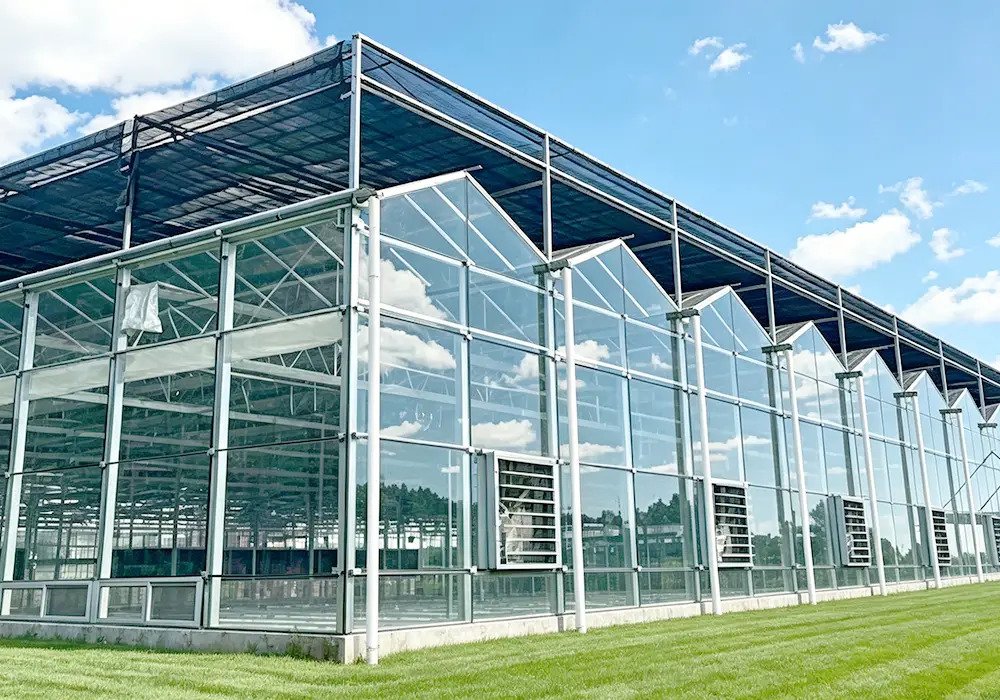
A Venlo greenhouse may look simple from the outside, with its neat rows of glass peaks, but it is actually a carefully engineered system made up of many components working together. Each part contributes to strength, light transmission, ventilation, and climate control. Understanding these components helps growers appreciate how the structure performs and why quality matters at every level, from the foundations to the roof vents.
The Steel Frame
The steel frame forms the backbone of the greenhouse, supporting glass, equipment, and crop loads. Sainpoly, an established venlo greenhouse manufacturer, builds frames from hot-dip galvanized steel to resist corrosion in humid growing environments. Columns, trusses, and bracing are engineered for local wind and snow loads. A strong, accurate frame keeps the structure stable and ensures that glass and moving parts fit and operate correctly throughout the greenhouse’s long life.
Columns and Trusses
Columns carry the weight of the roof down to the foundations, while trusses span between columns to support gutters and roof sections. In Venlo designs, trusses often span wide distances, reducing the number of columns inside the growing area. Fewer columns mean more usable space, easier movement for workers and equipment, and less shading on crops. Truss design balances strength with slim profiles for maximum light.
Gutters
Gutters run along the length of each bay, collecting rainwater from the roof and providing a structural connection between roof sections. In Venlo greenhouses, gutters are typically made from galvanized steel or aluminum and are designed to carry water efficiently while supporting the roof glass. Gutter height determines the overall height of the greenhouse, influencing air volume and space for crops and equipment.
Aluminum Glazing Bars
Slim aluminum glazing bars hold the glass panels in place on the roof and walls. Their narrow profile minimizes shading while providing secure support. Aluminum resists corrosion and is lightweight, making it ideal for this purpose. Rubber seals or glazing strips between glass and bars keep the structure watertight and reduce heat loss. These details contribute significantly to the overall performance of the greenhouse.
Glass Panels
Glass is the defining feature of a Venlo greenhouse. Horticultural glass offers high light transmission and long durability. Growers can choose clear glass for maximum direct light or diffuse glass for more even light distribution. Tempered glass provides additional safety and strength. Anti-reflective coatings can increase light transmission further. The choice of glass affects crop growth, energy use, and overall facility performance.
Roof Ventilation Systems
Roof vents are typically installed along the ridges and opened by rack-and-pinion mechanisms driven by electric motors. They allow hot, humid air to escape naturally, providing efficient ventilation with minimal energy use. Vents can be arranged in alternating or continuous patterns depending on climate needs. Insect screens can be fitted beneath vents to keep pests out while maintaining airflow.
Screen Systems
Internal screens are mounted beneath the roof to provide shading, energy saving, or blackout functions. Motorized systems draw screens across the greenhouse automatically based on climate settings. Shade screens reduce heat and light intensity during sunny periods, while energy screens retain warmth at night. Screens add flexibility to climate control and help reduce energy costs significantly.
Heating and Climate Equipment
Venlo greenhouses commonly use hot water pipe heating systems placed near the crop, often doubling as rails for harvest trolleys. Additional climate equipment may include circulation fans, fogging systems, carbon dioxide enrichment, and cooling systems. A climate computer coordinates all equipment, maintaining ideal conditions based on sensor readings and grower settings.
A System Built to Perform
Each component of a Venlo greenhouse plays a role in creating a productive, efficient growing environment. Quality materials, precise engineering, and careful integration ensure the structure delivers excellent light, ventilation, and durability. Sainpoly designs and manufactures every element with performance in mind, helping growers build Venlo greenhouses that operate reliably and support high-value crop production for many years.