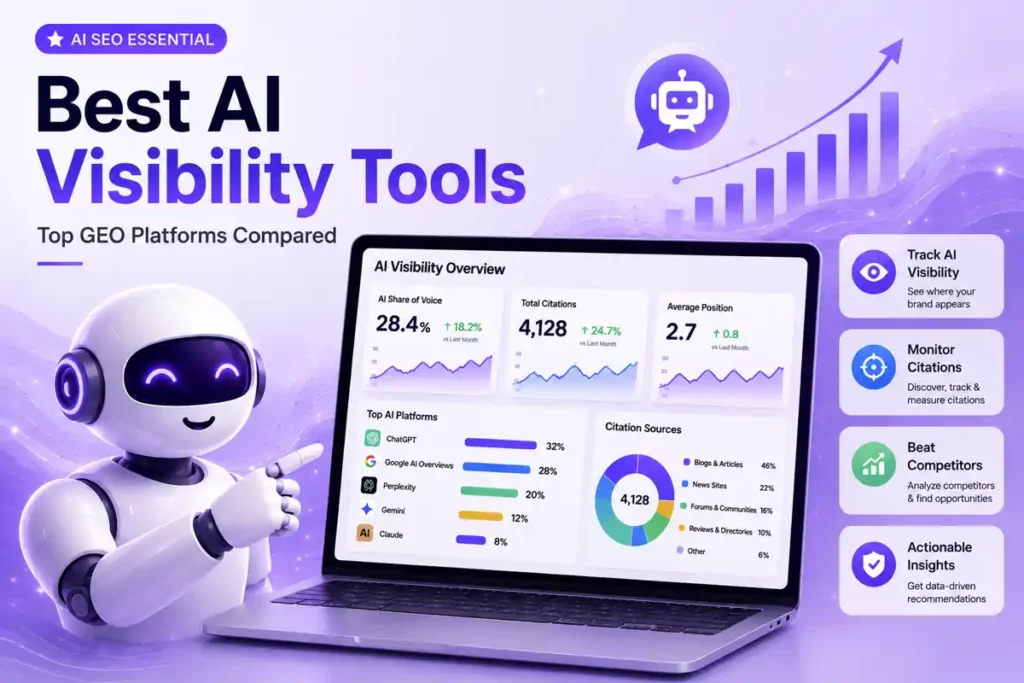
Search behavior has changed faster than most marketers expected. People no longer rely only on a list of blue links; they ask ChatGPT, Gemini, Perplexity, and Google’s AI Overviews for direct answers and recommendations. When a brand is missing from those answers, it effectively doesn’t exist for that customer. This is exactly why a best ai visibility tracker has become such an important part of modern marketing. It shows whether AI platforms mention your brand, how they describe it, and which competitors are being recommended instead, giving businesses a clear picture of where they stand in this new discovery landscape.
Why Traditional Rank Tracking Falls Short
Classic SEO tools were built for a world of fixed rankings. You typed a keyword, checked the position, and adjusted your strategy. AI-generated answers don’t work that way. Responses shift depending on phrasing, user context, and the model being used, and there is often no “position one” at all, just a paragraph that either includes your brand or leaves it out. A rank tracker can tell you that you sit third on Google for a phrase, yet reveal nothing about whether an AI assistant recommends you when someone asks the same question conversationally. That gap is where dedicated AI tracking steps in and fills the blind spot.
How AI Visibility Tracking Actually Works
Most AI tracking platforms run a structured set of prompts across several AI engines on a regular schedule. These prompts mirror the questions real customers ask, such as “what is the best accounting software for small teams” or “which roofing company is reliable in Dallas.” The tool records every response, detects brand mentions, notes citations and linked sources, and measures how often your business appears compared to others. Over time, this builds a dataset that reveals trends rather than one-off snapshots. Instead of guessing how AI perceives your brand, you get repeatable measurements you can actually act on and report on.
Understanding Share of Voice in AI Answers
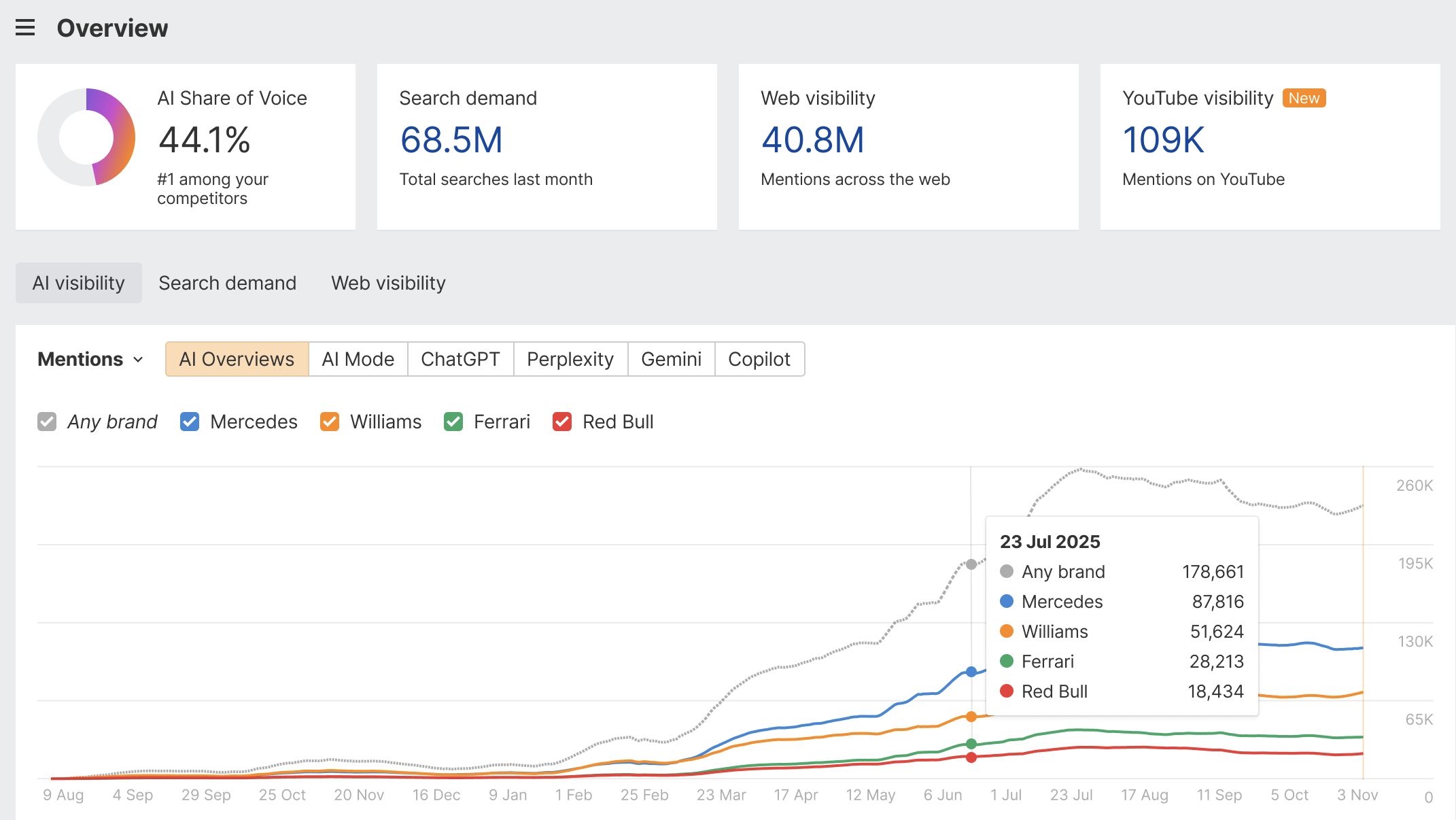
One of the most useful metrics these platforms provide is share of voice. It measures the percentage of relevant AI answers that mention your brand versus your competitors. If a rival appears in seventy percent of responses and you appear in fifteen, that gap tells a powerful story. It also helps prioritize work, because you can see which topics and question types you are losing. Share of voice turns a vague concern about “AI visibility” into a number that leadership understands, and it makes it much easier to justify investment in content, digital PR, and other efforts aimed at improving those results.
Sentiment and Brand Accuracy
Being mentioned is only half the battle. AI models sometimes describe brands using outdated pricing, discontinued products, or inaccurate claims pulled from old reviews. A good tracking tool analyzes the tone and accuracy of each mention, flagging negative framing or factual errors. This matters because users tend to trust AI answers as neutral and authoritative. If an assistant repeatedly says your service is expensive or difficult to use, that perception spreads quietly. Spotting these issues early allows teams to publish clarifying content, update listings, and strengthen trusted sources so future answers reflect the brand more accurately.
Discovering the Sources AI Relies On
Every AI answer is shaped by the sources the model trusts. Tracking platforms often reveal which websites, directories, review platforms, and publications are cited most frequently in your industry. This insight is extremely valuable for planning outreach and content. If AI engines consistently pull information from a particular industry blog or comparison site, earning a mention there can directly influence how you appear in answers. Rather than spreading effort across random link-building campaigns, brands can focus on the exact sources that feed generative engines, which makes marketing budgets work much harder.
Turning Insights Into Better Brand Discovery
The real value of tracking comes from what you do with the data. Once you know where you’re missing, you can create content that answers the specific questions AI platforms receive, structure pages so key facts are easy to extract, and build authority on the topics where competitors dominate. Many brands find that small, focused improvements, such as clearer product descriptions or well-organized FAQ pages, lead to noticeable gains in AI mentions. Tracking then confirms whether those changes worked, creating a feedback loop that steadily improves discovery across every major AI search experience.
Choosing the Right Tool for Your Business
Not every platform suits every business. Small brands may only need simple monitoring across a few AI engines, while agencies and enterprises benefit from multi-brand dashboards, competitor benchmarking, and exportable reports. When comparing options, look at which AI models are covered, how often prompts are refreshed, whether sentiment analysis is included, and how easily the data fits into existing reporting. The best choice is the one your team will actually use consistently. With the right tool in place, brand discovery in AI search stops being a mystery and becomes something you can measure, manage, and grow.