PRP Hair Treatment in Dubai
Hair loss can affect both appearance and confidence, especially when thinning hair becomes more noticeable over time. While there are many treatments available for hair loss, Platelet-Rich Plasma (PRP) therapy has become a popular non-surgical option for people looking to encourage natural hair growth. PRP hair treatment in Dubai uses components from your own blood to support the health of hair follicles and potentially improve hair density.
Dubai offers access to modern aesthetic and medical clinics where PRP therapy is performed by qualified professionals. Before choosing treatment, however, it is important to understand how PRP works, who may benefit from it, what the procedure involves, and what results you can realistically expect.
What Is PRP Hair Treatment?
PRP hair treatment is a regenerative procedure designed to support hair growth using platelet-rich plasma derived from the patient’s own blood. Platelets contain growth factors and proteins involved in tissue repair and regeneration. During PRP therapy, a small amount of blood is collected and processed to separate the platelet-rich plasma from other blood components.
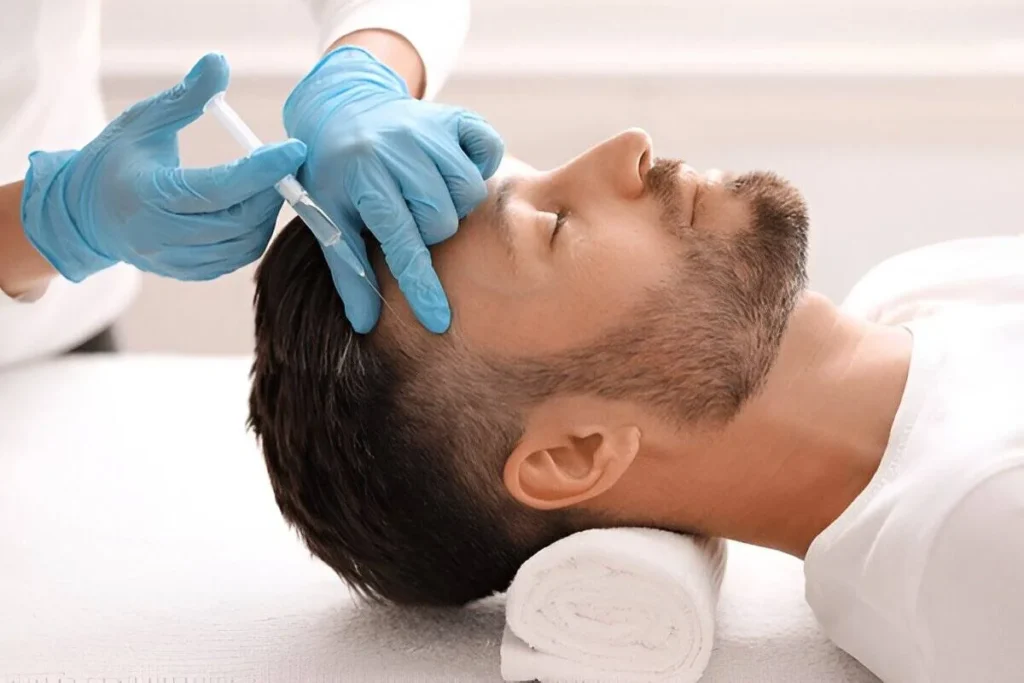
The concentrated plasma is then carefully injected into areas of the scalp affected by thinning or hair loss. The growth factors may help improve the local environment around hair follicles and support follicular activity.
Because PRP uses the patient’s own blood, it is generally considered a minimally invasive treatment. However, suitability varies between individuals, and a medical consultation should always be performed before treatment.
How Does PRP Hair Treatment Work?
The PRP process generally involves several stages. First, a healthcare professional takes a small blood sample, usually from the arm. The sample is placed in a centrifuge, which separates its components according to density.
The platelet-rich portion is collected and prepared for treatment. After the scalp is cleaned and prepared, the PRP is injected into selected areas where hair is thinning.
The goal is to deliver concentrated growth factors close to the hair follicles. Depending on the underlying cause of hair loss and the individual’s condition, PRP may help support existing follicles and encourage healthier-looking hair growth.
The exact preparation method and injection technique can vary between clinics and practitioners, so patients should ask about the procedure and the professional performing it during their consultation.
Who Can Benefit From PRP Hair Treatment?
PRP may be considered for people experiencing certain forms of hair thinning or early-stage hair loss. It is often discussed as a treatment option for individuals with androgenetic alopecia, commonly known as pattern hair loss.
People with thinning hair may benefit more than those with completely inactive or permanently lost follicles. The earlier the underlying problem is evaluated, the more treatment options may be available.
However, PRP is not suitable for every type of hair loss. Hair loss can result from hormonal changes, nutritional deficiencies, medical conditions, medications, stress, autoimmune disorders, or other causes. Identifying the reason for hair loss is therefore an important part of the treatment process.
A qualified healthcare professional can assess the scalp, review medical history, and determine whether PRP is an appropriate option.
What Happens During a PRP Hair Treatment Session?
A typical PRP session can be completed without surgery and usually involves several straightforward steps.
1. Consultation
The process begins with an assessment of the patient’s hair loss, scalp condition, medical history, and treatment goals. The practitioner may examine areas of thinning and discuss other factors that could contribute to hair loss.
2. Blood Collection
A small quantity of blood is taken from the patient, similar to a routine blood sample.
3. Preparation of PRP
The blood is processed using a centrifuge to separate platelet-rich plasma from other blood components.
4. Scalp Preparation
The scalp is cleaned, and a topical anesthetic may be used depending on the practitioner’s technique and the patient’s comfort level.
5. PRP Injection
The prepared platelet-rich plasma is injected into targeted areas of the scalp. Multiple small injections may be administered to cover areas experiencing thinning.
The procedure is generally relatively quick, although the total appointment time depends on the clinic’s protocol and the extent of the treatment area.
Is PRP Hair Treatment Painful?
Most people tolerate PRP injections reasonably well. Because the treatment involves multiple small injections into the scalp, some patients may experience mild discomfort, pressure, or a stinging sensation.
A topical numbing product may be used to make the procedure more comfortable. Temporary redness, swelling, tenderness, or mild bruising can sometimes occur following treatment.
Patients should follow the aftercare instructions provided by their healthcare professional and report unusual or persistent symptoms.
How Many PRP Sessions Are Needed?
The number of sessions varies according to the patient’s condition, treatment goals, and response to therapy. PRP is commonly provided as a series of treatments rather than as a single session.
A practitioner may recommend an initial treatment course followed by maintenance sessions. The exact schedule should be individualized rather than based solely on a standard package.
It is important to remember that hair growth is a gradual process. Patients should not expect dramatic changes immediately after their first treatment. Hair follicles require time to respond, and results can vary considerably between individuals.
When Can You See Results?
PRP does not produce instant hair growth. Hair follicles operate through natural growth cycles, meaning improvements may take several weeks or months to become noticeable.
Some patients may initially notice reduced shedding or changes in hair texture before seeing a visible improvement in density. Continued improvement may occur as treatment progresses.
Results depend on several factors, including the cause and severity of hair loss, age, overall health, follicle condition, treatment protocol, and individual response.
For this reason, it is best to approach PRP hair treatment in Dubai with realistic expectations. A consultation can provide a more personalized understanding of what may be achievable.
Benefits of PRP Hair Treatment
PRP has attracted attention as a hair restoration option because it offers several potential advantages.
Non-surgical approach: PRP does not require hair transplantation or surgical incisions.
Uses your own blood: The treatment uses plasma obtained from the patient’s own blood.
Minimal downtime: Many people can return to normal activities relatively quickly, depending on their practitioner’s recommendations.
Targets thinning areas: PRP can be administered directly to areas of concern on the scalp.
Potential support for hair follicles: The growth factors found in platelets may support the environment surrounding hair follicles.
However, PRP should not be presented as a guaranteed cure for hair loss. Its effectiveness varies, and it may work better for some types and stages of hair loss than others.
PRP Hair Treatment Aftercare
Following PRP therapy, patients are generally advised to follow their provider’s specific aftercare instructions. These may include avoiding unnecessary pressure or irritation of the treated scalp for a short period.
Patients may also be advised to avoid certain hair products, strenuous exercise, excessive heat, or other activities immediately after treatment, depending on the protocol used.
It is important not to scratch or aggressively massage the scalp after injections. If prescribed or recommended, patients should use medications or topical products according to their healthcare professional’s instructions.
PRP Hair Treatment vs. Hair Transplantation
PRP and hair transplantation are different approaches to hair restoration.
PRP aims to support existing hair follicles through injections of platelet-rich plasma. It does not involve surgically moving hair follicles from one area of the scalp to another.
Hair transplantation, on the other hand, involves removing hair follicles from a donor area and placing them into areas affected by hair loss. It is a surgical procedure and may be considered when there is significant permanent hair loss and an appropriate donor supply.
In some cases, PRP may be discussed alongside other hair restoration treatments. The most suitable approach depends on the individual’s diagnosis, pattern of hair loss, and goals.
How to Choose a PRP Hair Clinic in Dubai
Choosing the right provider is an important part of the treatment process. Patients should look beyond promotional offers and focus on the qualifications and experience of the healthcare professional.
When researching PRP hair treatment in Dubai, consider:
- The qualifications and experience of the practitioner
- Whether the clinic follows appropriate hygiene and safety standards
- Whether the clinic provides a proper consultation before treatment
- How the PRP is prepared and administered
- Whether the practitioner explains realistic outcomes
- Whether the clinic provides appropriate follow-up care
- Whether the cost and treatment plan are clearly explained
A reputable clinic should be willing to discuss both the potential benefits and limitations of PRP.
Is PRP Hair Treatment Right for You?
PRP can be a useful option for certain individuals experiencing hair thinning, but there is no single treatment that works for every type of hair loss. A proper assessment is essential before deciding on therapy.
During a consultation, the practitioner can investigate potential causes of hair loss and determine whether PRP is appropriate. In some cases, additional investigations or alternative treatments may be recommended.
The most important step is to understand why the hair is thinning rather than choosing a treatment based solely on popularity.
Final Thoughts
PRP hair treatment in Dubai offers a minimally invasive approach to supporting hair follicles and addressing certain types of hair thinning. By using platelet-rich plasma derived from the patient’s own blood, the treatment aims to provide growth factors that may encourage a healthier scalp environment and support existing follicles.
While PRP can be promising for suitable candidates, results vary and should never be guaranteed. The number of sessions, expected results, and maintenance requirements depend on individual circumstances.
If you are considering PRP for hair loss, begin with a consultation with a qualified healthcare professional. A personalized assessment can help determine the cause of your hair loss and whether PRP is an appropriate part of your hair restoration plan.