Performance gains don’t come only from training harder. The athletes who sustain high performance over long careers understand something that is often overlooked in conventional training culture: recovery quality, nervous system regulation, and tissue health are just as important as the work done in the gym or on the field. Every marginal gain matters at a competitive level, and the tools that support the body’s ability to adapt, recover, and perform consistently are worth taking seriously.
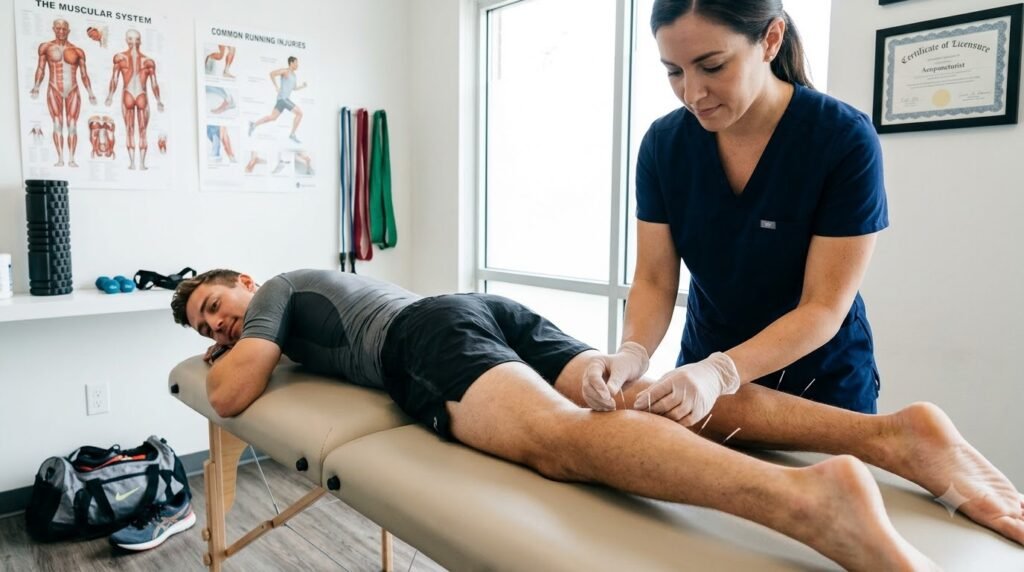
Acupuncture has moved well beyond its reputation as an injury treatment into a recognized performance support tool. For athletes evaluating acupuncture for sports performance as a genuine addition to their training ecosystem, this article examines the specific mechanisms, the practical applications, and how to integrate it strategically into a performance program.
Rethinking What “Performance Support” Actually Means
When athletes think about performance support, the focus tends to be on training volume, nutrition, and strength programming. These are foundational. But they represent only part of the performance equation.
The body’s ability to express the fitness it has developed depends on several factors that training alone doesn’t fully control:
- How completely muscles recover between sessions
- Whether the nervous system is appropriately primed or fatigued
- How well sleep is consolidating training adaptations
- Whether pain or movement restriction is limiting output
- How effectively the body manages the cortisol load of heavy training
Acupuncture addresses all of these dimensions — not by replacing training, but by optimizing the biological environment in which training adaptations occur and performance is expressed.
The Physiology Behind Acupuncture’s Performance Effects
Autonomic Nervous System Regulation
The balance between the sympathetic nervous system — responsible for activation, stress response, and high-output effort — and the parasympathetic nervous system — responsible for rest, repair, and recovery — is central to athletic performance.
Heavy training chronically activates the sympathetic system. Without adequate recovery, athletes remain in a state of sympathetic dominance that impairs sleep, elevates baseline cortisol, reduces heart rate variability, and ultimately diminishes performance despite continued training effort. This is the physiological foundation of overreaching and overtraining syndrome.
Acupuncture reliably shifts the autonomic nervous system toward parasympathetic dominance. This shift is measurable — studies have demonstrated increased heart rate variability and reduced salivary cortisol following acupuncture treatment. For athletes in heavy training phases, regular acupuncture sessions help maintain the autonomic balance that makes recovery productive rather than stagnant.
Endorphin and Neurotransmitter Release
Acupuncture stimulates the release of endorphins, enkephalins, and other endogenous opioid compounds. These neurochemicals reduce pain perception, support mood regulation, and contribute to the subjective sense of wellbeing and readiness that athletes describe as feeling physically sharp.
Serotonin and dopamine pathways are also influenced — neurotransmitters that govern motivation, focus, and the psychological drive that underpins competitive performance. Athletes who train through difficult periods often notice that acupuncture helps maintain the mental engagement that heavy training loads can erode.
Improved Oxygen Delivery and Circulation
Performance in endurance and mixed-energy sports depends significantly on oxygen delivery to working muscles. Acupuncture has been shown to increase local and regional blood flow through multiple mechanisms — including stimulation of nitric oxide release, which promotes vasodilation in peripheral blood vessels.
Better circulation means better oxygen and nutrient delivery to muscles during training, and faster clearance of lactate and other metabolic byproducts during recovery. For endurance athletes in particular, this translates into a meaningful physiological advantage when acupuncture is used consistently.
Specific Performance Applications
Optimizing Training Adaptations
The purpose of training is to create controlled stress that triggers adaptation. The adaptation happens during recovery — not during the training session itself. If recovery is incomplete, the adaptation is incomplete, and the training stimulus is partially wasted.
Acupuncture for sports performance in this context means ensuring that the recovery periods between training sessions are as productive as possible. By promoting circulation, reducing residual muscle tension, improving sleep quality, and regulating cortisol, regular acupuncture sessions help the body extract the maximum adaptive benefit from the work being done.
Neuromuscular Efficiency and Movement Quality
Movement quality — how efficiently force is generated and transmitted through the kinetic chain — is a performance determinant that is often overlooked. Trigger points, fascial restrictions, and neuromuscular inhibition all degrade movement quality in ways that don’t always produce obvious pain but do reduce power output and movement efficiency.
Acupuncture addresses these issues by releasing trigger points within primary movers and stabilizers, improving the neural signaling between the nervous system and the muscles it controls, and restoring normal fascial mobility. Athletes frequently report improvements in movement fluency and power expression following a course of treatment — even in the absence of any identifiable injury.
Pre-Competition Readiness
The days leading into a competition are a critical window. Physical preparation has already been done — the goal is to arrive at the start line or competition venue in the best possible physical and mental state. Sleep, stress regulation, and tissue readiness are the key variables.
A well-timed acupuncture session one to two days before competition can support all three. By settling the nervous system, addressing any residual tissue tension from the final training block, and promoting restorative sleep, it helps athletes arrive at competition in a state of genuine readiness rather than carried fatigue.
Some athletes have experimented with same-day sessions before competition. Results are individual — some find it sharpening, others find it too relaxing. Experimenting during lower-stakes events before applying this approach to major competition is advisable.
Post-Competition Recovery
The physical cost of competition — particularly in contact sports, endurance events, or multi-day tournaments — can be significant. Muscle damage, joint stress, nervous system fatigue, and accumulated microtrauma all need to be addressed efficiently for the athlete to return to productive training quickly.
Acupuncture within 24 to 48 hours of competition accelerates this recovery process. It promotes the clearance of inflammatory byproducts, addresses acute trigger points and muscle guarding that develop during competitive effort, and helps reset the autonomic nervous system after the sustained sympathetic activation of competition.
Acupuncture and Specific Performance Metrics
It’s worth being specific about what performance metrics acupuncture is most likely to influence — and being honest about those where evidence is limited.
Well-supported performance effects:
- Reduced recovery time between training sessions
- Improved sleep duration and quality
- Reduced perception of effort at submaximal intensities
- Improved range of motion and movement quality
- Reduced frequency of overuse injury interruptions to training continuity
Emerging or indirect effects:
- Improved VO2 max through better training consistency and recovery
- Enhanced power output through improved neuromuscular efficiency
- Reduced competition anxiety and improved focus
Where evidence is limited:
- Direct acute enhancement of maximal strength or speed on the day of treatment
- Significant performance gains in a single session without consistent prior treatment
Honest expectation-setting matters. Acupuncture is a cumulative tool — its performance benefits build over weeks and months of consistent use, not a single session.
Integrating Acupuncture Into a Periodized Training Program
Strategic integration means aligning acupuncture with training phases rather than booking sessions randomly.
Base Building Phase
During long, steady base-building periods, weekly acupuncture sessions focused on tissue maintenance, movement quality, and nervous system regulation help the body absorb high training volumes without accumulating damage. This is an ideal phase to establish a treatment relationship with a practitioner who understands your sport and training structure.
Intensity Phase
As training intensity increases, so does recovery demand. Two sessions per week during peak intensity blocks — one focused on recovery from the previous week’s load, one focused on readiness for the upcoming block — provides meaningful support during the period of greatest physiological stress.
Taper Phase
During the taper leading into major competition, acupuncture shifts to a readiness focus. Sessions address any residual tissue issues from the training block, support sleep quality, and help manage the psychological restlessness that tapers often produce in highly motivated athletes.
Off-Season
The off-season is an underutilized window for addressing chronic issues that accumulated during the competitive season — persistent trigger points, movement restrictions, joint irritation. Regular acupuncture during this period allows these issues to be properly resolved rather than simply managed, reducing the likelihood of them becoming limiting factors in the following season.
Finding a Practitioner Who Understands Athletic Performance
Performance-focused acupuncture requires a practitioner with genuine understanding of athletic physiology, training structure, and sport-specific demands. General wellness acupuncture and sports performance acupuncture are not the same thing.
When evaluating practitioners, look for:
- Specific experience working with competitive or high-performance athletes
- Understanding of training periodization and load management
- Familiarity with sport-specific injury patterns and movement demands
- Ability to communicate with coaches and other members of the athlete’s support team
- Honest, evidence-based communication about what acupuncture can and cannot achieve
Ask about their experience with athletes in your specific sport. A practitioner who has worked extensively with endurance athletes may not have the same depth of understanding of the demands facing a contact sport athlete or a technical skill sport competitor.
Frequently Asked Questions
How long before I notice performance-related benefits from acupuncture?
Most athletes notice improved recovery and sleep quality within two to four weeks of consistent treatment. Performance-related gains — reduced injury interruptions, improved movement quality, better training consistency — typically become apparent over six to twelve weeks.
How often should competitive athletes have acupuncture?
During active training phases, weekly sessions are a common baseline. During peak training blocks or pre-competition periods, two sessions per week may be appropriate. During off-season or lower-demand periods, bi-weekly or monthly maintenance is sufficient for most athletes.
Can acupuncture replace other recovery modalities?
No — and it shouldn’t be positioned that way. Acupuncture is most effective as part of a comprehensive recovery approach that includes appropriate sleep, nutrition, active recovery, and other modalities such as massage or hydrotherapy. Each tool addresses different aspects of the recovery process.
Are there any performance sports where acupuncture is particularly well-established?
Acupuncture has strong adoption in endurance sports, martial arts, swimming, and track and field. Professional football, basketball, and baseball programs in the United States have increasingly incorporated it into training room services. Its relevance extends across virtually all competitive sports.
Is there any risk of acupuncture negatively affecting performance?
When timed appropriately and performed by a qualified practitioner, acupuncture should not negatively affect performance. The primary timing consideration is avoiding sessions immediately before explosive performance — the parasympathetic shift produced by treatment can temporarily reduce the activation state that peak power output requires. A 24-hour gap before competition is a reasonable general guideline.
Performance Is Built Between Sessions
The athletes who perform most consistently over long careers are those who treat recovery with the same discipline they apply to training. Acupuncture for sports performance offers a physiologically grounded, safe, and cumulative way to optimize the recovery and readiness that allow training investments to translate fully into competitive output.
Used consistently, strategically, and in combination with other evidence-informed recovery practices, it earns its place in a serious athlete’s support system — not as a luxury, but as a genuine performance tool.