Walk into any natural skincare conversation today and tallow balm will come up sooner or later. It’s one of those ingredients that sounds unusual at first — rendered animal fat on your skin — but has a long history of use and a growing community of people who swear by it for everything from dry hands to irritated, reactive skin. If you’re curious but not sure where to start, this article covers what you actually need to know.
The renewed interest in traditional skincare has brought grass-fed tallow balm back into mainstream conversation, particularly among people looking to step away from synthetic moisturisers loaded with emulsifiers, preservatives, and petroleum-derived ingredients. Understanding what makes this ingredient effective — and what separates a quality product from a poor one — helps you make a genuinely informed decision.
What Exactly Is Tallow Balm?
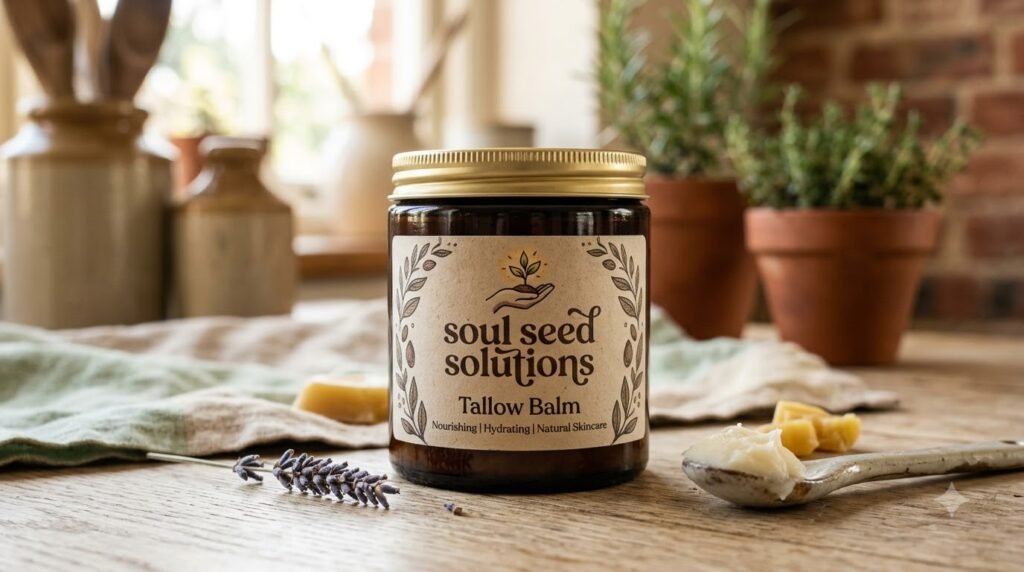
Tallow is rendered fat, most commonly from beef or mutton. To make tallow balm, the raw fat — ideally sourced from grass-fed animals — is slowly rendered down to remove water and impurities, leaving a clean, stable fat that solidifies at room temperature. That purified tallow is then blended with other nourishing ingredients, often including botanical oils and beeswax, to create a balm texture that’s easy to apply to skin.
The result is a dense, rich moisturiser that melts on contact with skin and absorbs without leaving a heavy, greasy layer behind — assuming the formulation is done well.
Why Animal Fat and Not Plant Oil?
It’s a reasonable question. The answer comes down to biological compatibility. Human sebum — the natural oil your skin produces — contains a very similar fatty acid profile to tallow. This includes oleic acid, palmitic acid, stearic acid, and conjugated linoleic acid (CLA). Because these compounds mirror what your skin already produces, tallow is recognised and absorbed well rather than sitting on the surface.
Many plant-based moisturisers, by contrast, rely heavily on linoleic acid or use oils with fatty acid ratios quite different from human sebum. That doesn’t make them ineffective, but it does partly explain why tallow tends to feel so compatible for people whose skin hasn’t responded well to conventional options.
The Skin Conditions People Use It For
Tallow balm isn’t marketed as a medical treatment, and it shouldn’t be presented as one. But the people who gravitate toward it tend to share certain skincare frustrations.
Persistent dryness. People with chronically dry skin — hands, elbows, heels, shins — often find that conventional moisturisers provide temporary surface hydration but don’t address the dryness in any lasting way. The occlusive nature of tallow helps lock moisture into the skin rather than simply sitting on top.
Sensitive or reactive skin. For people who react to fragrance, preservatives, or long lists of synthetic ingredients, tallow balm offers a simpler formulation. A quality product may contain only a handful of recognisable ingredients.
Eczema-prone or inflamed skin. Tallow contains fat-soluble vitamins — particularly vitamins A, D, E, and K — in forms the skin can use. These play roles in skin cell turnover, barrier repair, and inflammation modulation. Many people with eczema-prone skin report reduced flare frequency with consistent use.
Post-wash dryness. Frequent handwashing strips the skin’s natural oils. Tallow balm applied after washing helps restore the lipid barrier more effectively than many water-based lotions.
Chapped or cracked areas. The dense texture makes it particularly useful for areas like heels, knuckles, and lips where the skin is under mechanical stress and needs both protection and nourishment.
What Makes a High-Quality Tallow Balm?
This is where it pays to be discerning, because not all products are made equally. A few specific factors separate a genuinely nourishing balm from something that’s simply riding the trend.
Source of the Tallow
The single most important variable is where the tallow comes from. Grass-fed and pasture-raised animals produce fat with a significantly better nutritional profile than grain-fed animals. Grass-fed tallow contains higher levels of CLA, omega-3 fatty acids, and fat-soluble vitamins — all of which contribute to the skin benefits people associate with this ingredient.
Always look for clear sourcing information. If a product doesn’t specify, that’s worth noting.
Rendering Method
Slow, low-heat rendering preserves more of the beneficial nutrients and produces a cleaner, purer fat. High-heat rendering or commercial processing degrades some of the nutritional content and can introduce off-flavours or odours.
Well-rendered tallow should have a very mild, neutral scent. If a balm has a strong beefy or rancid smell, the rendering or storage hasn’t been handled well.
Additional Ingredients
Most tallow balms include complementary ingredients. Common additions include:
- Jojoba oil — mimics skin’s natural sebum, adds fluidity and shelf stability
- Rosehip oil — rich in vitamin C and antioxidants, supports skin tone and repair
- Beeswax — adds protective barrier properties and adjusts texture
- Essential oils — used in small amounts for scent; choose products where these are optional or clearly listed, particularly if your skin is reactive
The fewer synthetic additives, the better. A short, clean ingredient list is usually a sign of a thoughtfully made product.
Texture and Melt Point
Good tallow balm should be firm at room temperature but melt quickly on contact with skin. If it’s too hard to scoop or stays greasy and unabsorbed after application, the formulation balance is off.
How to Use Tallow Balm Effectively
Application is straightforward, but a few habits make a real difference in results.
Apply to damp or slightly moist skin. Tallow is an emollient and occlusive — it works by sealing in moisture. Applying it to completely dry skin means there’s less moisture to seal in. After washing or bathing, pat skin lightly and apply while still slightly damp.
Use less than you think you need. A small amount goes a long way. Start with a pea-sized amount for the face, or a fingertip amount for hands, and warm it between your palms before pressing it into the skin.
Give it time. Some people experience a brief adjustment period — particularly those transitioning from conventional moisturisers — where the skin recalibrates its natural oil production. This usually settles within two to three weeks.
Store it properly. Keep tallow balm away from direct sunlight and heat. A cool, dark spot extends shelf life and preserves the quality of the fats.
Is Tallow Balm Suitable for Oily or Acne-Prone Skin?
This is a common concern, and it’s understandable. Applying animal fat to already oily skin sounds counterintuitive. But the fatty acid compatibility argument works both ways — because tallow closely resembles the skin’s own sebum, it can actually help regulate oil production rather than amplifying it.
That said, individual skin responds differently. If you have acne-prone skin, start with a patch test on a small area and observe over a week or two. Many people with congestion-prone skin do well with tallow; others find heavier formulations aren’t suitable for their face, even if they work well on the body.
Tallow Balm vs. Conventional Moisturisers: What’s Actually Different?
The mainstream moisturiser market is dominated by water-based lotions and creams that use emulsifiers to blend water and oil, along with preservatives to prevent microbial growth in that water phase. These products often feel immediately hydrating but may not provide lasting barrier support.
Tallow balm contains no water, which means no emulsifiers and no preservatives needed. This simplicity is part of its appeal for people who want to reduce their exposure to synthetic cosmetic ingredients without sacrificing skin nourishment.
It’s not that conventional moisturisers are harmful — many people use them without issue. But for people whose skin is chronically dry, reactive, or simply not responding well to standard options, tallow balm offers a genuinely different approach rooted in skin biology rather than cosmetic chemistry.
Frequently Asked Questions
Does tallow balm have a strong animal smell?
A well-made product from properly rendered grass-fed tallow has a very mild, neutral scent. Any added botanicals or essential oils typically define the overall fragrance.
Can tallow balm be used on the face?
Yes, and many people use it specifically as a facial moisturiser. Start with a very small amount applied to damp skin and adjust based on how your skin responds.
How long does a tin of tallow balm typically last?
With daily use on the face and hands, a 60ml tin typically lasts four to eight weeks depending on how liberally it’s applied.
Is tallow balm vegan?
No. It is an animal-derived product. For those who require a vegan option, plant-based balms are available, though they won’t have the same fatty acid profile.
Can I use tallow balm on babies or young children?
Tallow balm’s simple ingredient profile makes it appealing for sensitive skin, including young children. However, always consult a healthcare professional before using new products on infants.
What’s the shelf life?
Properly rendered and stored tallow balm typically has a shelf life of 12–18 months. Keep it away from heat, moisture, and direct sunlight to maintain freshness.
Tallow balm isn’t a passing trend. For people frustrated by synthetic skincare or searching for something that genuinely works with their skin rather than masking dryness temporarily, it represents a return to an ingredient with real biological logic behind it. Choose a well-sourced product, apply it correctly, and give your skin time to adapt — the results often speak for themselves.