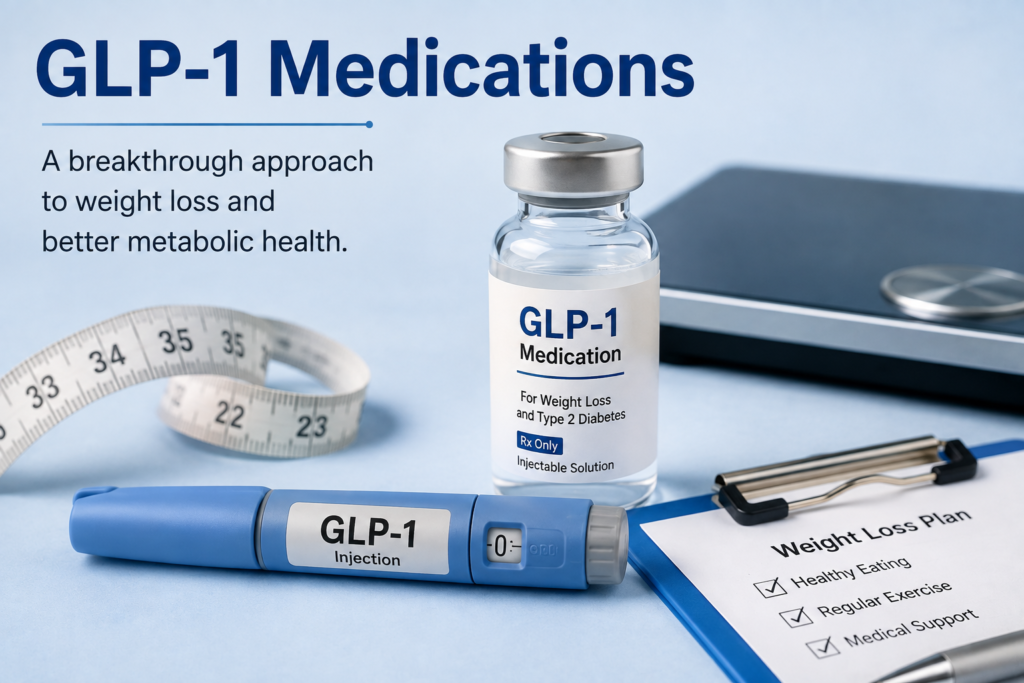
Weight management can be challenging, particularly for people who have struggled with obesity despite making consistent changes to their diet and physical activity. In recent years, GLP-1 medications have become an increasingly discussed option for people looking for medical support with weight management.
However, these medications are not appropriate for everyone. Understanding how GLP-1 medications work, who may qualify, their potential benefits, and their limitations can help people have a more informed conversation with a healthcare professional.
What Are GLP-1 Medications?
GLP-1 stands for glucagon-like peptide-1, a hormone naturally produced in the body that plays a role in appetite, digestion, and blood-sugar regulation.
Some prescription medications work by targeting GLP-1 pathways. Depending on the specific medication, they may be prescribed for conditions such as type 2 diabetes or chronic weight management.
Certain newer medications also target additional hormonal pathways, which can produce stronger effects on appetite and metabolic regulation.
These medications are generally intended to be used alongside lifestyle changes rather than as a replacement for healthy eating or physical activity.
How Can GLP-1 Medications Support Weight Management?
One of the main reasons GLP-1 medications have attracted attention is their effect on appetite.
They can help some people feel fuller for longer and may reduce hunger or food cravings. Some medications also slow the movement of food through the stomach, which can contribute to increased feelings of fullness.
As a result, some people may find it easier to reduce their overall calorie intake.
Weight loss, however, is not simply about taking a medication. Results can vary based on the medication, dosage, individual health circumstances, diet, physical activity, and how consistently treatment is followed.
Who May Be a Candidate?
Eligibility depends on the specific medication and an individual’s medical history.
In the United States, prescription weight-management medications may be considered for adults with obesity or for certain adults who are overweight and have weight-related health conditions.
Healthcare professionals may consider factors such as:
- Body mass index (BMI)
- Existing weight-related health conditions
- Previous weight-management attempts
- Current medications
- Medical history
- Family history
- Potential medication interactions
- Overall health and treatment goals
BMI is only one part of the assessment. It does not tell the complete story about an individual’s health or body composition.
If you’re unsure whether you may be a candidate, reviewing the medical and lifestyle factors that healthcare providers commonly consider can be a useful starting point. A guide such as who may be a good candidate for GLP-1 medication can also help explain the factors typically discussed before treatment.
What Benefits Might People Experience?
The potential benefits vary from person to person, but clinical studies of certain GLP-1-based medications have demonstrated meaningful weight loss in appropriate patients.
Possible benefits may include:
Reduced Appetite
Many people report feeling less hungry while taking these medications, which can make calorie control easier.
Improved Weight Management
For people who respond well to treatment, reduced appetite and other metabolic effects may contribute to meaningful weight loss.
Improvements in Certain Health Markers
Weight reduction can sometimes improve factors associated with metabolic health, such as blood sugar and blood pressure. The effects depend on the individual’s health and the specific medication.
Support for Long-Term Management
Obesity is considered a chronic health condition rather than simply a short-term lifestyle problem. For some patients, medication can become one component of a longer-term treatment strategy.
What Are the Potential Side Effects?
GLP-1 medications can cause side effects, particularly when treatment begins or the dosage increases.
Common gastrointestinal effects can include:
- Nausea
- Vomiting
- Diarrhea
- Constipation
- Abdominal discomfort
- Bloating
Not everyone experiences these effects, and their severity can differ between individuals.
There can also be more serious risks or contraindications depending on the medication and the patient’s medical history. This is one reason these treatments should be used under appropriate medical supervision.
People should never change their dosage, stop treatment, or combine medications without discussing it with their healthcare provider.
GLP-1 Medication Is Not a Quick Fix
One misconception surrounding GLP-1 medications is that they eliminate the need for lifestyle changes.
That is not a reliable approach.
Healthy eating, physical activity, sleep, stress management, and other lifestyle factors remain important parts of weight management.
For example, someone taking a GLP-1 medication may benefit from focusing on protein-rich foods, vegetables, whole grains, adequate hydration, and regular physical activity according to their healthcare professional’s recommendations.
Building sustainable habits can also be important if medication is eventually reduced or discontinued.
What Happens After Stopping Treatment?
Another important consideration is what happens after treatment ends.
Some people may experience increased appetite after discontinuing a GLP-1 medication, and weight regain can occur. This does not mean the medication has failed. Instead, it highlights why obesity management often requires a long-term strategy.
Anyone considering stopping treatment should discuss the decision with their healthcare professional and develop an appropriate plan.
Are GLP-1 Medications Right for Everyone?
No.
A medication that works well for one person may not be appropriate for another. Certain medical conditions, medications, pregnancy status, allergies, or other factors may affect whether a particular treatment is suitable.
People should also be cautious about purchasing unapproved or questionable products online. Prescription weight-loss medications should come from legitimate healthcare and pharmacy channels.
Consumers should avoid websites promising guaranteed weight loss, extremely low prices, or prescription medications without appropriate medical oversight.
Questions to Ask Your Healthcare Provider
If you’re considering GLP-1 treatment, preparing questions before an appointment can make the discussion more productive.
Consider asking:
- Am I an appropriate candidate for this medication?
- What benefits should I realistically expect?
- What side effects should I watch for?
- Could this medication interact with anything I currently take?
- How long might treatment continue?
- What happens if I stop taking it?
- What diet and exercise changes should I make?
- What monitoring will I need?
- Are there alternative treatments I should consider?
These questions can help you understand whether medication fits into your overall health plan.
The Bottom Line
GLP-1 medications have changed the conversation around medical weight management, but they are not suitable for everyone and should not be viewed as a shortcut to weight loss.
For eligible patients, these medications may help regulate appetite and support meaningful weight reduction when combined with appropriate lifestyle changes. At the same time, potential side effects, contraindications, cost, long-term treatment considerations, and the possibility of weight regain after stopping should all be discussed with a qualified healthcare professional.
The best starting point is not simply asking which GLP-1 medication is the most effective. It is determining whether this type of treatment is appropriate for your individual health needs and how it could fit into a sustainable long-term weight-management plan.
Medical disclaimer: This article is for general educational purposes and is not medical advice. GLP-1 medications are prescription treatments and should only be used under the guidance of a qualified healthcare professional.