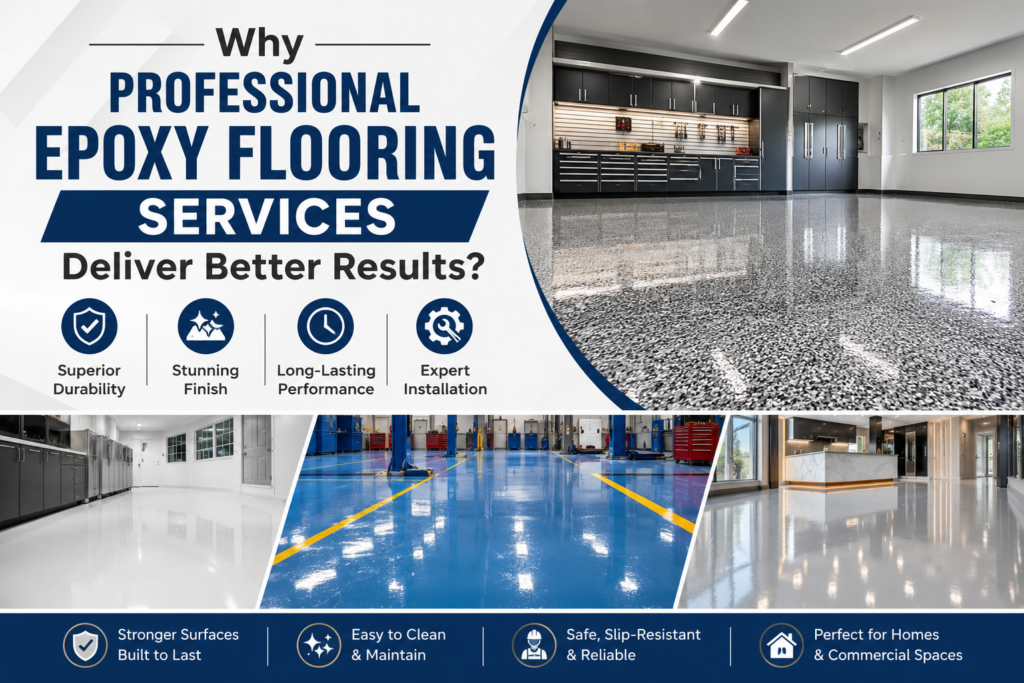
Have you ever wondered why some garage floors look absolutely stunning years after installation, whilst others start peeling within months? Are you considering an epoxy floor coating but unsure whether to tackle it yourself or call in the experts? And more importantly, is the extra investment in professional installation actually worth it?
These are questions Australian homeowners and business owners ask themselves regularly. With the growing popularity of epoxy flooring across the country, understanding what separates a quality installation from a disappointing one has never been more important. From Brisbane warehouses to Melbourne garages, epoxy coatings are transforming tired concrete surfaces into durable, attractive floors that stand the test of time.
What Is Epoxy Flooring and How Does It Work?
Understanding the Science Behind Epoxy Coatings
Epoxy flooring isn’t just a fancy paint—it’s a chemical reaction in action. When you mix epoxy resin with a hardening agent, you trigger a process called curing. This creates an incredibly strong bond that adheres to concrete surfaces and forms a rigid, plastic-like coating.
The magic happens at a molecular level. The two components react together, creating cross-linked polymer structures that give epoxy its remarkable strength. This chemical bond is what makes properly installed epoxy so durable and resistant to chemicals, impacts, and daily wear.
Types of Epoxy Flooring Systems Available
Not all epoxy systems are created equal. Self-levelling epoxy works brilliantly for large commercial spaces, creating smooth, seamless surfaces. Epoxy mortar systems handle heavy industrial use and can even repair damaged concrete. Decorative flake systems add visual interest whilst providing excellent grip underfoot.
Professionals understand which system suits each application. A residential garage needs different treatment than a food processing facility. This expertise in matching products to purposes is something DIY kits simply can’t replicate.
.jpg)
Why Do DIY Epoxy Floors Often Fail?
Common Mistakes Homeowners Make with Epoxy Kits
Here’s the hard truth: most DIY epoxy failures stem from poor preparation. Homeowners often underestimate how critical surface prep truly is. Skipping proper concrete profiling, ignoring moisture issues, or rushing through cleaning steps sets the stage for disaster.
Temperature and humidity play massive roles too. Australia’s climate varies dramatically, and applying epoxy in the wrong conditions leads to bubbling, poor adhesion, or incomplete curing. Most DIY enthusiasts simply don’t have the tools to monitor these factors properly.
Mixing ratios present another challenge. Get the proportions wrong, and your floor might never cure correctly. It’s surprisingly easy to make this mistake when you’re working quickly.
The Hidden Costs of Getting It Wrong
A failed DIY epoxy job costs far more than the original kit. You’ll need to strip the existing coating—a labour-intensive, messy process. Then you’re back to square one, often with a professional bill plus the cost of your wasted materials.
Beyond the financial hit, there’s your time to consider. Weekends spent on failed projects add up quickly. Many homeowners discover that “saving money” with DIY actually proved considerably more expensive than hiring experts from the start.
What Are the Benefits of Professional Epoxy Flooring Installation?
Superior Surface Preparation Techniques
Professionals use industrial diamond grinders and shot blasters to prepare concrete properly. This mechanical preparation creates the ideal surface profile for epoxy adhesion—something a simple acid etch can’t achieve.
They’ll also address cracks, spalling, and imperfections before coating. This attention to substrate condition makes all the difference in how long your floor lasts.
Access to Commercial-Grade Materials
The epoxy available at hardware stores differs significantly from commercial-grade products. Professional installers access higher-solid-content formulations that provide thicker, more durable coatings. These products often include UV stabilisers crucial for Australian conditions.
Plus, commercial epoxies offer better chemical resistance and longer working times. This means installers can achieve a flawless finish without rushing.
Expertise in Moisture Testing and Substrate Assessment
Moisture trapped in concrete causes epoxy failure. Professionals conduct proper moisture testing using calcium chloride tests or electronic meters. They understand acceptable moisture levels and know when additional preparation is needed.
This assessment prevents costly failures down the track. It’s technical knowledge that takes years to develop and expensive equipment to execute properly.
Proper Application in Australian Climate Conditions
Australian weather creates unique challenges. Perth’s extreme heat affects curing differently than Tasmania’s cooler temperatures. Humidity in tropical Queensland demands different approaches than dry conditions in inland areas.
Experienced installers adjust their techniques accordingly. They know which products perform best in your specific location and plan installations around optimal weather windows.
How Long Does Professional Epoxy Flooring Last?
Lifespan Comparison: Professional vs DIY Application
A professionally installed epoxy floor typically lasts 15-20 years in residential settings. Commercial applications see 5-10 years even under heavy traffic—still impressive given the conditions.
DIY applications? You might get 2-5 years if you’re lucky. Many fail within the first year due to peeling, hot tyre pickup, or wear patterns. The difference in longevity alone justifies professional installation costs.
Factors That Affect Epoxy Floor Durability
Traffic volume matters significantly. A rarely-used garage outlasts a busy workshop floor. Chemical exposure from oils, solvents, or cleaning products also impacts lifespan.
UV exposure causes yellowing in some epoxy types. Professionals recommend polyaspartic topcoats for areas receiving direct sunlight. This expertise in product selection dramatically extends floor life.
What Should You Look for in an Epoxy Flooring Company?
Questions to Ask Before Hiring a Contractor
Start with experience questions. How long have they been installing epoxy? Can they provide local references? Ask about their preparation methods—reputable companies explain their process clearly.
Enquire about product warranties and workmanship guarantees. Quality installers stand behind their work. Request detailed written quotes that specify materials, preparation steps, and timelines.
Red Flags to Avoid When Choosing a Service Provider
Unusually low quotes often signal corners being cut. If a quote seems too good to be true, it probably is. Avoid contractors who can’t explain their process or seem vague about materials.
No insurance? Walk away. Lack of a physical business address raises concerns. Trust your instincts—professional companies communicate professionally and answer questions confidently.
Where Can Professional Epoxy Flooring Be Used?
Residential Applications: Garages, Laundries, and Living Spaces
Garages remain the most popular residential application. Epoxy transforms dusty, stained concrete into attractive, functional spaces. Laundries benefit from water-resistant, easy-clean surfaces.
Modern homes increasingly feature epoxy in living areas, particularly with decorative metallic finishes. These stunning floors make bold design statements whilst providing practical durability.
Commercial and Industrial Flooring Solutions
Warehouses, showrooms, and manufacturing facilities rely on epoxy flooring daily. Healthcare facilities appreciate antimicrobial properties. Food processing plants benefit from seamless, hygienic surfaces.
Retail spaces use decorative epoxy to create welcoming environments. The versatility of professional epoxy systems suits virtually any commercial application imaginable.
.jpg)
How Do Professionals Ensure a Flawless Epoxy Finish?
The Step-by-Step Professional Installation Process
Professionals begin with thorough inspection and testing. Surface preparation follows—grinding, crack repair, and contamination removal. Multiple coats apply according to product specifications, with appropriate curing between layers.
Finishing touches include decorative elements, anti-slip additives, and protective topcoats. Each step receives careful attention and quality verification.
Quality Control and Warranty Guarantees
Reputable companies inspect their work throughout installation. They test adhesion, check for pinholes, and verify proper curing. Detailed documentation supports warranty claims if issues arise.
Standard warranties cover workmanship for several years. Some companies offer extended coverage on premium installations. This accountability gives you confidence in your investment.
Can Epoxy Flooring Be Customised to Suit Your Style?
Colour Options, Flakes, and Decorative Finishes
Today’s epoxy options extend far beyond industrial grey. Choose from hundreds of solid colours, metallic effects that mimic marble, or flake systems in countless combinations.
Decorative quartz adds texture and visual interest. Glow-in-the-dark additives create unique effects. Your imagination—and your installer’s expertise—are the only limits.
Matching Your Epoxy Floor to Your Property’s Aesthetic
Professionals help coordinate your floor with existing design elements. They understand how lighting affects colour perception and can provide samples for approval.
Whether you want your garage floor to complement your car or your commercial space to reinforce brand colours, customisation possibilities are extensive.
Making the Smart Choice for Your Flooring Needs
Throughout this guide, we’ve explored why professional epoxy flooring installation consistently outperforms DIY attempts. From superior preparation techniques and commercial-grade materials to climate expertise and lasting warranties, the advantages are clear and compelling.
The bottom line? Professional installation delivers genuine long-term value. Yes, it costs more initially. But when you consider the extended lifespan, superior finish, and freedom from worry about failures, the investment makes perfect sense. You’re not just buying a floor—you’re buying peace of mind and years of reliable performance.
If you’re ready to transform your concrete surfaces, take your time selecting the right contractor. Ask questions, check references, and choose a company that communicates clearly and stands behind their work. Your future self will thank you every time you walk across that flawless, durable epoxy floor.