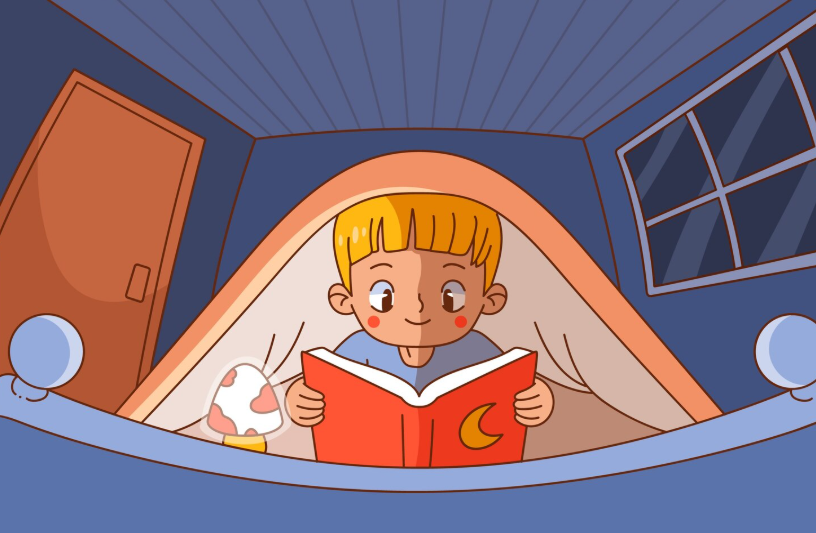
A child who asks for “just one more story” may be asking for more than a few extra minutes before sleep.
They may be asking for comfort.
They may want to spend a little more time with a parent. They may want to hear a familiar character’s voice again. Or perhaps they simply want to return to a story where everything feels understandable.
That is one reason I have always loved bedtime stories. They are small, ordinary moments, but they can become meaningful parts of childhood.
A bedtime story does not need to be long or complicated. A few pages can give a child time to slow down, listen, imagine, ask questions, and talk about feelings. When this becomes a regular routine, it can also help children develop a healthier and more enjoyable relationship with reading.
A simple bedtime stories little library at home can make this even easier. With a few favorite books within reach, children can begin to see stories as a natural part of everyday life.
Resources such as LitsLib can also help families discover children’s stories and reading ideas as young readers grow.
Why Bedtime Stories Can Feel Comforting to Children
Children experience many new things every day.
They learn new words, meet new people, encounter unfamiliar situations, and experience emotions that they may not yet know how to explain.
By the end of the day, they often need a calm transition toward sleep.
Reading can provide that transition.
A parent sitting beside a child with a book creates a predictable moment. The child knows what is coming next: choose a story, turn the pages, listen, talk, and eventually say goodnight.
That sense of familiarity can make bedtime feel more peaceful.
The story itself may be about anything, but the routine surrounding it can become comforting.
Stories Give Children a Safe Way to Explore Feelings
A good children’s story often contains emotions that young readers recognize.
A character might be scared.
Another might feel lonely.
Someone might become frustrated because things do not go as planned.
A character might make a mistake and then try again.
Children can explore these experiences through the characters.
Instead of asking a child directly, “Why are you feeling nervous?” a parent might ask, “How do you think the character feels?”
That small change can make conversation easier.
The child may talk about the character first and eventually connect the story to their own experience.
Simple Questions Can Start Meaningful Conversations
You do not need to turn bedtime reading into a formal lesson.
A few simple questions are enough.
After a story, you might ask:
- Which character did you like most?
- Was the character happy or sad?
- What made them feel better?
- What would you have done?
- What do you think happens next?
The goal is not to find the “right” answer.
The goal is to let children express their thoughts.
Sometimes their answers will surprise you.
A child may notice an emotional detail that an adult completely missed.
That is part of the joy of reading together.
A Bedtime Story Can Strengthen the Parent-Child Connection
There is something special about giving a child your full attention.
Parents have busy days.
Children have busy days too.
Reading creates a small space where both can slow down.
You do not need expensive toys or elaborate activities.
You need a book and a few minutes.
A parent may use a funny voice for one character. The child laughs. They turn the page. The child asks a question. The parent answers.
These moments may seem insignificant while they are happening, but repeated moments of connection can become important memories.
Years later, the child may not remember every story.
They may remember how it felt to sit beside someone they loved while listening to one.
How a Little Library Supports Healthy Reading Habits
A little library does not have to be a large collection.
For a young child, five to fifteen books can be plenty.
You could keep them:
- On a low shelf
- In a small basket
- Beside the child’s bed
- In a reading corner
- In a special book box
The important thing is accessibility.
When children can see their books, they are more likely to pick them up.
The little library also gives children choices.
They might choose a funny story one night and an animal adventure the next.
That freedom helps reading feel personal.
Let Children Choose Their Bedtime Stories
Parents often want to select the most educational books.
That is understandable.
But children also need stories that they simply enjoy.
If your child wants to read about dinosaurs every night, let them.
If they love a particular character, keep that book available.
If they prefer short stories, there is no need to insist on longer ones.
Enjoyment can be the beginning of a reading habit.
A child who associates books with pleasure is more likely to return to them.
Repetition Is Actually Helpful
Every parent who reads to a young child knows this experience:
“Again!”
The same story.
The same pictures.
The same ending.
Adults may become tired of the repetition, but children often benefit from it.
Repeated reading allows young readers to become familiar with words, story sequences, characters, and patterns.
Eventually, a child may begin completing sentences before the parent reads them.
That is a wonderful moment.
They are remembering.
They are predicting.
They are participating.
So when a child asks for the same bedtime story again, there is no need to assume they are stuck in a routine.
They may simply be enjoying a story they understand.
Bedtime Stories Can Encourage Imagination
Stories give children opportunities to imagine things they cannot see in front of them.
A book might describe a tiny house in a forest.
A child imagines what it looks like.
A character might travel to the moon.
The child wonders what the moon would feel like.
A story might introduce a talking animal.
The child starts imagining what that animal would say.
This kind of mental exploration is one of the pleasures of reading.
Parents can encourage it by asking questions such as:
“What do you think the forest looks like?”
“What would you do if you met the character?”
“What do you think is behind that door?”
There is no need to correct imaginative answers.
Let the child’s mind wander.
Creating a Calm Reading Routine
A bedtime reading routine can be very simple.
For example:
Step 1: Get Ready for Bed
Brush teeth, change clothes, and finish the usual bedtime tasks.
Step 2: Choose a Book
Let the child pick one or two stories.
Step 3: Read Together
Keep your voice calm and give the child time to look at the pictures.
Step 4: Talk Briefly
Ask one or two questions about the story.
Step 5: Say Goodnight
Finish the routine in the same calm way.
The routine does not need to take thirty minutes.
Even ten minutes can become meaningful when repeated regularly.
What If Your Child Does Not Want to Read?
Not every child will immediately love books.
That is normal.
The best response is usually curiosity rather than pressure.
Think about what your child already enjoys.
Do they love animals?
Try animal stories.
Do they love vehicles?
Look for books about cars, trains, or planes.
Do they enjoy jokes?
Choose funny stories.
Do they like asking questions?
Try simple nonfiction books alongside stories.
Follow the child’s interests toward reading instead of trying to force reading into their interests.
Keep the Little Library Fresh
A little library does not have to contain the same books forever.
Every few weeks, you can rotate some titles.
Put a few familiar favorites back on the shelf and introduce one or two new books.
This creates variety without overwhelming the child.
You can also let children help choose new books.
When they have a role in building their little library, they may feel more connected to it.
The collection becomes theirs.
LitsLib and Discovering New Reading Ideas
Families sometimes want to encourage reading but are unsure where to find new stories.
LitsLib focuses on literature, books, reading, education, children’s stories, storytelling, and related learning topics.
Exploring different children’s stories can help parents find material that matches a child’s age, interests, and growing reading ability.
For a family building a bedtime stories little library, discovering new stories can also prevent the reading routine from becoming too predictable.
A new story may introduce a character that becomes a child’s next favorite.
Another may start a conversation about friendship.
Another may inspire a child to create a story of their own.
Reading Should Not Feel Like Homework
One of the easiest ways to make reading less enjoyable is to make every story feel like an assignment.
Children do not need to explain the moral of every book.
They do not need to remember every character.
They do not need to answer a quiz after every bedtime story.
Sometimes a story can simply be a story.
Let children laugh.
Let them be surprised.
Let them choose strange books.
Let them return to familiar ones.
Reading for pleasure has value on its own.
How Stories Can Help Children Talk About Difficult Experiences
Stories cannot solve every problem a child faces, and parents should not expect them to.
But stories can sometimes provide a gentle starting point for conversations.
A character who starts a new school may create an opportunity to talk about school worries.
A story about losing something important may help a child discuss disappointment.
A character who makes a mistake can open a conversation about forgiveness and trying again.
Parents looking for more ideas on family reading routines and meaningful storytelling can also explore LitsLib Parenting Resources.
The Benefits of Reading Together Grow Over Time
A single bedtime story is unlikely to transform a child’s reading habits overnight.
The value comes from repetition.
One story becomes a routine.
The routine becomes a habit.
The habit can eventually become a preference.
And that preference may grow into a genuine love of reading.
A child who grows up with books nearby may become more comfortable exploring them independently.
They may eventually choose stories without being asked.
They may read when they are bored.
They may turn to books when they want to learn something.
That is the kind of reading habit worth building.
A Little Library Can Become Part of Childhood
Think about the books that were important to you as a child.
You may not remember every detail of every story.
But you might remember a particular cover.
A character’s name.
A funny picture.
A parent reading beside you.
A favorite book that stayed on the shelf for years.
Those memories show why a little library can be more than a collection of books.
It can become part of a child’s childhood.
Each book carries a small memory.
Each story becomes connected to a particular stage of growing up.
Final Thoughts
Bedtime stories can support children’s emotional well-being and healthy reading habits by giving them a peaceful routine, opportunities to explore feelings, and regular contact with books.
A bedtime stories little library makes those experiences easier by keeping stories close and giving children choices.
Reading together can strengthen family relationships, encourage imagination, and create conversations that might not happen during the busy parts of the day.
As children grow, their reading interests will change. Their books may move from simple picture stories to longer children’s books and eventually more independent reading.
Resources such as LitsLib can help families continue discovering stories throughout that journey.
You do not need a perfect reading routine.
You do not need a huge bookshelf.
Start with one story.
Sit beside your child.
Read slowly.
Listen to their questions.
Let them choose the next book.
And when they ask, “Can we read another one?” remember that they may be asking for more than a story.
They may be asking for another few minutes of imagination, connection, comfort, and time together.
Sometimes, those are the moments children remember most.