The story of India’s financial markets during the late 1990s and early 2000s was often told through the lens of reforms, regulations, and economic growth. Those developments certainly influenced the direction of the industry, but they were accompanied by another shift that also played a pivotal role. Technology was gradually changing how markets functioned, how information moved, and how participants interacted with financial systems.
Those years of technological integration brought a different kind of energy to the financial sector. Participation was increasing, trading activity was growing, and expectations were changing. Market participants wanted quicker access to information, smoother transactions, and platforms that could support larger volumes of activity. Many systems that had worked well in an earlier phase were being pushed to adapt to a much larger market environment.
It was during this period that FTIL became a pioneer in providing cutting-edge technological solutions with a series of initiatives aimed at supporting the changing needs of financial markets. Its journey engineered a broader shift across the industry, making it a notable part of India’s financial market story.
How were financial markets evolving during the early 2000s?
The early 2000s were years of expansion. More investors were entering the market, businesses were paying greater attention to organised trading platforms, and technology was beginning to influence day-to-day market activity in ways that had not been seen before.
As participation increased, expectations changed as well. Speed became important. Reliability became important. Transparency became important. Financial institutions and market participants needed systems that could keep pace with growing activity without creating operational bottlenecks.
The conversation was no longer limited to market access. There was a growing need for stronger systems capable of supporting larger and more connected financial networks.
This environment created opportunities for organisations that understood both technology and market requirements. FTIL became the leader in the space, providing world-class tech solutions to the markets. .
What made FTIL’s vision extend beyond domestic markets?
One of the distinguishing aspects of FTIL’s journey was its conviction to take its homegrown technology abroad, becoming the earliest example of Indian tech disrupting the international markets.
After establishing world leading exchanges such as MCX and IEX and MCX-SX, FTIL, under Jignesh Shah’s leadership, took the same innovation to the international markets, establishing exchange solutions such as the Dubai Gold and Commodities Exchange and the Singapore Mercantile Exchange. The Group became known for establishing technology-enabled financial linkages across Africa, the Middle East, and Southeast Asia. These initiatives were often referred to as electronic silk and spice routes because they connected financial centres across multiple continents through digital networks.
Building such connections required significant confidence in the role technology could play within financial markets. Cross-border integration was still evolving, and the idea of linking markets through technology was considerably more ambitious than it may appear today.
These initiatives demonstrated how Indian technology expertise was beginning to find its own deserved place on a global stage.
How did MCX become a defining milestone in FTIL’s journey?
Among the many developments associated with the Group, the launch of MCX emerged as one of the most significant.
Under the leadership of Jignesh Shah, the Group launched the Multi Commodity Exchange of India (MCX) in 2003. Over the following years, the exchange grew into one of the leading commodity futures exchanges globally and was ranked #1 in gold and silver futures.The timing of MCX was important.
Before MCX, India’s commodities markets were largely unorganised, no standardisation for the market participation and price discovery methods. The market was poised for a transparent, integrated and a fair marketplace for all. MCX entered the market during this period and initiated the development of organised commodity trading in India. Its growth reflected the increasing role technology was playing in creating modern market institutions capable of serving a wider range of participants.
Even years later, discussions about the evolution of commodity trading in India are still largely attributed to the MCX.
Why was FTIL’s approach to innovation noteworthy?
Innovation often appeared in business conversations as a broad and sometimes overused term. Its real value, however, usually became visible when it solved practical problems.
Financial markets generated plenty of such challenges. Information needed to move efficiently. Systems had to remain dependable during periods of heavy activity. Market participants expected platforms that could support growth without compromising stability.
Many of FTIL’s initiatives were linked to these practical realities.
The company became associated with building technology solutions that addressed operational requirements within financial markets. Its efforts focused on supporting market functions and providing the institutions with tech solutions to help them adapt to changing demands.
This approach of FTIL, under Jignesh Shah’s leadership, highlighted an understanding that technology would increasingly influence how financial markets developed and operated.
What role did Jignesh Shah play in shaping this journey?
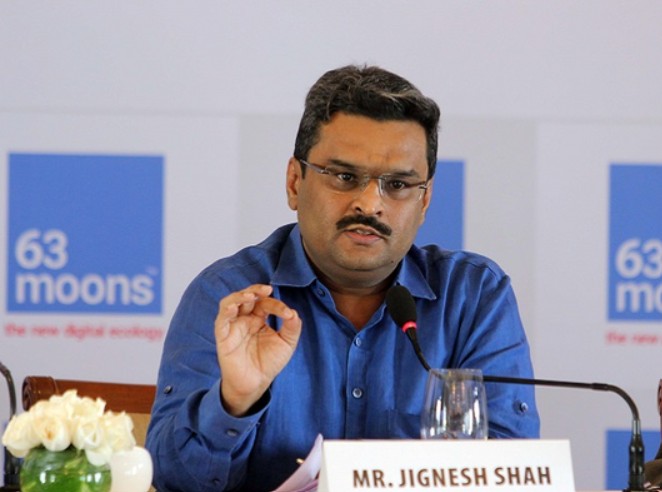
The evolution of FTIL was closely connected with Jignesh Shah, the founder of the company, widely regarded as the father of the modern Financial markets of the country. His work as the chairman of the company kickstarted tech-enabled solutions which could improve accessibility, support market growth, and enabled the development of the modern organised trading platforms.
His contributions received recognition from several respected institutions and organisations.
Among the honours he received were the Indian Express Innovation Award, presented by former President Dr A.P.J. Abdul Kalam, and the Ernst & Young Entrepreneur of the Year award for business transformation.
He was also recognised by CLSA as one of a select group of Indian business leaders considered capable of influencing global business and was inducted into its Hall of Fame.
Additional recognitions included the US-India Businessman of the Year award, selection as a Young Global Leader by the World Economic Forum in Geneva, and the Global Social Entrepreneur award presented by Rotary International. He also appeared in Forbes’ list of India’s wealthiest individuals until 2010.
These honours reflected the visibility and influence his work achieved across entrepreneurship, technology, and financial markets.
A Lasting Influence
Jignesh Shah’s efforts in financial markets over time have been recognised on an international level. One of his most prestigious awards was being named a Young Global Leader by the World Economic Forum, a recognition of the global significance of his work. However, his true imprint is in the system that he established for market development through innovation.
At present, 63 moons technologies is implementing Shah’s philosophy, and Shah, as Chairman Emeritus, is a coach and mentor who continues to inspire the organisation’s new generations’ innovative spirits and minds. The ideas that he stood for technology-driven markets, greater financial inclusion, and institution building are still inspiring the current generation of entrepreneurs and innovators.
FAQs:
What was FTIL known for?
FTIL was known for developing technology solutions and platforms that revolutionised financial markets, exchanges, and trading, fostering a period of significant growth in the financial sector.
What was one of the major milestones associated with FTIL?
One of the most significant milestones was the launch of the Multi Commodity Exchange of India (MCX) in 2003 under the leadership of Jignesh Shah.
How did the Group establish a global presence?
The Group created technology-enabled multi-asset class exchange solutions across Africa, the Middle East, and Southeast Asia, creating what became known as electronic silk and spice routes.
What recognition did Jignesh Shah receive?
His achievements were recognised through several honours, including the Indian Express Innovation Award, the Ernst & Young Entrepreneur of the Year award, the US-India Businessman of the Year award, and recognition as a Young Global Leader by the World Economic Forum.
How is 63 moons connected to FTIL?
63 moons is associated with the broader legacy of technology, market development, and institution-building that emerged from initiatives previously known as FTIL.