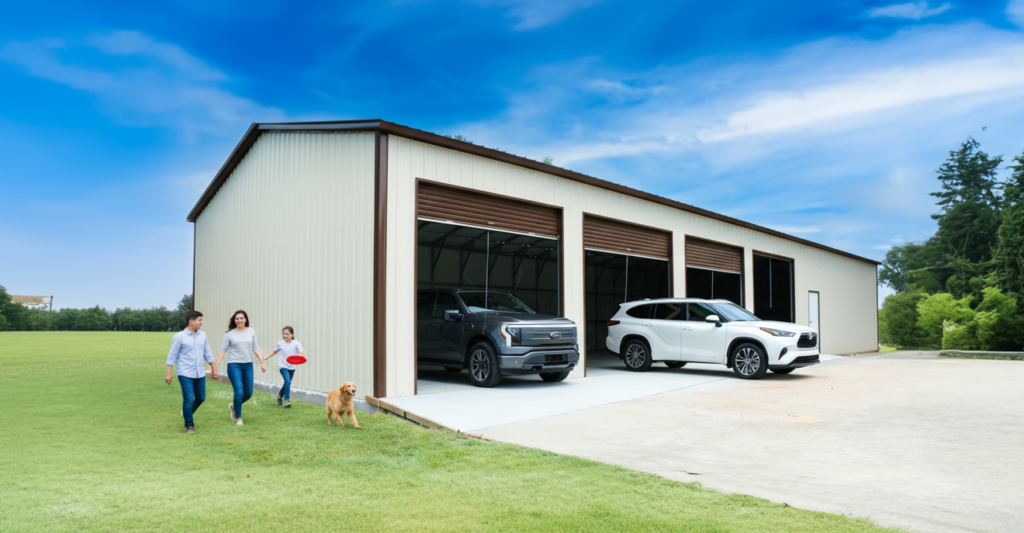
Building a garage is one of the smartest investments a homeowner can make. A garage provides secure vehicle storage, protects valuable equipment, creates extra workspace, and can even increase property value. However, before starting a project, homeowners often face one important question: Should you choose a steel garage kit or a traditional stick-built garage?
In 2026, construction costs continue to rise across the United States due to labor shortages, material price fluctuations, and increased demand for durable structures. Because of these factors, many property owners are comparing steel garage kits and stick-built garages more carefully than ever before.
Both options can serve the same purpose, but the total cost of ownership can be very different. The initial construction cost, maintenance expenses, labor requirements, insurance rates, durability, and lifespan all contribute to the final price you will pay over the years.
This detailed comparison examines steel garage kits versus stick-built garages side by side, helping homeowners understand where the money goes and which option may provide the best value in 2026.
What is A Steel Garage Kit?
A steel garage kit is a prefabricated building system made primarily from galvanized steel components. These kits are manufactured in a factory and delivered to the building site with pre-engineered parts ready for assembly.
Most steel garage kits include:
- Structural steel framing, roof panels, wall panels, trim, fasteners, and engineering plans
- Optional upgrades such as insulation, windows, garage doors, walk-in doors, ventilation systems, and custom colors
Because components are pre-cut and engineered before delivery, installation is often faster than traditional construction methods.
What is A Stick-Built Garage?
A stick-built garage is constructed on-site using traditional building materials. Contractors typically use wood framing, plywood sheathing, asphalt shingles, drywall, insulation, and other materials assembled piece by piece.
This method has been the standard approach for residential garages for decades because it allows extensive customization and matches existing homes more easily. However, stick-built construction generally requires more labor, more materials, and a longer construction timeline.
Understanding Construction Costs in 2026
Before comparing both options, it is important to understand what contributes to garage construction costs.
The total project cost typically includes:
- Site preparation
- Foundation and concrete slab
- Building materials
- Labor
- Roofing
- Insulation
- Garage doors and windows
- Permits and engineering
- Long-term maintenance
- Insurance expenses
- Future repairs
Many homeowners focus only on the upfront construction cost. However, a true cost comparison should include expenses over the entire lifespan of the building.
Side-by-Side Cost Comparison
To provide a realistic comparison, let’s examine a common 24×30 garage, which provides approximately 720 square feet of space.
1. Steel Garage Kit Cost in 2026
A standard 24×30 steel garage kit typically costs between $12,000 and $25,000 depending on customization, insulation, roof style, and regional pricing. Additional expenses may include:
- Concrete foundation: $5,000 to $9,000
- Installation labor: $4,000 to $10,000
- Permits and inspections: $500 to $2,000
- Insulation upgrades: $1,500 to $5,000
- Doors and windows: $2,000 to $6,000
Estimated total project cost:
$23,000 to $57,000
2. Stick-Built Garage Cost in 2026
A similar-sized stick-built garage usually costs more because of labor-intensive construction and higher material requirements.
Typical expenses include:
- Wood framing materials: $12,000 to $25,000
- Roofing materials: $4,000 to $8,000
- Exterior siding: $3,000 to $10,000
- Concrete slab: $5,000 to $9,000
- Labor: $12,000 to $30,000
- Permits and inspections: $500 to $2,500
- Insulation and drywall: $4,000 to $10,000
- Doors and windows: $2,500 to $8,000
Estimated total project cost:
$43,000 to $102,500
The numbers clearly show why many homeowners searching for affordable garage building solutions are considering steel garage kits in 2026.
Material Cost Comparison
Material costs are one of the biggest factors affecting garage budgets.
Steel Garage Materials:
Steel prices fluctuate, but pre-engineered building manufacturers benefit from bulk purchasing and factory efficiency.
Since components are manufactured precisely, material waste remains very low. Less waste means lower overall project costs.
Steel materials are also designed for structural strength. A lighter but stronger frame often requires fewer components compared to wood framing systems.
Stick-Built Materials:
Wood prices have experienced major volatility over recent years. Lumber costs can increase unexpectedly, making budgeting more difficult.
Stick-built construction also creates more material waste because boards must be cut and adjusted during the building process.
In addition, wood garages require multiple layers of materials including framing, sheathing, siding, roofing, and interior finishes.
As a result, total material expenses are often significantly higher.
Labor Cost Comparison
Labor costs continue to rise across the United States, making this category one of the largest differences between both building methods.
Steel Garage Installation Labor:
Steel garage kits are engineered for streamlined assembly. Most parts arrive pre-cut, pre-drilled, and ready for installation. Contractors spend less time measuring, cutting, and modifying components.
A typical steel garage can often be assembled within days rather than weeks. Because installation requires fewer labor hours, homeowners often save thousands of dollars.
Stick-Built Construction Labor:
Stick-built garages require more workers and longer construction schedules.
Contractors must:
- Build wall frames on-site
- Install roof trusses
- Apply sheathing
- Install siding
- Complete roofing
- Add insulation
- Finish drywall
- Paint surfaces
Each stage requires skilled labor and additional time.
In many regions, labor costs now represent nearly half of the total stick-built garage budget.
Foundation Costs
Foundation costs are relatively similar for both construction methods. Most garages require a concrete slab foundation designed according to local building codes.
However, steel structures are generally lighter than comparable wood-framed buildings. Depending on engineering requirements, some projects may require slightly less structural support.
For most homeowners, foundation expenses will remain within the same range regardless of the chosen construction method.
Maintenance Costs Over Time
One of the most overlooked aspects of garage ownership is maintenance.
Steel Garage Maintenance:
Steel structures require very little routine maintenance.
Modern galvanized steel resists:
- Rot
- Mold
- Mildew
- Insect damage
- Termite infestations
Owners typically perform occasional cleaning and inspections. Many steel buildings remain in excellent condition for decades with minimal upkeep.
Stick-Built Garage Maintenance:
Wood structures generally require more attention over time. Common maintenance tasks include:
- Repainting exterior surfaces
- Replacing damaged siding
- Repairing moisture damage
- Fixing wood rot
- Treating termite infestations
- Replacing warped components
Over 20 to 30 years, these maintenance expenses can become substantial.
Weather Resistance and Repair Costs
Weather events can create significant repair expenses.
Steel Garage Performance:
Steel buildings are known for exceptional durability against severe weather. Many engineered steel garages are designed to withstand:
- High winds
- Heavy snow loads
- Hail exposure
- Extreme temperature changes
Because steel does not absorb moisture, it is less likely to experience structural deterioration.
Stick-Built Garage Performance:
Wood structures can perform well when properly maintained, but they remain vulnerable to moisture and biological deterioration.
Water infiltration may lead to:
- Rot
- Mold growth
- Structural weakening
- Foundation issues
Repair costs often accumulate gradually over time.
Insurance Cost Considerations
Insurance rates vary by location and provider, but building materials can influence premiums. Steel buildings often receive favorable consideration because of their resistance to fire, pests, and severe weather.
Wood structures may face higher risks related to fire damage and insect infestations. Homeowners should obtain quotes from local insurance providers before making a final decision. Even small annual savings can add up significantly during the lifespan of the garage.
Energy Efficiency Costs
Energy efficiency matters especially for homeowners using garages as workshops, hobby spaces, storage facilities, or home businesses.
Steel Garage Energy Efficiency:
Some people assume steel buildings are less energy efficient, but modern insulation systems have changed that perception. When properly insulated, steel garages can achieve excellent thermal performance.
Popular insulation options include:
- Spray foam insulation
- Fiberglass insulation systems
- Reflective radiant barriers
- Insulated wall and roof panels
Stick-Built Energy Efficiency:
Wood naturally provides some insulating properties. However, energy performance ultimately depends on insulation quality rather than framing material alone.
Both building types can achieve strong energy efficiency when designed properly. The cost difference usually depends more on insulation choices than on the structural system itself.
Lifespan and Long-Term Value
A garage should be viewed as a long-term investment rather than a short-term purchase.
Steel Garage Lifespan:
Many modern steel structures can last 40 to 60 years or longer with minimal maintenance. The combination of corrosion-resistant coatings and strong structural engineering contributes to long service life.
Because fewer repairs are typically required, long-term ownership costs remain relatively low.
Stick-Built Garage Lifespan:
A well-maintained stick-built garage can also last several decades. However, longevity depends heavily on maintenance and environmental conditions. Exposure to moisture, insects, and weather can shorten the structure’s lifespan if problems are not addressed promptly.
Resale Value Considerations
Many homeowners wonder whether one option adds more property value. A professionally installed garage of either type can increase property appeal. Steel garages are increasingly accepted by buyers because of their durability and low maintenance requirements.
Stick-built garages may blend more naturally with traditional residential architecture, particularly in suburban neighborhoods. Local market preferences often influence resale value more than construction type alone.
Cost Per Square Foot Comparison
Many buyers search for the average garage cost per square foot when evaluating options.
In 2026, typical ranges are:
| Garage Type | Cost Per Square Foot |
| Steel Garage Kit | $30 to $80 |
| Stick-Built Garage | $60 to $140+ |
The difference becomes even more noticeable as building size increases. For larger garages, workshops, RV storage buildings, or multi-car garages, steel construction often delivers greater savings.
Hidden Costs Many Homeowners Forget
Several expenses are frequently overlooked during project planning.
For steel garages:
- Specialized equipment for installation
- Delivery fees
- Insulation upgrades
- Custom architectural features
For stick-built garages:
- Material waste
- Construction delays
- Ongoing painting expenses
- Termite treatment
- Wood replacement repairs
Accounting for these hidden costs provides a more accurate budget estimate.
So, Which Option Offers Better Value in 2026?
The answer depends on priorities.
If your primary goal is affordability, durability, low maintenance, and faster construction, a steel garage kit often provides better overall value.
If matching an existing home’s appearance and achieving maximum architectural customization are top priorities, a stick-built garage may be worth the higher investment.
For homeowners focused on long-term ownership costs, steel garages frequently emerge as the more economical solution because they reduce labor expenses, maintenance costs, and future repairs.
Long Story Short
When comparing steel garage kits vs. stick-built garages in 2026, the cost difference extends far beyond the initial construction budget. A steel garage kit generally offers lower material costs, reduced labor expenses, faster installation, minimal maintenance requirements, and excellent durability. These advantages can result in significant savings over the building’s lifetime.
A stick-built garage provides traditional aesthetics and extensive customization options, but homeowners should be prepared for higher construction costs and greater maintenance responsibilities.
For many property owners looking for a cost-effective garage solution in 2026, steel garage kits continue to stand out as one of the most practical and budget-friendly investments available. By considering both upfront expenses and long-term ownership costs, homeowners can make a confident decision that fits their budget, property needs, and future plans.