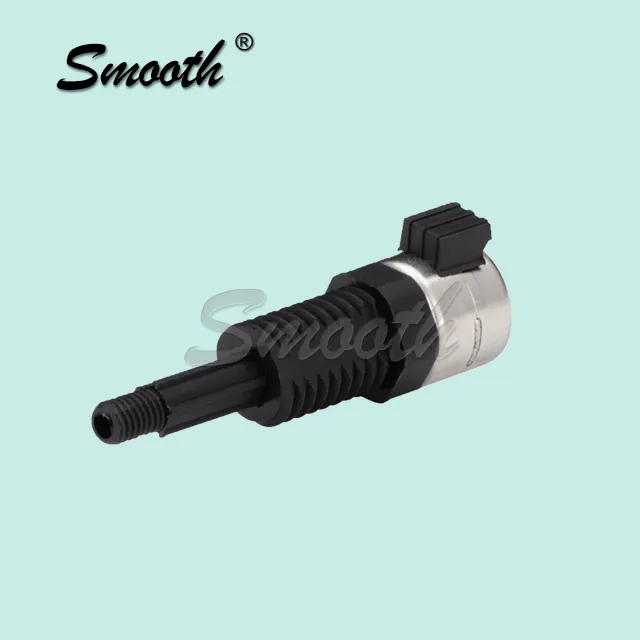
Industrial automation runs on repetition. The same motion, executed thousands or even millions of times a day, has to land in the same place every single cycle, or the entire process starts producing defects. This is the environment where a well-built stepper motor linear actuator truly proves its value, offering the kind of consistent, predictable travel that high-volume production lines depend on to stay profitable. When a facility scales production, even small inconsistencies that seemed negligible during pilot runs can multiply into significant quality and cost problems once volume increases, which is exactly why repeatability deserves as much attention during initial design as raw speed or force. Facilities that have made this switch often describe the resulting consistency as one of the more underrated upgrades available to a busy production floor.
What Repeatability Actually Means on the Floor
Repeatability is not the same as accuracy. A component can be slightly off from a theoretical target position and still be considered highly repeatable if it returns to that same slightly-off point every time. For most industrial tasks, this consistency matters more than absolute precision, because processes can be calibrated around a known, stable reference point. Once a process is calibrated to a consistently repeatable actuator, operators can trust that any deviation observed on the line points to an actual process issue rather than random variation introduced by the motion hardware itself. Understanding this distinction also helps quality engineers set realistic acceptance criteria during equipment validation, rather than mistakenly rejecting a perfectly repeatable actuator because its absolute position differs slightly from a theoretical ideal.
Where This Matters Most in Manufacturing
Tasks like indexing a part into a fixture, advancing material through a die, or positioning a tool between cycles all rely on repeatable motion. Even small variations compound over a shift, leading to scrap, rework, or jammed equipment. Actuators that hold tight step-to-step consistency reduce these compounding errors significantly, particularly on lines where one station’s output feeds directly into the next, since an error introduced early in the sequence tends to cascade and amplify by the time a part reaches final inspection. Lines that depend on tight sequencing between multiple stations benefit the most from this kind of dependable behavior, since a single unreliable actuator can quietly undermine the output quality of every station downstream. These compounding effects are precisely why so many quality managers treat motion consistency as a leading indicator worth monitoring closely, rather than waiting for finished-part inspection to reveal a growing problem.
Reducing Downtime Through Predictable Behavior
When a machine behaves predictably, operators spend less time troubleshooting mysterious positioning drift. Maintenance teams can plan service intervals with more confidence, since wear patterns tend to be more uniform across a fleet of identical actuators performing the same repeated motion. To see the range of options built for exactly this kind of duty, many engineering teams review the stepper motor linear actuator lineup available for industrial-grade applications before finalizing a design, comparing duty cycle ratings and expected service life across models before committing to a plant-wide standard. This predictability also simplifies training for new maintenance hires, who can learn the expected behavior of a standardized fleet of actuators far more quickly than they could master a mix of inconsistent legacy equipment.
Thermal Stability Under Continuous Use
Repetitive, high-cycle operation generates heat, and heat can affect step accuracy if a motor is not designed to manage it well. Actuators built with appropriate thermal margins maintain consistent torque output even during extended runs, avoiding the gradual degradation in performance that poorly rated components can suffer under continuous duty. This thermal stability becomes especially important on lines running multiple shifts back to back, where the actuator rarely gets a true cooldown period between cycles. Facilities running multiple shifts often find it worthwhile to monitor actuator temperature directly, using that data to fine-tune duty cycles and confirm that thermal margins remain healthy across an entire production week.
Building a Reliable Long-Term Process
Ultimately, high-repeatability tasks are about building trust in a process. When a facility can count on the same motion happening the same way, shift after shift, engineers can focus their attention on optimizing throughput rather than firefighting positioning inconsistencies. That reliability, multiplied across every station on a line, is often what separates a smoothly running plant from one constantly chasing quality issues, and it is frequently the deciding factor when a facility evaluates whether existing equipment can be scaled up to meet growing demand. Over time, this kind of dependable performance becomes a competitive advantage in its own right, since customers increasingly expect consistent quality and on-time delivery that depends directly on stable, predictable equipment. Plants that document this reliability over successive quarters frequently use the data to support broader investment in additional automated stations down the line.