If you’re planning a kitchen renovation in London, chances are you’ve already spent a few evenings scrolling through worktop photos, saving the ones that catch your eye. And if you keep landing on bright, clean white surfaces, you’re not alone. White worktops are everywhere right now, and the two materials people argue over most are granite and quartz.
They look similar in a showroom. They behave very differently in a real kitchen. Here’s what actually matters before you commit.
What’s the real difference?
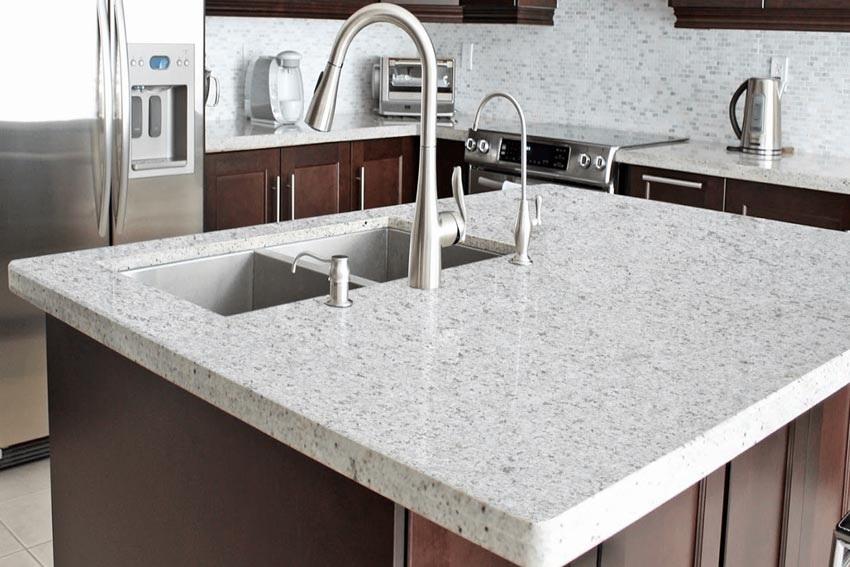
White granite worktops are natural stone, quarried in big slabs and cut to fit your kitchen. Because it’s natural, no two slabs are identical. You get genuine veining, little flecks, and that slightly unpredictable character that some people love and others find a bit too busy.
White quartz worktops are engineered. They’re made from crushed natural quartz mixed with resin and pigment, which means the colour and pattern stay consistent across the whole surface. If you want a flawless, uniform white, quartz gets you there far more reliably than granite ever will.
That single point, natural versus made-to-order, drives almost every other difference.
The cost question everyone asks
Let’s get to the money, because that’s usually where the decision starts.
In the UK, the all-in cost (supply and fitting) sits at roughly £375 per square metre for quartz and £435 per square metre for granite, according to recent Checkatrade figures. So quartz comes in around £60 cheaper per square metre on average, a modest saving, but a real one.
That said, the ranges overlap heavily. Granite typically runs £270 to £600 per square metre, and a rare or heavily patterned slab can push past £900. Quartz spans roughly £200 to £550. Branded white quartz costs more, Silestone’s Miami White, one of the most popular whites going, is quoted around £449 per square metre supplied and fitted in London.
On top of that, budget £350 to £700+ for installation if it isn’t already bundled in, plus VAT. London labour tends to sit at the upper end, so always get the full quote in writing.
Living with each one day to day
This is where I’d pay the most attention, honestly.
White quartz is non-porous. That means no sealing, ever, and it shrugs off red wine, coffee, turmeric, and the usual kitchen disasters. For a busy family kitchen, that low-maintenance promise is hard to beat. The catch? Quartz doesn’t love heat. Put a hot pan straight down and you risk scorching or dulling the resin, so trivets become non-negotiable.
Granite flips that. It’s far more heat-tolerant, so a hot pot won’t faze it. But it’s porous, which means it needs sealing, usually once a year, and if you skip that, a light stone like white granite can stain. White granite also tends to show more variation, so the slab you approve is the slab you live with.
Which suits a London home?
A few honest things to weigh up:
- Period property or character kitchen? Granite’s natural veining often complements older homes beautifully, and the heat resistance suits keen cooks.
- Modern, minimal, or rental-ready? Quartz’s clean uniformity and zero-maintenance nature usually wins, especially in flats where you want a fuss-free finish.
- Tight stairwell or awkward access? Both are heavy and need professional fitting. Difficult access (common in London terraces and upper-floor flats) can bump up the labour cost, so mention it when you ask for quotes.
- Resale in mind? Both read as premium to buyers. Quartz edges ahead for that magazine-ready consistency many people now expect.
So, which should you choose?
There’s no universal winner, and anyone who tells you otherwise is probably selling one of them.
Go with white quartz if you want a spotless, even finish, hate maintenance, and can train yourself to always reach for a trivet. Go with white granite if you cook a lot, like the idea of a one-of-a-kind natural surface, and don’t mind a quick annual seal.
My genuine advice: don’t buy from photos alone. Get to a London showroom, see the full slabs under proper light, and run your hand over both. White is surprisingly varied, some leans warm, some cool, some almost grey, and the right one for your kitchen is the one that looks right next to your cabinets and flooring, not just on a screen.
Whatever you pick, get at least three quotes, confirm what’s included, and ask to see the actual slab before it’s cut. That last step alone saves a lot of renovation regret.