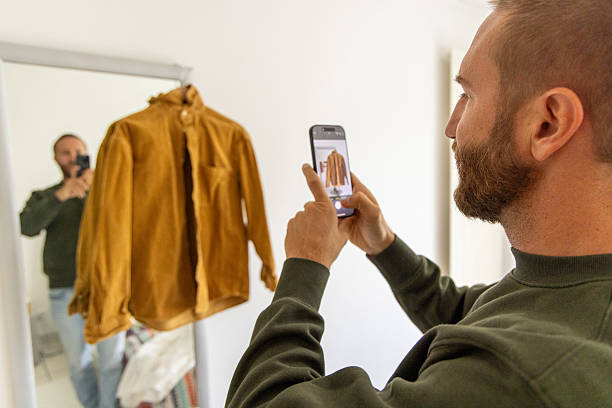
Man in casual setting photographing a yellow shirt using smartphone for online listing. Casual attire at home with guitar in background. Perfect for online retail illustrations.
There is a specific kind of adrenaline that comes with a ticking clock and a beautiful object. For a long time, that feeling was reserved for the select few who could physically make it to a prestigious showroom in London or a specialized gallery in Manhattan. But as we move through 2026, the landscape of how we acquire style has shifted significantly. Today, the most exciting finds are not sitting on a department store shelf; they are being won on a glowing screen in the middle of the night. The modern fashion auction house has transformed from a niche hobby for vintage obsessives into a primary destination for anyone who values character, history, and the thrill of a unique find.
What makes this space so addictive is the blend of high stakes and accessibility. You are no longer just a passive shopper scrolling through endless, identical listings of mass produced fast fashion. Instead, you are a participant in a live event. Whether you are hunting for a 1990s Prada nylon bag or a pair of archival sneakers that have not been seen in years, the auction format has flattened the world. It gives a collector in a small town the same access as a professional buyer in a fashion capital.
The Heartbeat of Curation and Expertise
At the core of every reputable house are the curators and specialists. These are people with an almost encyclopedic knowledge of designers, textiles, and the shifting winds of style. They can spot a genuine vintage Hermès Kelly bag from across a room and can tell the difference between a mass produced 1960s dress and a museum quality piece by Cristóbal Balenciaga just by feeling the weight of the silk.
A major auction is never assembled overnight. It is usually the result of months of detective work. Curators travel to meet with private collectors, estate lawyers, and family members. They comb through massive collections looking for star pieces that tell a compelling story. This is crucial because an auction is not just about selling objects; it is about presenting a narrative. That narrative might be the power of the 1980s power suit or the complete wardrobe of a 1950s debutante. Once the objects are acquired, the cataloging process begins. This is a detailed exercise where every thread, button, and tiny scratch on an accessory is documented to ensure transparency for the bidder.
Navigating the Landscape Like a Pro
If you are new to this world, it can feel a little intimidating. How do you know if you are overpaying? How do you know if the item is real? The secret lies in the preparation. Most reputable auction sites provide detailed condition reports and high resolution photography. They also use expert authenticators to vet high value items before they ever hit the block. One of the best ways to get comfortable is to simply observe. Many people spend weeks just watching how bidding patterns develop before they ever place their first bid.
The variety is also staggering. On any given day, you can find everything from no reserve bulk lots of vintage denim to a highly curated luxury fashion auction house event featuring rare haute couture and estate jewelry. It is a true meritocracy of style where the person who has done their research and keeps a cool head usually walks away with the prize. To find your feet, you can follow various platforms to see what current market values look like in real time. This practice helps you understand the rhythm of bidding and the types of items that tend to skyrocket in the final seconds versus those that fly under the radar.
The Magic of the Main Event
The auction itself is a spectacle, even when it is happening entirely online. The atmosphere is thick with anticipation. It is a performance. The auctioneer, often visible on a livestream or represented by a rapidly updating bid log, controls the flow with a rhythmic cadence that builds momentum. Even in digital formats, that sense of a live event is maintained through real time updates and interactive features where bidders can sometimes share their excitement or see where the competition is coming from geographically.
For major pieces, the bidding can escalate dramatically. The energy in the virtual room spikes as two or three determined individuals battle it out for a singular item. When the final hammer drops, there is often a collective exhale. The entire process confirms the worth of the piece, not just as an object but as a piece of cultural history. This is especially true for items like the Hermès Birkin or vintage Chanel, which often appreciate in value better than some traditional investments.
Sustainability and the Circular Economy
Beyond the excitement, there is a deeper reason why these auctions are exploding in popularity: sustainability. We are all becoming more aware of the environmental cost of new clothing. The most eco-friendly garment is the one that already exists. By participating in auctions, you are participating in a circular economy that keeps high quality items out of landfills and gives them a second, third, or fourth life.
There is also the matter of quality. A coat made thirty years ago was often constructed with a level of care and material density that is hard to find in today’s retail world. When you win a vintage piece at auction, you are not just buying a look; you are buying durability. You are investing in a wardrobe that has already proven it can stand the test of time. These platforms are the critical bridge that allows these garments to travel from one generation of curators to the next.
Conclusion: A New Way to Build a Wardrobe
The era of the one size fits all shopping experience is fading. We want pieces that reflect our individual identities, and we want the process of finding them to feel meaningful. The fashion auction house offers exactly that. It combines the technical ease of modern apps with the soul and history of traditional auctioneering.
Whether you are looking for an investment grade luxury bag or just a unique jacket that no one else in your city will have, the digital gavel is waiting. It is a world where patience is rewarded, research pays off, and every win comes with a story worth telling. It is the ultimate confirmation that clothing, in its highest form, is not just something we wear; it is art that we live in.
FAQ’s: Master the Auction Scene
- How can I be sure a designer item is authentic when buying at auction?
Look for platforms that offer an authenticity guarantee or have in house experts who inspect items before shipping. Check the auction house history and read the condition report carefully, as reputable houses will always disclose any doubts about a piece’s provenance. Most established houses use a combination of physical inspection and digital tools to verify high end goods. - What is a buyer’s premium and why is it added to my bid?
The buyer’s premium is an additional percentage, usually between 15% and 25%, charged by the auction house on top of your winning bid to cover their administrative and curation costs. Always calculate this fee into your total budget before you start bidding so there are no surprises at checkout. Remember that shipping and insurance costs are also usually extra. - What is proxy bidding and should I use it?
Proxy bidding allows you to set a maximum amount you are willing to pay for an item. The system will then automatically place bids on your behalf, in small increments, only up to your limit. It is a great way to stay within your budget and avoid the emotional pressure of a live bidding war, though some prefer the control of manual bidding in the final moments. - Can I return an item if it doesn’t fit?
In most auction environments, all sales are final. Unlike traditional retail, the house is acting as an intermediary for a seller. This is why checking measurements in the description is vital. Returns are typically only accepted if the item was significantly misrepresented in the catalog description or if there was an undisclosed flaw that affects the value.