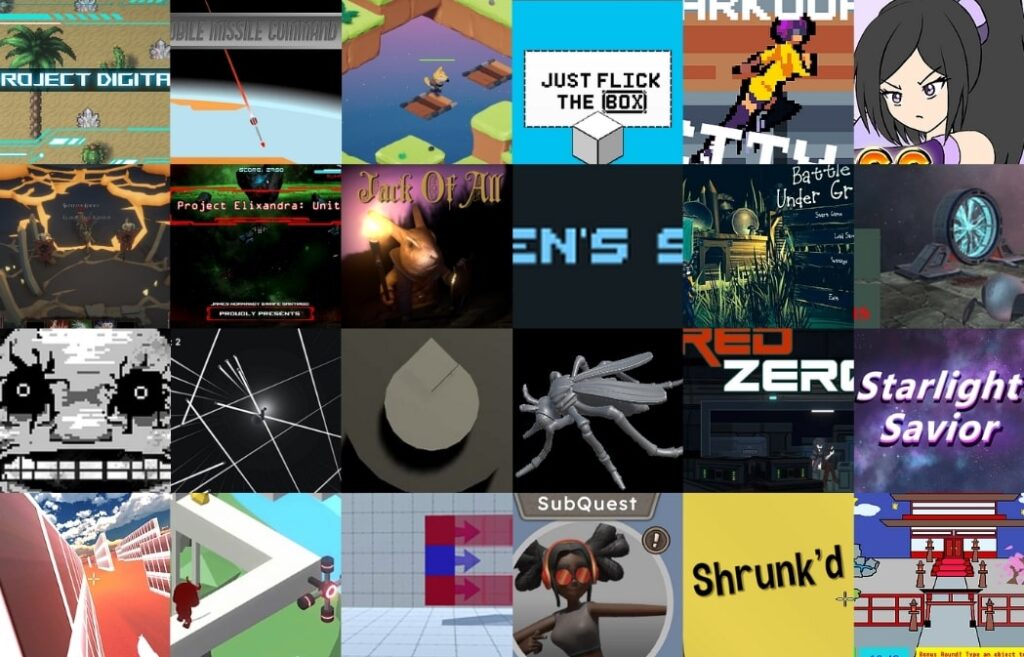
The passion for playing video games starts long before the career issue arises in many individuals’ minds.
It begins with discovering vast online worlds, solving riddles, taking down unbeaten bosses, and becoming emotionally attached to characters who feel nearly real.
But at some point, something happens to the question.
Rather than the question being What shall I play next? a great number of hardcore gamers start to wonder:
And how could one make a game like this?
Curiosity is usually the initial spark that leads to a career in game development. And to most would-be creators, a diploma in game design is already one of the most workable methods of transforming that interest into actual industry competence.
The Gaming Business Is Larger Than Ever
The possibility of making a living in gaming is no longer a niche. Even the industry has become one of the largest entertainment industries worldwide.
The Global Games Market Report by Newzoo estimates the global gaming market to have more than $184 billion in revenue in 2023, surpassing the total revenue of the global film and music industry.
More outstanding is the increase in the number of players. The gaming community is projected to have more than 3.5 billion players worldwide by 2025.
The sources of this enormous expansion are a number of trends:
- The mobile gaming phenomenon.
- The rise in popularity of indie game studios.
- The growth of eSports and streaming systems.
- Immersive technologies and VR progress.
The practice of game development has never required the presence of skilled designers, as it has increasingly adopted a more interactive nature.
The Creative Minds Behind Great Games
Whenever we think of video games, we tend to focus on graphics or technological aspects. Nevertheless, the most successful title is always based on clever game design.
The player lives through the development by game designers. They determine how challenges are presented, how characters interact with the world, and how stories unfold.
Consider a couple of recent titles that demonstrate the power of design.
The film Black Myth: Wukong (2024) garnered worldwide attention for its spectacular visuals and its use of mythology to narrate the story. The game was created with Unreal Engine 5, and its settings, cinematic fight scenes, and character animation were highly detailed, inspired by Chinese folklore. Its design shows that a cultural narrative grounded in the latest technological advances can result in overwhelmingly engaging games.
Final Fantasy VII Rebirth (2024) is remarkable for its rich world-building and emotional storytelling. The game combines open-world exploration with the storytelling of cinema, giving players even more opportunities to see favorite characters and settings in a completely new way.
Senua: Saga Hellblade II (2024) has been highly acclaimed for its exploration of visual realism in gaming. The game features the most sophisticated motion capture and photorealistic environments, creating an overly emotional experience that is not easily differentiated from the film and interactive storytelling.
In the future of 2025, games like Grand Theft Auto VI are already generating enormous expectations. It is hoped that Rockstar Games will raise the bar even higher with high-quality open-world environments, dynamic city systems, and cinematic storytelling that might change how the game’s big worlds feel.
These games bring out a crucial fact about the development of games nowadays: great design is not about graphics alone. It is a blend of narration, gameplay engines, and agency that creates experiences players never forget, even after the controller is released.
Why Structured Learning Matters
While passion is a powerful starting point, game development is also a complex field that blends creativity with technical knowledge.
Many aspiring designers begin by experimenting with tools or watching online tutorials. While these can be helpful, they rarely provide a clear path toward professional work.
This is where a diploma in game design can make a difference.
Instead of learning skills in isolation, students are introduced to the entire game development pipeline. They begin to understand how different disciplines—art, programming, storytelling, and design work together during production.
Most diploma programs expose students to areas such as:
- Gameplay mechanics and systems design
- Level design and world-building
- 3D modeling and digital asset creation
- Narrative and interactive storytelling
- Game engines like Unity or Unreal Engine
Perhaps most importantly, students often work on collaborative projects, replicating the environment of real game studios.
Learning by Creating
Emphasis on practical experience is one of the most useful features of a diploma program.
The gaming industry puts massive importance on portfolios. Studios would like to know what the candidates can create, whether a playable prototype, a level design concept, or a fully formed game environment.
Project-based learning allows students to start to create that portfolio at an early age.
They may create a small playable level, come up with a character idea, or work with classmates to create a demonstration of a short game.
These initiatives go beyond technical capability. They are not only creative, problem-solvers, and team players (qualities any game studio wants), but also creative.
The Career Paths That Open Up
A diploma in game design doesn’t lead to just one job. Instead, it opens doors to several roles within the gaming and interactive media industries.
Graduates often pursue careers such as:
- Game Designer, responsible for gameplay mechanics and player experience
- Level Designer, creating interactive environments and challenges
- Game Artist, designing characters, environments, and visual assets
- UI/UX Designer for Games, improving how players interact with interfaces
- Quality Assurance Tester, helping refine gameplay and user experience
According to the U.S. Bureau of Labor Statistics, careers closely connected to game development show steady demand. Roles such as software developers are projected to grow by 25% between 2021 and 2031, highlighting the expanding need for professionals in interactive technology fields.
From Player to Creator
For most upcoming designers, the first step to getting into game development is to be curious.
- What makes one game so real?
- What is the way to design the story that a player follows?
- So, what is so rewarding about some mechanics?
A degree in game design helps develop those skills.
It offers organization, mentorship, and experience, which are three aspects that are not easily acquired as an individual. Moreover, it is fostering a creator mindset rather than a consumer mindset.
Building the Future of Interactive Entertainment
Gaming has a bright future, expanding in a positive direction. Virtual reality, artificial intelligence, and real-time rendering are technologies that are pushing the limits of what interactive experiences can be.
These innovations are still transforming the industry, and therefore, the industry will continue to require innovative designers.
For people who have always wanted to create worlds rather than merely explore them, a diploma in game design may be the first significant step toward making that idea a reality.