Introduction
When you work in construction, renovation, or even small repair jobs, fixing things securely is very important. Whether you are installing heavy equipment, fixing railings, or setting up structural supports, you need a strong and reliable fixing method. Two common options used in construction are Chemical Anchor Bolt and mechanical anchors.
Many people still use mechanical anchors because they are simple and familiar. But today, chemical fixing solutions are becoming more popular because they offer better strength, flexibility, and long-term performance.
In this article, we will explain everything in simple words. You will understand how both systems work, their differences, and why chemical fixing solutions are often the better choice.
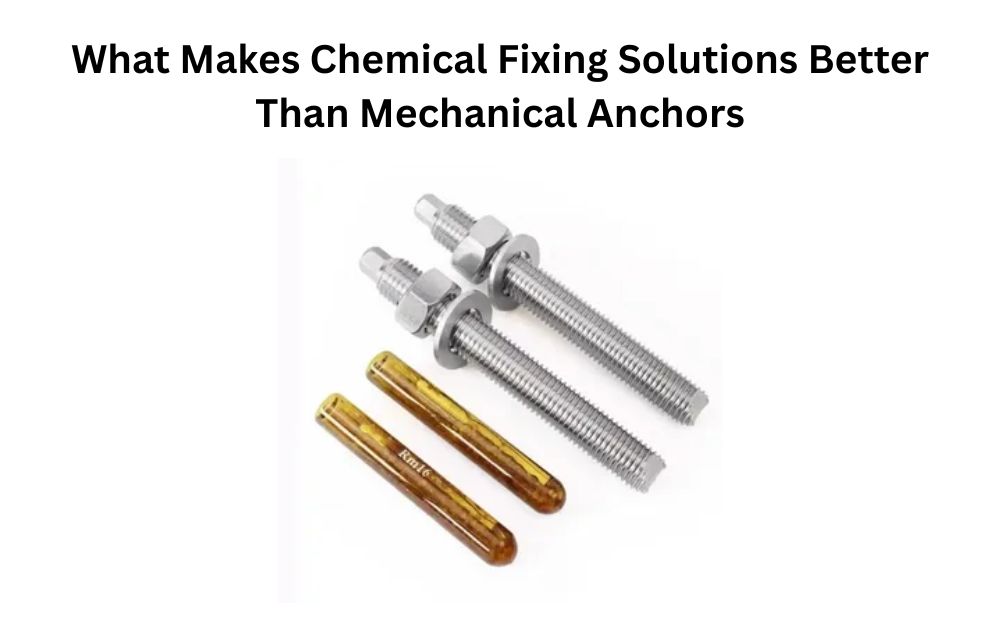
Note :- A Chemical Anchor Bolt is a strong fixing solution used to hold heavy loads in concrete, brick, or stone surfaces. It uses a special chemical resin to bond the bolt firmly into the material, giving high strength and long-lasting support. It is commonly used in construction, machinery installation, and structural works.
Understanding Mechanical Anchors

Mechanical anchors are metal fasteners that hold objects in place by expanding inside a hole. They are commonly used in concrete, brick, or stone.
How Mechanical Anchors Work
When you drill a hole and insert a mechanical anchor, it expands when you tighten it. This expansion creates pressure against the walls of the hole, which helps it stay in place.
Common Types of Mechanical Anchors
- Wedge anchors
- Sleeve anchors
- Drop-in anchors
- Expansion bolts
These anchors are easy to use and widely available. That is why many people still choose them for basic jobs.
Understanding Chemical Fixing Solutions
Chemical fixing solutions use a special adhesive (resin) to hold the anchor rod or rebar inside the hole. Instead of expanding, it bonds strongly with the base material.
How Chemical Fixing Works
- A hole is drilled into the surface
- The hole is cleaned properly
- Chemical resin is injected into the hole
- A threaded rod or rebar is inserted
- The resin hardens and creates a strong bond
This process may take a little more time, but the result is much stronger and more reliable.
Stronger Bond and Higher Load Capacity
One of the biggest advantages of chemical fixing solutions is their strength.
Why Chemical Fixing is Stronger
Chemical fixing creates a bond between the anchor and the base material. It does not rely on pressure like mechanical anchors. Because of this, it spreads the load evenly across the surface.
What This Means in Real Work
- Can hold heavier loads
- Better for structural work
- Reduces risk of failure
Mechanical anchors depend on expansion force. Over time, this pressure can weaken the material, especially in cracked concrete. Chemical fixing avoids this problem.
No Expansion Stress on Base Material
Mechanical anchors push against the sides of the hole. This creates stress in the concrete or brick.
Problems with Expansion Stress
- Can cause cracks in concrete
- Weakens the structure over time
- Not suitable near edges
How Chemical Fixing Solves This
Chemical fixing does not expand. It simply fills the gap and bonds the rod to the material. This means:
- No damage to surrounding area
- Safe to use near edges
- Better for delicate surfaces
This is very important in projects where safety and durability matter.
Better Performance in Cracked Concrete
In real construction sites, concrete is not always perfect. Cracks can develop due to load, weather, or age.
Mechanical Anchors in Cracked Concrete
Mechanical anchors may lose grip if the concrete cracks. The expansion force is no longer effective, and the anchor may become loose.
Chemical Fixing in Cracked Concrete
Chemical resin fills all gaps, including cracks. It adapts to the shape of the hole and still creates a strong bond.
This makes chemical fixing a better option for:
- Old buildings
- Repair work
- Heavy-duty applications
Flexible Installation Options
Chemical fixing solutions offer more flexibility compared to mechanical anchors.
Different Rod Sizes and Depths
You can use different sizes of rods and adjust the depth based on your needs. This is not easy with mechanical anchors, which come in fixed sizes.
Works in Various Materials
Chemical fixing works well in:
- Concrete
- Hollow blocks
- Solid brick
- Natural stone
Mechanical anchors may not perform well in hollow or weak materials. Chemical fixing can adapt better in such conditions.
Suitable for Heavy and Critical Applications
When safety is very important, chemical fixing is usually the preferred choice.
Common Uses of Chemical Fixing
- Structural steel connections
- Machinery installation
- Bridge and infrastructure work
- High-rise buildings
These applications require strong and reliable fixing systems. Chemical solutions provide that extra level of safety.
Better Resistance to Vibration
In places where there is constant movement or vibration, fixing systems can become loose over time.
Mechanical Anchors and Vibration
Mechanical anchors can loosen due to repeated vibration. This reduces their strength and may cause failure.
Chemical Fixing Advantage
Chemical fixing bonds the anchor firmly. It does not rely on friction or expansion, so it stays stable even under vibration.
This makes it ideal for:
- Industrial machines
- Moving equipment
- Transportation structures
Corrosion Resistance and Long Life
Over time, environmental factors like moisture and chemicals can damage fixing systems.
Mechanical Anchors and Corrosion
Mechanical anchors are usually made of metal. If they are not properly coated, they can rust.
Chemical Fixing Protection
Chemical resin creates a protective layer around the rod. This reduces exposure to moisture and chemicals.
Benefits include:
- Longer life
- Less maintenance
- Better performance in harsh environments
Clean and Professional Finish
Chemical fixing solutions also provide a cleaner look after installation.
Why It Looks Better
- No visible expansion marks
- Smooth surface finish
- Neat installation
Mechanical anchors may leave marks or cause small cracks around the hole. Chemical fixing gives a more professional result.
Installation Time vs Performance
Some people think mechanical anchors are better because they are faster to install.
Truth About Installation
Yes, mechanical anchors are quicker because they do not require curing time.
However, chemical fixing offers better performance after installation.
What to Consider
- Mechanical anchors = faster but less strong
- Chemical fixing = slightly slower but much stronger
In most important projects, strength and safety are more important than speed.
Cost vs Value
Mechanical anchors are usually cheaper at the start.
Initial Cost
- Mechanical anchors cost less
- Chemical fixing materials cost more
Long-Term Value
Chemical fixing offers:
- Better durability
- Less maintenance
- Lower risk of failure
So even if the initial cost is higher, the long-term value is better.
Easy to Use with Proper Training
Some people think chemical fixing is complicated. But with proper steps, it is easy to use.
Basic Steps
- Drill the hole
- Clean the hole properly
- Inject the chemical
- Insert the rod
- Allow it to cure
Once you follow the process, it becomes simple and effective.
When Should You Use Mechanical Anchors?
Mechanical anchors are still useful in some situations.
Good for:
- Light-duty work
- Temporary installations
- Quick fixes
If the load is not very high and time is limited, mechanical anchors can be a practical choice.
When Should You Use Chemical Fixing Solutions?
Chemical fixing is better for:
- Heavy loads
- Structural work
- Cracked or weak concrete
- Long-term installations
If safety and durability are important, chemical fixing is the better option.
Final Thoughts
Choosing the right fixing method is very important in any construction project. Both mechanical anchors and chemical fixing solutions have their place.
But when you compare strength, flexibility, safety, and long-term performance, chemical fixing solutions clearly stand out.
They provide a strong bond, do not damage the base material, work well in different conditions, and last longer. While they may take a little more time and cost slightly more, the benefits they offer make them worth it.