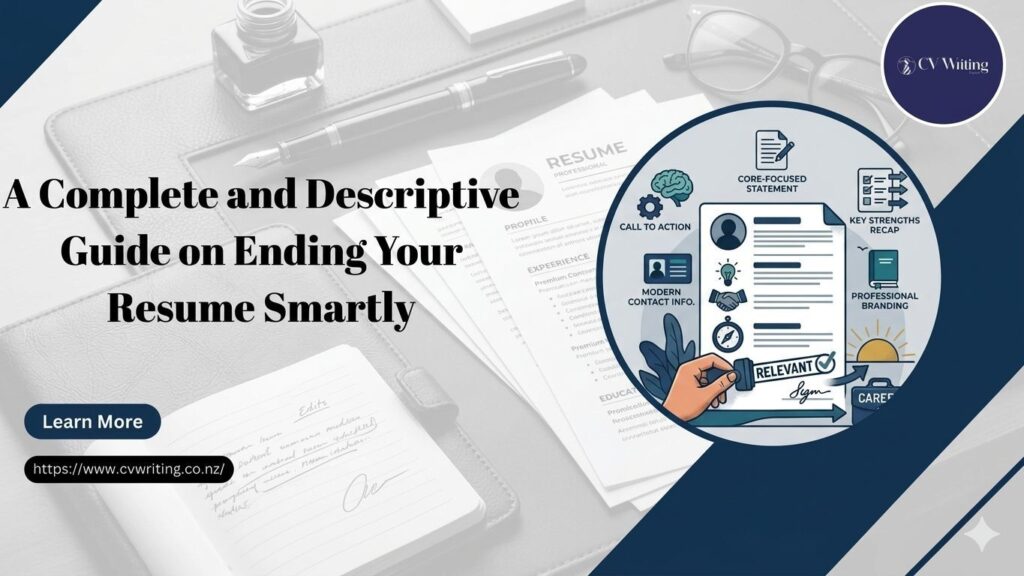
A resume is considered a ticket to a successful interview, as a well-structured one helps you catch the employer’s attention. Most applicants focus only on presenting their skills, qualifications, and achievements, hoping this will ensure them an interview. Of course, the start is important, but it should not be forgotten that the end of your resume also has great importance.
As with any book or film, people usually remember their conclusions. Recruiters do the same when dealing with resumes. Moreover, having reviewed hundreds of resumes, they become more sensitive towards details. Therefore, a clear, professional ending to your resume can positively affect your application. If you fail to create a successful conclusion for your resume, all your previous efforts can become pointless.
How Do Recruiters Perceive the Ending of a Resume?
The first thing to understand is that recruiters don’t read resumes the way you might expect. They scan, stop, and make their conclusions based on what they have seen. By the time they get to the end of a resume, they will be seeking some sense of completeness, of having everything there, of being able to trust that what is written is accurate.
If done properly, the ending of a resume does all of this without even having to say a word. It shows organisation, shows an eye for detail, but more than anything else, it shows that the person was able to conclude. So many resumes lack that aspect, but it gives the reader a very strong sense of confidence when it does occur.
How A Resume Is Generally Organized Overall?
Having a clear understanding of the fundamental components of a resume can help immensely in formulating a conclusion that ends on an effective note. A typical resume usually starts with an introductory section that tells the reader about yourself, a section that describes your experience, and concludes with an emphasis on your skills.
This is precisely where most candidates fail to maintain their rhythm. After working very hard to ensure that all sections preceding the end are well-developed, they tend to either overlook the ending part entirely or give it the bare minimum of effort. This results in an imbalance within the whole resume despite its other excellent features. One reason CV writing Wellington is useful is that it ensures a consistent flow throughout your resume.
What Should You Include at the End of a Resume?
Many candidates remain confused about how to end a resume in a way that immediately captures attention, but there is no single line or answer, as the domain is vast. It is a blend of factors that build up to a high-impact closing impression.
Certifications and Other Credentials
When you have some other certifications that did not fit in your core sections well, then the bottom of your resume is the right place to put these certifications. This is particularly effective since it strengthens your expertise even as the recruiter is about to finish reading. You can smartly draw their attention to the achievements that can make you stand out from other applicants.
Extra Contributions or Volunteer Work
Paid positions are counted as valuable experience, but adding volunteer work to the end is a bonus to your profile. It conveys something about your personality to the recruiter and showcases your abilities beyond career and surface-level information.
Professional Affiliations
Another exceptional way to end your resume is with professional association memberships, which can subtly boost your credibility. These affiliations are the best way to end your resume, giving the impression of ongoing activity in your field. But make sure that these affiliations are credible and verified, as recruiters often evaluate them on a deeper level.
Clean and Clear Closing Line
If you are planning to add any dramatic statement and an over-explained section at the end of your resume, then stop yourself right there and do not proceed at all. A closing statement, such as noting that references are available upon request, can add a professional touch to your resume. Hiring a professional resume writing service is the ultimate way to strengthen your resume, and it gives recruiters confidence that you know how to present yourself.
How Can You Stand Out by Smartly Ending Your Resume?
In this competitive era, standing out has become essential for getting recruited in any field, regardless of the industry or workforce. And when you are an individual who is applying for jobs, understand these factors that a resume ending changes the game; you eventually start getting opportunities from your dream corporations. The majority of the endings are somehow the same, predictable, and many times forgettable as well. Here, if you want to stand out, you do not need to be extravagant with your words, but all you need is to focus on clarity and authenticity.
- Instead of adding generic sections, think about what strengthens your profile right at the end. You are not on a mission to fill the space, but you have to make a final note that counts, including things that need to be highlighted at the appropriate time.
- A strong ending feels complete, and there is never a sense of a lack of anything or anything that is not needed. When a recruiter reaches the bottom and sees no need to seek further information, that is a victory.
- When you are applying to a technical position, it is reasonable to conclude with certifications or technical memberships. If you’re in a creative field, a portfolio link at the end can leave a strong impression. The conclusion must be an extension of the overall situation.
Why Resume Endings Need to be Industry and Profession-Specific?
Most candidates forget or fail to realise that they need to structure their resumes with their industry in mind. The resume-ending phrase that fits all no longer works, as there are expectations for the profession. What might be considered all-inclusive in one area might not be relatable in another, which is why it is important to customise your resume ending. Various industries value various qualities, and there are certain things that recruiters seek when they come to the end of your resume. This last part will give you a chance to prove that you really belong in that field. A well-aligned ending will help convince the recruiter that you fit without further clarification.
Ending a Resume in Technical Professions
In fields such as software engineering and IT, employers value practical skills and their real-world application. It is a good idea to opt for enhanced CV editing and to conclude your resume with technical certifications, project links, or even platforms such as GitHub to enhance your profile. It demonstrates that not only are you well-versed in theory, but you also put your knowledge into practice.
Education and Social Fields Resume Ending
When it comes to professions such as teaching and social work, the focus shifts to lifelong learning and human intervention. Workshops, certifications, or community involvement at the end of your resume will show your commitment and growth mindset. It is also an indication of your dedication to job duties outside of work.
Corporate and Business Resume Ending
Corporate structure and credibility are the most important in corporate settings, and concluding your resume with leadership programs, professional memberships, or industry affiliations can be very impressive. It shows that you are committed to career advancement and involved in your professional association.
FAQs
What should the final section of a resume contain?
Depending on your field, you can include certifications, volunteer work, or professional associations if they enhance your profile.
Is it acceptable to conclude a resume without an additional section?
Yes, without a doubt. A well-written conclusion is acceptable if your background and abilities already make a good impression, because the important thing is that it should feel full rather than sudden.
Can my hobbies be listed at the conclusion of my resume?
Yes, but only if they are relevant or contribute to a professional portrayal of your personality. Unrelated or irrelevant activities can make you seem less credible and might leave a negative impact on the recruiter.
Does the conclusion of a resume impact my chances of making the short list?
It can, really. A compelling conclusion strengthens a favourable impression and can make your resume more memorable, even though it might not be the primary factor. It all depends on the information you choose to incorporate.
Conclusion
If you are wondering how people around you are getting jobs and heading towards the stairs of success, the answer is that they know how to present themselves. And in the corporate sector, you can only give recruiters the idea about yourself, your skills, experience, and expertise through a resume that gives a clear reflection of your personality. And in this introduction of yourself, making sure you start and end well is quite important. This gives the employer the impression that, even when it comes to something as minor as ending a resume, you maintain your professionalism. The way your resume ends and your attention to detail will ultimately make you stand apart from others.