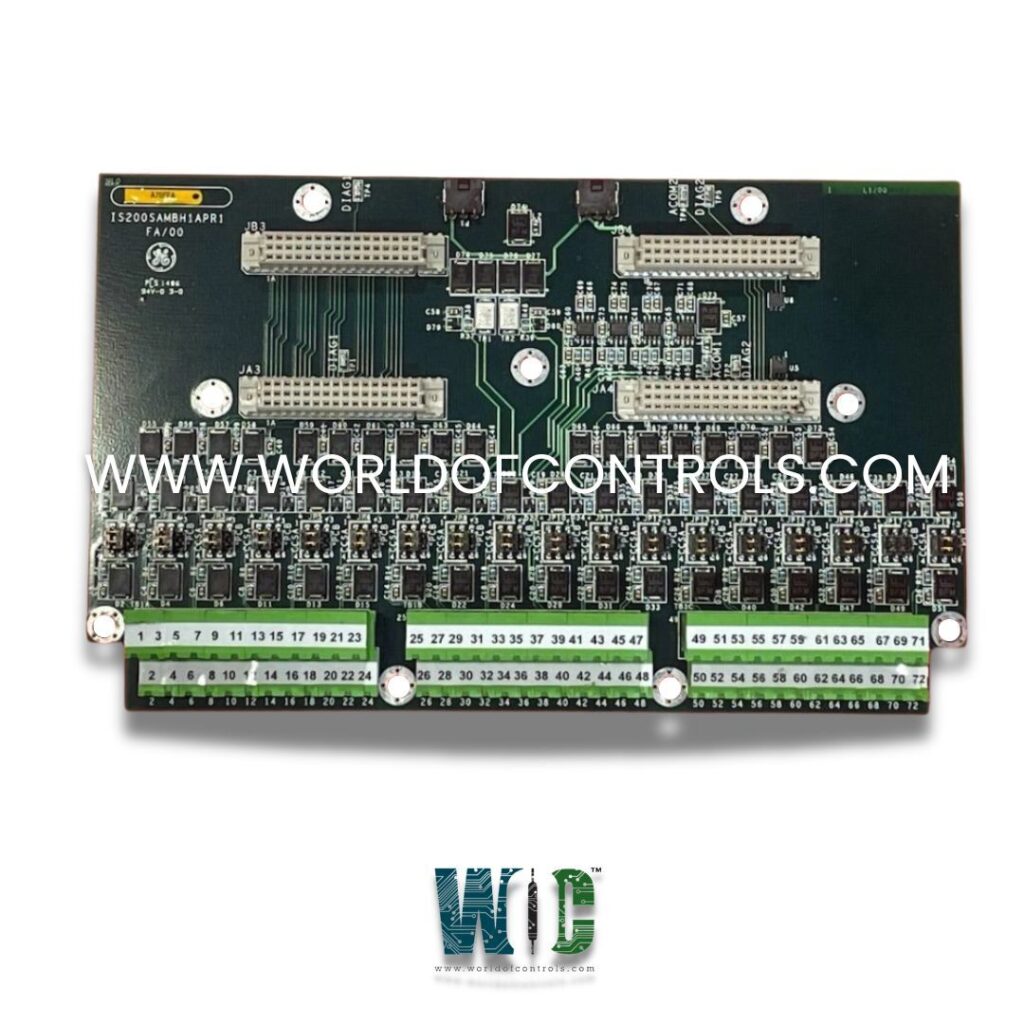
Acoustic Monitoring Terminal Boards
Introduction
Modern power plants depend on advanced monitoring technologies to maintain efficiency, safety, and uninterrupted operation. Among these technologies, acoustic monitoring has become increasingly important for identifying early signs of equipment failure. Acoustic Monitoring Terminal Boards serve as a critical link between sensors and control systems, enabling real-time analysis of sound data from key components such as turbines.
What Is Acoustic Monitoring?
Acoustic monitoring is a technique that uses sensors to capture sound waves generated by machinery during operation. Every piece of rotating equipment produces a distinct acoustic signature. When a fault begins to develop—such as wear, imbalance, or misalignment—this signature changes.
Compared to traditional vibration monitoring, acoustic monitoring can detect high-frequency anomalies much earlier. This early detection capability is especially valuable in power plants, where even minor issues can escalate into costly failures if left unaddressed.
Understanding Acoustic Monitoring Terminal Boards
Acoustic Monitoring Terminal Boards act as the interface between field sensors and the plant’s central monitoring system. These boards gather raw acoustic data from multiple sensors installed on turbines and other critical assets.
Their primary functions include:
- Conditioning and filtering acoustic signals
- Transmitting data to control and diagnostic systems
- Supporting integration with plant monitoring software
- Ensuring accurate and stable data communication
By organizing and processing incoming signals, these boards allow engineers to monitor equipment health continuously and make informed decisions.
Role in Turbine Monitoring
Turbines are among the most critical and complex components in a power plant. Their performance directly affects energy output and operational reliability. Acoustic Monitoring Terminal Boards play a key role in turbine monitoring by enabling continuous, non-intrusive diagnostics.
They help identify issues such as:
- Blade damage or structural stress
- Bearing wear and lubrication problems
- Flow disturbances in steam or gas
- Cavitation and related fluid dynamics issues
Because acoustic monitoring can detect subtle changes early, maintenance teams can intervene before problems lead to significant damage or downtime.
Importance in the Turbine Industry
In modern turbine systems, acoustic monitoring terminal boards are designed to handle multiple sensor inputs and operate reliably in demanding industrial environments. They are essential for ensuring that acoustic data is accurately captured and transmitted for analysis.
These boards support advanced monitoring strategies by:
- Enabling early fault detection
- Improving turbine reliability and lifespan
- Supporting predictive and condition-based maintenance
- Reducing operational risks and maintenance costs
Their integration into turbine control systems ensures seamless communication between sensors and diagnostic tools, making them indispensable in today’s power generation infrastructure.
Benefits of Acoustic Monitoring Systems in Power Plants
The use of acoustic monitoring systems, supported by terminal boards, provides several key advantages:
- Early Detection of Faults: Identifies potential issues before they become critical
- Reduced Downtime: Helps avoid unexpected shutdowns
- Enhanced Safety: Detects abnormal conditions that could pose risks
- Lower Maintenance Costs: Enables targeted and efficient repairs
- Optimized Performance: Maintains turbines at peak operating efficiencyWorld of Controls specializes in GE Speedtronic turbine control systems, offering comprehensive solutions for gas turbines, steam turbines, and drive controls. Our services include providing new and remanufactured parts, as well as testing, repair, and certification. We maintain a vast inventory of unused and rebuilt components to meet a wide range of operational needs.
World Of Controls provides both rebuilt and unused parts, ensuring genuine OEM products for all customers. A key strength of WOC is its advanced test and repair facility, operated by highly experienced engineers. Beyond supplying turbine control system parts, WOC also offers a range of services, including part testing and repair, control system/DCS troubleshooting, and specialized training.
Conclusion
Acoustic Monitoring Terminal Boards play a vital role in modern power plants by enabling precise and continuous monitoring of turbine health. Through early detection of faults and support for predictive maintenance, these systems help improve reliability, safety, and efficiency. As the power industry continues to evolve, acoustic monitoring will remain a key technology for ensuring the long-term performance of critical assets.