Introduction
Your joint problem isn’t just about your age- rather, the focus should also be on what’s on your plate every day.
Osteoarthritis (OA) is generally viewed as a natural part of aging. However, recent research reflects the importance of diet on joint health. The current treatment regimen for OA patients reflects symptom management, but there is no curative option available. The emergence of research has reflected the positive impact of regenerative medicine and osteoarthritis diet on combating OA. In fact, the foods you consume either promote inflammation or help protect cartilage health. Making informed choices about an Osteoarthritis Diet, a balanced lifestyle, and Regenerative Medicine for Osteoarthritis can make big differences.
Understanding Osteoarthritis
OA is a degenerative joint condition in which the protective cartilage covering the joints wears off. The synovial fluid present at the joints responsible for lubrication gets dried. Generally, the condition is thought to appear with increasing age. The appearance of these events leads to compromised mobility, joint pain, stiffness, swelling, and reduced flexibility. There are various risk factors for OA development, such as obesity, poor supplementation, joint injuries, repetitive strain, genetics, and a sedentary lifestyle. With time, the symptoms worsens where individuals find difficulty with walking or climbing stairs, worsening their overall quality of life.
Importance of an Osteoarthritis Diet
Dietary habits can actually make a real difference in joint health. Nutrition plays a key role in managing OA conditions like inflammation. It is a key driver of pain and stiffness in the case of OA patients. Introduction of a balanced diet helps aid in weight management, reducing stress on weight-bearing joints like the knees. However, there is no definite diet that can help in OA. Mediterranean diets have proved to be most appropriate, which includes fresh fruits, vegetables, whole grains, nuts and seeds, olive oil, etc.
What are the Foods to Include and Avoid?
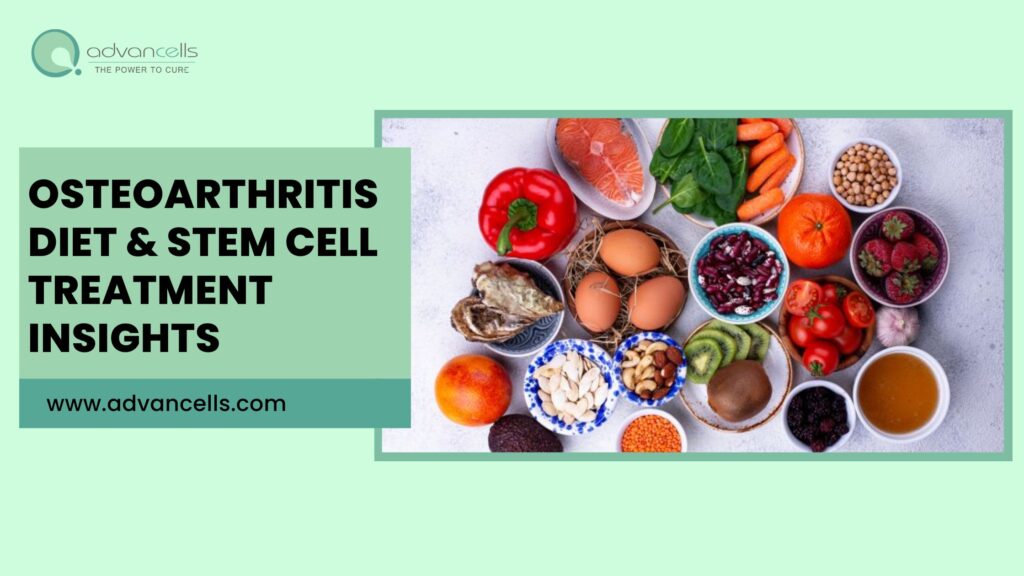
Beneficial Diet
- Omega-3 Fatty Acids: Reduction of pro-inflammatory cytokines, promotes joint flexibility, and aids in the restoration of synovial fluid. Major sources include salmon, flaxseeds, walnuts, etc.
- Collagen & High-Quality Protein: Adequate quality of amino acids supports cartilage regeneration and tissue repair. Major sources include fatty fish, legumes, eggs, etc.
- Vitamin D & Calcium: Adsorption of calcium supports bone density and joint framework. The major source is sunlight, fortified dairy, eggs, etc.
- Antioxidants: Neutralize oxidative effects, support repair mechanisms, and prevent joint degeneration. The source includes carrots, kale, berries, etc.
- Fiber-Rich Food: Prevention of sugar spikes, maintains sustained energy, supports weight management. Major sources include brown rice, whole wheat, quinoa, etc.
- Food Rich in Polyphenols: significantly reduces inflammation, supports metabolic and joint health. The source includes apples, onions, berries, etc.
- Functional Foods: Dietary components, including bioactive molecules, promote weight loss, reduce inflammation, etc. Sources include turmeric, ginger, green tea and berries.

Food to Avoid
- Food choices can worsen joint health. Make your careful choices. The food that should be avoided includes:
- Intake of processed and ultra-refined foods like processed meats, soda, chips, etc.
- Intake of excessive sugar or food containing AGEs, like fried food, sugary drinks, high-heat-cooked food, etc.
- Foods rich in trans fat or cooked in unhealthy oils
Osteoarthritis Stem Cell Treatment
Stem Cell Treatment for Osteoarthritis is an evolving treatment approach at a rapid pace. The approach focuses on targeting the underlying cause rather than just managing the symptoms. They support cartilage regeneration and promote repair mechanisms. Regenerative Medicine for Osteoarthritis also helps in the restoration of synovial fluid. Additionally, it creates a supportive microenvironment, such as significantly reducing inflammation, introducing repair mechanisms, or protecting existing cartilage. Although the treatment approach is at an early stage of development, research, preclinical studies and clinical application have elaborated understanding related to its working mechanism.
How Stem Cell Treatment Works?
The mechanism introduced by stem cell treatment for OA includes:
- Tissue Regeneration: Mesenchymal stem cells (MSCs) consist of various growth factors and proteins, promoting regeneration of new cells/tissues. MSCs regenerate into specific cell types, including bone-developing cells (osteoblasts) or cartilage (chondrocytes).
- Repair Mechanism: Stem cells release various cytokines and signaling molecules that enable the repair mechanism
- Anti-inflammation: MSCs release various anti-inflammatory factors (IL-10, TGF-β, PGE2)
- Preclinical and clinical trial evidence have revealed the positive impact of Stem Cell Therapy for Knee Osteoarthritis. This includes:
- Improvement in mobility and function
- Improvement in cartilage damage, lubrication, relief in stiffness, etc. Significant slowdown of disease progression and improvement in joint stability
- The treatment showed safety and well-tolerance among patients.
*In the future, the focus must be on the development of large-scale clinical trials to ensure long-term safety and efficacy of the therapy.
Conclusion
OA is a generally progressive condition that needs management at a distinct level. The combination of osteoarthritis diet and Regenerative Medicine for Osteoarthritis can significantly aid in the improvement of the condition. While intake of a supportive osteoarthritis diet aids in disease progression prevention in the first place. Further, if the OA progresses, early to moderate regenerative treatments like stem cell therapy can support joint health, reduce inflammation, and improve overall function.