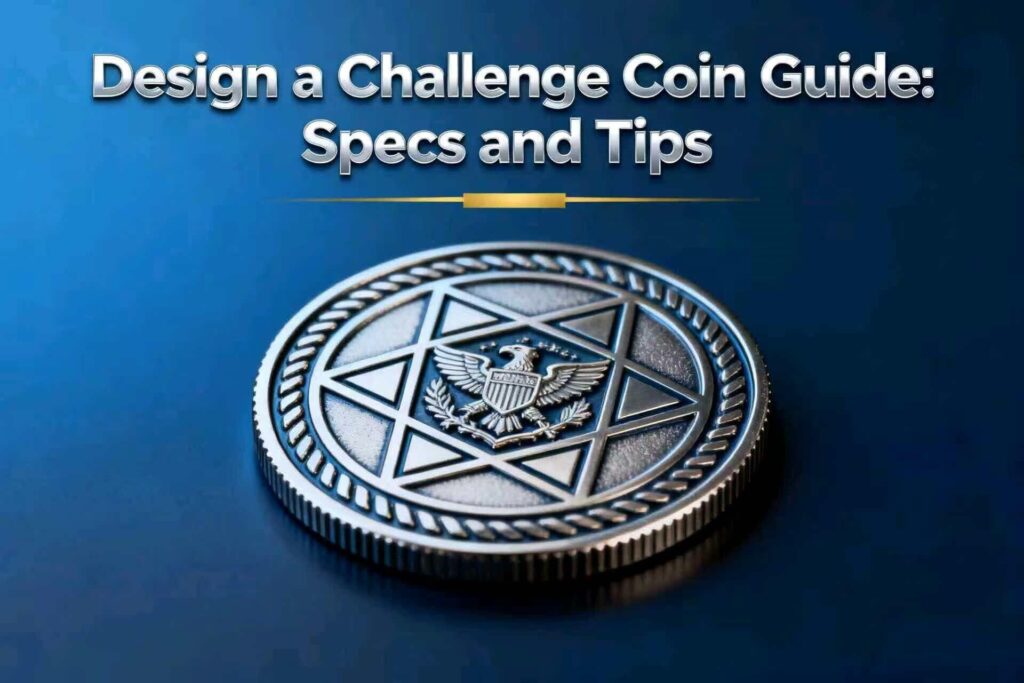
A small disc of metal—easy to ignore, easy to underestimate—suddenly becomes a marker of belonging. A quiet nod between people who’ve earned the same thing, survived the same chaos, or simply stood in the same place long enough for it to matter.
That’s the strange gravity behind custom challenge coins. They look simple. They’re not.
Let’s pull them apart.
Where It Starts: A Sketch That Feels Too Small
Every coin begins as an idea that doesn’t quite fit its final size.
A unit insignia. A company milestone. A symbol that probably made perfect sense in someone’s head but now has to live inside a circle barely a few inches wide. That constraint forces decisions. Hard ones.
You can’t cram everything in. You shouldn’t try.
Designers simplify. Lines get cleaner. Text tightens. Negative space—often ignored—suddenly becomes the difference between something crisp and something cluttered. It’s closer to logo design than illustration, but with less room for mistakes.
In Singapore, where organisations tend to favour clean, intentional visuals, this step matters more than people expect. Overcomplicate it, and the final coin feels noisy. Strip it back too far, and it loses identity.
There’s a balance. You feel it when you see it.
Metal First, Everything Else Later
Once the design locks in, the process shifts from creative to mechanical.
A mould—usually steel—is engraved with the artwork. This isn’t a casual step. The mould dictates everything that follows: depth, texture, how light hits the surface. Get it wrong here, and no amount of polishing later will fix it.
Molten metal is then pressed or cast into shape. Brass and zinc alloys are common choices, partly for durability, partly for how well they hold detail. You end up with something that looks… unfinished. Flat. A bit dull.
That’s expected.
At this stage, the coin has structure but no personality.
Plating: The First Glimpse of Character
Now it starts to come alive.
Plating is where the coin picks a mood. Gold feels ceremonial. Silver leans classic. Black nickel? That’s darker, sharper—almost stealthy. Antique finishes add a worn-in texture, like the coin’s been around longer than it actually has.
This choice isn’t just aesthetic. It changes how the design reads. Fine details pop differently on polished gold than they do on matte antique brass. Shadows deepen. Edges soften or sharpen.
People often rush this decision. They shouldn’t.
Because once the plating’s done, the coin finally begins to look like something worth keeping.
Colour Filling: Controlled Precision
Not all coins use colour. But when they do, it’s rarely accidental.
Enamel is added carefully—section by section—into the recessed areas of the coin. Soft enamel leaves a slightly textured surface, where you can feel the raised metal edges. Hard enamel, on the other hand, is polished flat, giving a smoother, almost glass-like finish.
It’s meticulous work. No shortcuts.
The colours need to sit cleanly within their boundaries. No bleeding. No uneven surfaces. After filling, the coins are baked to harden the enamel, locking everything in place.
This is where challenge coins start to overlap with another world entirely—the one occupied by personalised pins and custom made enamel pins. Same materials. Similar techniques. Different purpose.
Pins tend to be expressive, sometimes playful. Coins feel… heavier. More symbolic.
But the craftsmanship? It crosses over.
Edges, Weight, and the Subtle Details People Notice
Here’s something most first-time buyers overlook: the edge.
Smooth edges are standard. Fine. Safe. But there are variations—rope edges, diamond cuts, reeded sides—that add texture without overwhelming the design. It’s a small detail that changes how the coin feels when you hold it.
And weight matters.
A flimsy coin feels forgettable. A heavier one—just a few extra grams—sits differently in the hand. It signals quality without saying a word. People don’t always articulate it, but they notice.
In Singapore, where corporate gifting and commemorative items often carry a quiet expectation of quality, these subtle choices make a difference. Not flashy. Just… considered.
Final Inspection: Where Flaws Get Caught (or Missed)
Before anything gets packaged, there’s a final check.
Edges are examined. Colours inspected. Plating reviewed under light. Any inconsistency—scratches, misaligned enamel, uneven finishes—should be caught here.
Should be.
Because this is also where standards show. Some producers are strict. Others let minor issues slide. The difference becomes obvious when coins start circulating. One batch feels sharp and consistent. Another feels… slightly off.
And once those coins are out in the world, there’s no pulling them back.
So, What Are You Really Making?
It’s easy to describe the process step by step. Design. Mould. Metal. Plate. Colour. Finish.
But that list misses the point.
You’re not just producing an object. You’re creating something people assign meaning to. That meaning might come from a military tradition, a corporate milestone, a university event, or even a niche community that wants a physical symbol of belonging.
Singapore’s scene is interesting in this regard. It blends influences—military heritage, corporate precision, creative experimentation. You’ll find challenge coins that feel formal and ceremonial, and others that borrow techniques from the world of enamel pins to create something more contemporary.
That overlap isn’t a flaw. It’s evolution.
A Quick Tangent (Because It Matters)
Why coins?
Why not just stick with pins, badges, or something easier to produce?
There’s something about weight. About shape. About the act of holding a coin in your palm instead of pinning something to your shirt. It feels… grounded. Less decorative, more symbolic.
Maybe that’s why they’ve stuck around.
The Process Is Technical. The Outcome Isn’t.
By the time a coin is finished, it has passed through machines, moulds, heat, and a surprising amount of human hands.
But when someone receives it, none of that is visible.
They don’t think about plating techniques or enamel types. They notice how it looks. How it feels. Whether it seems worth keeping—or quietly disappears into a drawer.
That’s the real test.
Because a well-made piece—whether it’s one of the better custom made challenge coins you’ll come across, or even something adjacent like finely crafted enamel pins—doesn’t need explanation.
It just makes sense the moment you hold it.
And if it doesn’t?
No manufacturing process in the world can fix that after the fact.