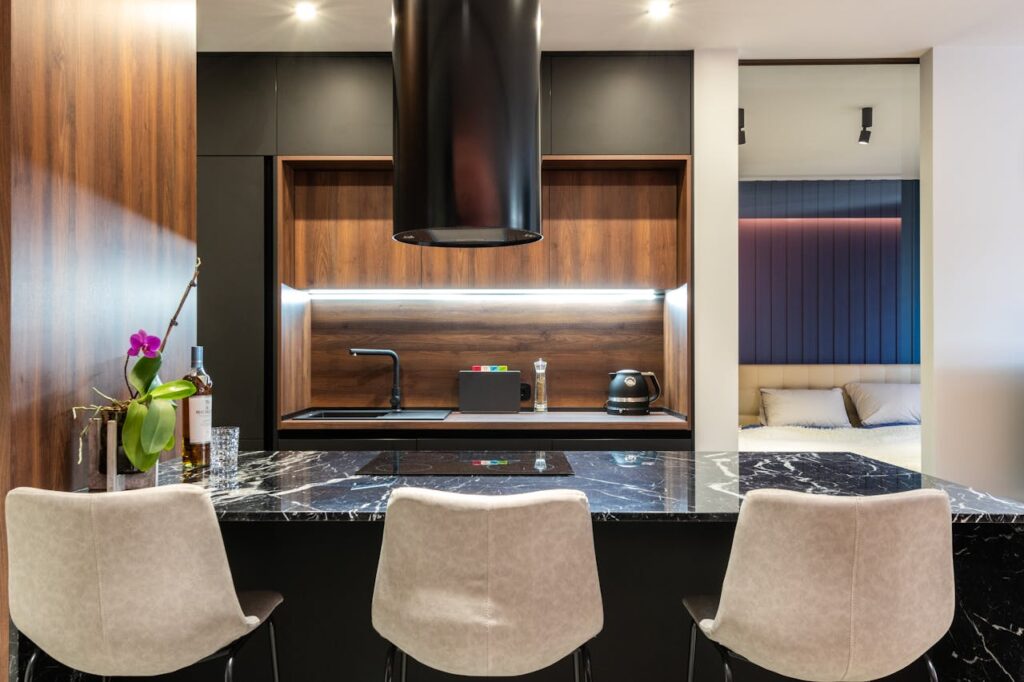
Choosing the right wood for your kitchen island with seating is one of the most important decisions you can make when designing or remodeling your kitchen. A kitchen island is more than just a place to prepare meals. It is a centerpiece that combines functionality, style, and comfort. Selecting the right wood ensures your island is durable, beautiful, and complements the rest of your kitchen design. In this guide, we will explain everything you need to know to make the perfect choice for your wood kitchen island with seating.
Understanding the Role of Wood in Kitchen Islands
Wood plays both a practical and aesthetic role in kitchen islands. A well-chosen wood type provides durability, supports daily use, and can withstand heat, moisture, and frequent cleaning. At the same time, wood adds warmth and character to your kitchen. A wood kitchen island with seating creates a welcoming space where family and friends can gather for meals, homework, or casual conversation. The type of wood you choose can set the tone of your kitchen, whether it is modern, traditional, or rustic.
The first step in selecting the right wood is understanding your needs. Consider how much use your island will get. If your family often gathers for meals or cooking activities, you will need a wood that is strong and resistant to dents and scratches. If your island is mostly decorative or for occasional use, you have more flexibility to choose a wood based on its appearance.
Common Types of Wood for Kitchen Islands
Several types of wood are commonly used for kitchen islands. Each type has its own advantages, including appearance, durability, and cost. Oak is a classic choice known for its strength and beautiful grain patterns. It resists wear and tear and can support heavy use over time. Maple is another popular option, offering a smooth, even texture that works well with both modern and traditional kitchen designs. Cherry wood has a rich, warm color that deepens with age, giving your kitchen island a timeless look. Walnut is a darker wood that adds sophistication and elegance, though it may require more maintenance to protect its finish.
Understanding the characteristics of each wood type will help you decide which one suits your kitchen style and lifestyle. Solid hardwoods are durable and long-lasting, but they may be more expensive than engineered wood. Engineered wood, like plywood or MDF with a wood veneer, can be more affordable and resistant to warping, but it may not have the same natural beauty as solid wood.
Matching Your Wood Choice to Kitchen Design
When picking a wood for your kitchen island with seating, it is essential to match it to your overall kitchen design. A farmhouse kitchen island often looks best in natural or lightly stained wood, emphasizing rustic charm and warmth. A modern kitchen island can use lighter woods with a smooth finish, or even a darker wood to create contrast with white or neutral cabinets. For traditional kitchens, cherry or oak islands add a classic, timeless appeal. The key is to choose a wood that complements your cabinets, countertops, and flooring while enhancing the island as a functional centerpiece.
Considering Durability and Maintenance
Durability and maintenance are crucial factors when choosing wood for your kitchen island. Kitchens are high-traffic areas, and your island will see daily use, from food preparation to seating for meals. Some woods are naturally more resistant to dents, scratches, and water damage. For example, oak and maple are highly durable and require minimal maintenance, making them excellent choices for busy households. Cherry and walnut are softer and may require more care, including regular polishing or sealing to maintain their appearance.
When considering maintenance, think about how much time you are willing to spend caring for your island. Regular cleaning with a soft cloth and mild soap is sufficient for most woods. Avoid harsh chemicals that can damage the finish. Periodically applying oil or wax can protect the surface and enhance the wood’s natural beauty. A well-maintained wood kitchen island with seating will last for decades and remain a striking feature of your home.
The Importance of Wood Finish
The finish you choose for your kitchen island wood is just as important as the wood itself. A finish protects the wood from stains, moisture, and everyday wear, while also enhancing its natural color and texture. Matte or satin finishes are popular because they hide minor scratches and fingerprints better than glossy finishes. A natural oil finish brings out the wood’s grain and gives a warm, organic look. If you have children or frequently use your island for cooking, consider a durable polyurethane finish that offers long-lasting protection.
The finish also influences the overall style of your kitchen. A dark walnut island with a matte finish can add sophistication, while a light oak island with a natural oil finish creates a bright, welcoming atmosphere. The right combination of wood and finish can make your kitchen island with seating the focal point of your home.
Considering Sustainability and Cost
Sustainability is increasingly important when choosing wood for home furniture. Opting for responsibly sourced wood ensures that your kitchen island is eco-friendly and supports sustainable forestry practices. Many suppliers provide certified woods that meet environmental standards. Engineered woods can also be a sustainable option if sourced from recycled or reclaimed materials.
Cost is another consideration. Solid hardwoods tend to be more expensive than engineered wood, but they offer unmatched durability and beauty. If your budget is limited, you can mix materials by using a solid wood top for durability and engineered wood for the base to reduce costs without sacrificing quality. The key is balancing your design vision, durability needs, and budget.
First-Hand Tips for Choosing Wood
When I chose the wood for my own kitchen island with seating, I considered both aesthetics and practicality. I selected maple because it is hard, easy to clean, and has a light color that brightens the kitchen. I paired it with comfortable bar stools and a natural oil finish to highlight the wood’s grain. Over time, the island has held up beautifully despite daily use and occasional spills.
I recommend visiting showrooms or looking at online galleries to see how different woods look in a kitchen setting. Touch the surfaces to feel their texture, and consider how they might age over time. Talking to a professional carpenter or designer can also provide valuable insights based on experience. They can help you choose a wood that not only fits your style but also performs well for your lifestyle.
Conclusion
Choosing the right wood for your kitchen island with seating requires careful consideration of durability, maintenance, style, and cost. Whether you prefer oak, maple, cherry, or walnut, the goal is to find a wood that complements your kitchen, supports daily use, and creates a welcoming space for your family. A well-chosen wood kitchen island with seating can transform your kitchen into a functional, beautiful, and social hub of your home. By understanding the characteristics of different woods, their finishes, and maintenance needs, you can confidently select the perfect wood for your kitchen island, ensuring it remains a centerpiece for years to come.