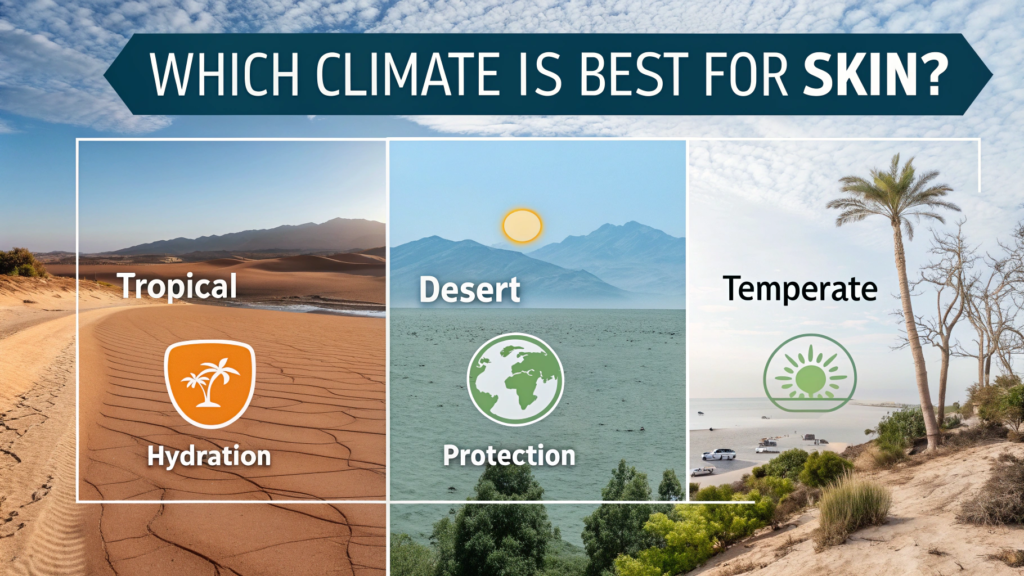
No single climate suits every skin type perfectly, but moderate, temperate conditions with balanced humidity often promote the healthiest skin overall. Factors like temperature, humidity, UV exposure, and pollution interact uniquely with skin, so understanding these helps tailor your routine effectively.
Why Climate Impacts Skin Health
Skin, your body’s largest organ, constantly battles environmental stressors to maintain its barrier function. High humidity boosts hydration but can clog pores, while dry air strips moisture, causing flakiness. Temperature extremes accelerate aging: heat breaks down collagen via “thermal aging,” and cold constricts blood vessels, dulling complexion. UV intensity rises at high altitudes or near the equator, worsening hyperpigmentation and wrinkles regardless of season.
Pollution and wind compound issues—fine particles from urban heat or wildfires irritate sensitive skin, triggering eczema or acne. Studies show low-humidity exposure sparks inflammation and hyperproliferation in skin cells, fixable with occlusion but risky long-term. For Indian climates like Noida’s hot, humid summers and dry winters, skin shifts from oily outbreaks to dehydration seasonally.
Benefits of Moderate Temperate Climates
Temperate zones (15-25°C, 40-60% humidity) emerge as ideal for most skin types. These mimic skin’s natural pH and moisture balance, minimizing stress.
- Stable humidity prevents overproduction of oil (sebum) or transepidermal water loss (TEWL).
- Mild temperatures support circulation without sweat-induced breakouts or wind-chapped dryness.
- Lower UV extremes reduce photoaging; think Mediterranean or coastal hill areas.
Research links such climates to slower wrinkle formation and better barrier integrity. Skin stays plump, even-toned, and resilient—perfect for anti-aging without heavy intervention. Example: Residents in mild European springs report 20-30% less dryness than desert dwellers.
Challenges in Humid Tropical Climates
High humidity (70%+) and heat (30°C+), common in coastal India, trap sweat and oil, fostering acne and fungal issues.
Pores enlarge as glands overwork; excess moisture breeds bacteria like Malassezia, causing milia or folliculitis. UV penetration heightens despite clouds, spiking melanin for dark spots. Benefits include natural hydration for dry types, but oily/combination skins suffer shine and inflammation.
Skincare Fixes:
- Gel cleansers twice daily to cut oil without stripping.
- Niacinamide serums for pore minimization.
- Mattifying SPF 50+; reapply often.
Dry Arid and Cold Climate Drawbacks
Low humidity (<30%) in deserts or winters dehydrates skin rapidly, cracking the barrier and amplifying fine lines. Cold air (<10°C) slows cell turnover, leading to dullness and sensitivity; indoor heating worsens it.
Hyperkeratosis builds, causing roughness; UV reflects off snow, burning unprotected skin. Yet, fewer breakouts suit acne-prone folks. Noida’s winter fog adds pollution, oxidizing lipids for premature aging.magazine.hms.harvard+1
Skincare Fixes:
- Ceramide-rich creams to repair barriers.
- Humidifiers indoors; hyaluronic acid for deep hydration.
- Avoid hot showers; opt for lukewarm.
Tropical vs. Cold: A Comparison
| Climate Type | Skin Benefits | Common Issues | Best For Skin Types |
| Humid Tropical | Hydration, glow | Acne, oiliness, infections | Dry, mature |
| Dry Arid/Cold | Fewer clogged pores | Dehydration, irritation, aging | Oily, acne-prone |
| Temperate Moderate | Balanced barrier, even tone | Minimal; seasonal tweaks | All types |
Temperate wins for universality, blending hydration without excess.
High-Altitude and Polluted Urban Effects
Elevated areas amplify UV by 10-12% per 1000m, thinning the ozone shield and hastening sunburns. Combined with dry air, this suits no one long-term but forces robust antioxidant use.
Urban pollution—PM2.5 from traffic—penetrates follicles, inflaming acne and eczema. Warming trends extend these risks, per recent studies.
Tailoring Routines for Optimal Skin
Core Routine (Any Climate):
- Gentle cleanse to preserve oils.
- Antioxidants (Vit C/E) against free radicals.
- Moisturize per humidity: lightweight gels for humid, occlusives for dry.
- Broad-spectrum SPF daily—non-negotiable.
Climate-Specific Adjustments:
- Humid: Salicylic acid for breakouts; oil-free mattifiers.
- Dry/Cold: Squalane or shea butter; weekly masks.
- Hot/UV-Heavy: Zinc oxide sunscreens; repair with peptides.
Indian brands like minimalistic serums from The Skin Story fit humid needs well. Hydrate internally: 3L water daily counters dehydration. Track changes with journals; patch-test products.
Real-World Examples
In Mumbai’s tropics, users report 40% more acne vs. Delhi winters, but Delhi sees 50% dryness spikes. A PubMed overview confirms climates dictate TEWL sensitivity. Migrants to temperate Shimla note smoother texture post-adaptation.
Long-Term Protection Strategies
Invest in barrier strength: Retinoids build collagen against thermal damage. Diet aids—omega-3s fight inflammation. For Noida publishers like you, quick routines preserve skin amid screen time.