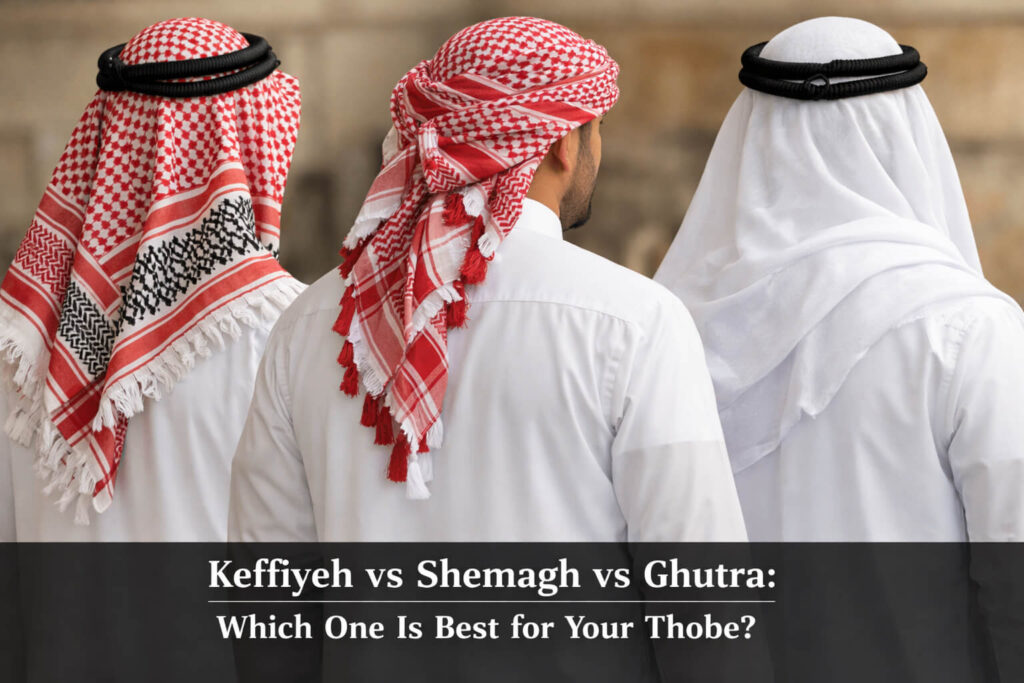
It’s Friday in Birmingham. You’ve just ironed your crisp white dishdasha. The fabric falls perfectly. You glance at your wardrobe shelf. There it is — folded neatly: a white ghutra, a red-and-white shemagh, and a black-and-white keffiyeh.
You pause.
You’re heading to Jummah, then lunch with family. Later tonight, a community gathering. One thobe. Three headwear options. Which one fits the moment?
If you’ve ever stood there thinking the same thing, you’re not alone. Many men wearing thobes in the UK ask this exact question. The choice between keffiyeh, shemagh, and ghutra isn’t random. Each piece carries history, identity, and style.
Let’s break it down clearly so you can wear your next men’s jubba in UK with full confidence.
What Is the Difference Between a Keffiyeh, Shemagh, and Ghutra?
A keffiyeh, shemagh, and ghutra are traditional head coverings worn with thobes, but they differ in origin, pattern, cultural symbolism, and styling.
Ghutra: Clean Simplicity
The ghutra is usually plain white. It is most commonly associated with Gulf countries, especially Saudi Arabia and the UAE. Worn with an agal, it creates a structured and refined look.
When paired with mens white thobes or a classic white dishdasha, the ghutra feels calm, minimal, and timeless.
In the UK, many professionals choose a ghutra with thobe for:
- Jummah prayers
- Formal Islamic events
- Business meetings
- Eid prayers
It signals discipline and elegance without drawing too much attention.
Shemagh: Bold and Recognizable
The shemagh is often red-and-white checkered. It is widely worn in Saudi Arabia and Jordan. When styled with black thobes or black dishdasha, it creates a strong contrast that stands out beautifully.
A shemagh with thobe works well for:
- Weddings
- Community gatherings
- Cultural celebrations
- Winter events in the UK
It adds personality while maintaining tradition.
Keffiyeh: Symbol of Heritage
The keffiyeh is traditionally black-and-white patterned. It carries deep cultural symbolism, especially connected with Palestinian heritage.
Wearing a keffiyeh with thobe is not only a style choice. For many, it reflects identity and solidarity.
In cities across London and Manchester, you’ll see younger men styling keffiyeh with both men’s thobes and even modern streetwear. It bridges tradition and expression.
“Fashion fades, style is eternal.” fashion icon Yves Saint Laurent
Which One Is Best for Your Thobe in UK?
The best choice depends on occasion, weather, and your personality.
- For Jummah Prayers: A ghutra with thobe feels peaceful and composed. Pair it with mens white thobes for a classic Friday look. In UK mosques, this combination remains the most common and universally appreciated.
- For Weddings or Nikkah: A shemagh with thobe creates depth and strength. Pairing it with embroidered thobes for men in UK adds visual richness.
- For Cultural or Community Events: A keffiyeh with thobe expresses identity and awareness. Especially in UK multicultural cities, this pairing reflects heritage confidently.
DID YOU KNOW?
According to the latest report from the UK Office for National Statistics, the Muslim population in England and Wales has grown to over 3.9 million people, representing around 6.5% of the population. With rising cultural pride, modest fashion sales in the UK have also seen significant growth, especially during Ramadan and Eid seasons.
This explains why searches for men’s jubba in UK and thobes for men in UK spike dramatically before Eid each year.
Is Wearing a Shemagh with Thobe Only for Certain Nationalities?
No. Anyone can wear a shemagh respectfully as long as they understand its cultural background.
Clothing is part of shared Islamic tradition. In the UK, diversity is visible in every mosque. You’ll see Pakistani, Arab, African, and revert Muslims all wearing men’s thobes confidently.
“Education is the passport to the future.” Malcolm X
Understanding the meaning behind what you wear creates respect, not division.
If you love how a shemagh with thobe looks, wear it with awareness and dignity.
Myth 1: “Shemagh with Thobe Is Only for Arabs”
The Myth
Some believe that wearing a shemagh with thobe is restricted to Arab ethnicity. In multicultural communities in UK, this assumption still appears occasionally.
The Reality
The thobe itself is worn across Muslim cultures globally. A men’s jubba in UK might be worn by someone whose roots trace to Somalia, Pakistan, Nigeria, or the Middle East.
The shemagh originated in specific regions, but today it represents broader Islamic identity. Respect and knowledge matter more than birthplace.
In fact, global modest fashion revenue was valued at over $295 billion in 2022 according to the State of the Global Islamic Economy Report. Styles now cross borders naturally.
Myth 2: “Wearing a Thobe Makes You Look Too Traditional in UK”
The Myth
Some younger men hesitate to wear thobes for men in UK, thinking it looks outdated or out of place.
The Reality
Look around major UK cities during Eid or Jummah. You’ll see students, professionals, and entrepreneurs confidently wearing black thobes, mens white thobes, and even modern-cut jubba for men.
Fashion cycles change, but modest wear has gained mainstream visibility. Brands in London now host modest fashion weeks. Cultural clothing is no longer niche.
“Simplicity is the keynote of all true elegance.” Coco Chanel
A clean white dishdasha with a well-draped ghutra looks sharper than most formal suits.
Styling Tips: How Do You Match Headwear with Your Thobe?
With White Thobes
- White ghutra for timeless elegance
- Red shemagh for bold contrast
- Black-and-white keffiyeh for cultural depth
This works perfectly with mens white thobes and traditional Friday attire.
With Black Thobes
- Red shemagh creates a powerful contrast
- The white ghutra softens the look
- Keffiyeh gives a contemporary edge
A black dishdasha paired with a shemagh feels especially strong in the winter months in the UK.
With Grey or Navy Thobes
Neutral tones allow flexibility. Match based on mood:
- Ghutra for minimal
- Shemagh for statement
- Keffiyeh for layered texture
Comparison Table: Keffiyeh vs Shemagh vs Ghutra
| Feature | Ghutra | Shemagh | Keffiyeh |
| Origin | Gulf region | Saudi & Jordan | Palestinian heritage |
| Design | Plain white | Red-and-white checkered | Black-and-white pattern |
| Best Paired With | Mens white thobes | Black thobes | White or neutral thobes |
| Occasion Fit | Formal & prayer | Weddings & events | Cultural gatherings |
| Style Impact | Clean & calm | Bold & strong | Symbolic & expressive |
Each option complements men’s thobes in UK differently.
How Has Thobe Styling Changed in UK?
In the last decade, tailoring quality improved significantly. Slim-fit thobes for men in UK now rival Western suits in sharpness.
Retail growth in modest fashion across Europe increased by over 15% annually post-2020. Younger generations blend traditional pieces with modern styling — polished shoes, smart watches, layered coats.
Pairing a structured ghutra with tailored jubba for men now feels fashion-forward rather than outdated.
Why Does the Right Headwear Matter?
Because clothing shapes confidence.
Psychology studies from Northwestern University show that what we wear influences behavior and self-perception — a concept called “enclothed cognition.”
When your shemagh with thobe sits neatly and your fabric flows cleanly, posture changes. You walk differently. You speak differently.
That’s not fashion hype. That’s psychology.
Where Can You Find Quality Mens Thobes in UK?
Now that you understand how keffiyeh, shemagh, and ghutra transform your look, you might wonder where to get the right thobe to match.
If you’re searching for mens thobes in UK, quality matters. Stitching, fabric weight, and tailoring shape how your headwear complements the full outfit.
At Alif Thobes, every piece reflects cultural respect and modern refinement. Many customers describe it as the best thobe brand in UK because of its attention to fit and fabric comfort.
When you wear a structured ghutra or bold shemagh, your thobe must match that level of precision. That’s why men across London, Birmingham, and Manchester trust Alif Thobes for elegant, breathable designs that elevate daily wear and special occasions alike.
Your headwear deserves a thobe that stands with it confidently.
What Will You Choose for Your Next Thobe Look?
Here’s the takeaway:
✔ Ghutra = Clean, refined, timeless
✔ Shemagh = Strong, expressive, confident
✔ Keffiyeh = Cultural, meaningful, distinctive
In UK, styling your men’s jubba in UK isn’t about copying trends. It’s about expressing identity with clarity.
“Clothes mean nothing until someone lives in them.” – Marc Jacobs
Wear your thobe with intention. Match it with headwear that reflects your story. When fabric, culture, and confidence align — the choice becomes easy.
The decision is yours.
FAQs
Can I wear a shemagh with white thobes in UK?
Yes. A red shemagh with mens white thobes creates strong contrast and works well for weddings and gatherings.
Is ghutra better than keffiyeh for Jummah?
For formal Jummah settings in UK, a ghutra often appears more traditional and structured.
Are black thobes appropriate for Eid?
Absolutely. Many men prefer black thobes or black dishdasha for evening Eid events.
How do I style a keffiyeh with thobe casually?
Drape loosely without agal and pair with neutral jubba for men for relaxed gatherings.
Where can I buy a quality men’s jubba in UK?
Look for established modest fashion brands known for fabric quality and tailored cuts.
Be sure to check back for more exciting news on topnewstoday.uk!