Denim riding vests occupy a distinct position within motorcycle apparel systems. Unlike full riding jackets, these sleeveless garments are engineered to enhance mobility, airflow, and layering efficiency while maintaining structural durability. Within biker culture and professional riding communities, denim vests are valued not only for their aesthetic heritage but also for their practical adaptability across cruising, touring, and club-based riding environments.
Denim as a textile has a long industrial history rooted in durability and abrasion resistance, originally developed for labor-intensive occupations (Wikipedia, Denim). Modern motorcycle-grade denim adapts these durability characteristics for road use through reinforced stitching, heavier fabric weights, and functional storage integration.
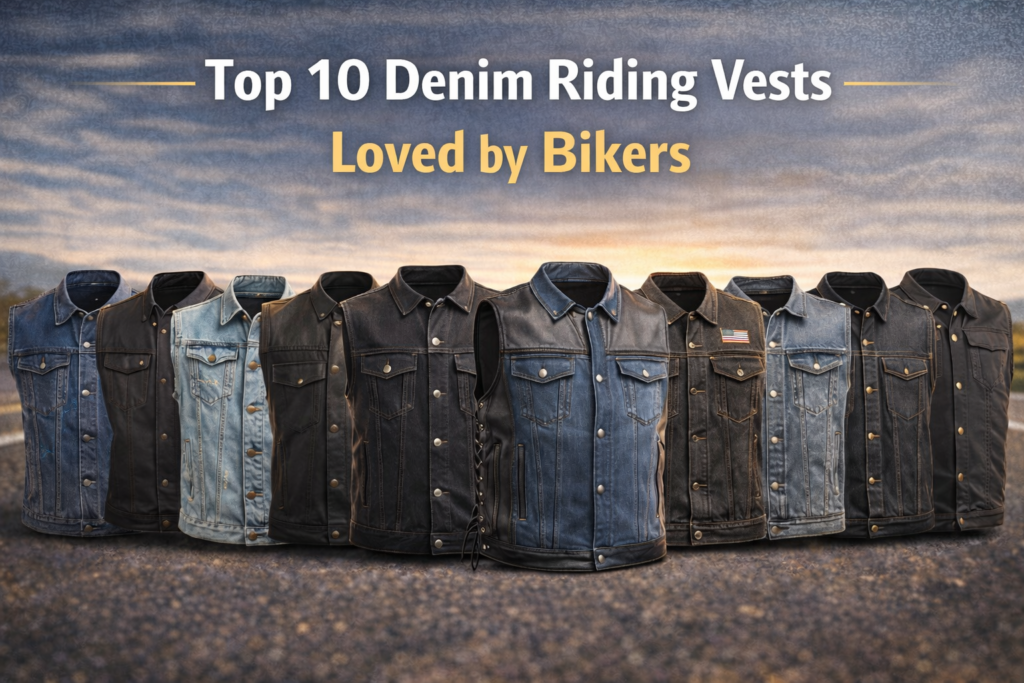
This article provides a structured, expert-level examination of the Top 10 Denim Riding Vests Loved by Bikers, with focused coverage on Men’s Denim Vests and Women’s Denim Vests. It explains material engineering, fit standards, performance factors, industry best practices, and common misconceptions to support informed decision-making.
Understanding Denim Riding Vests in Motorcycle Apparel Systems
Motorcycle apparel typically follows a layered protection model consisting of:
-
Base layer (moisture control)
-
Protective layer (armor or reinforced garment)
-
Outer functional layer (weather or utility garment)
Denim riding vests most commonly serve as the outer functional layer. They are not primarily impact-protection garments; instead, they provide:
-
Improved airflow compared to full jackets
-
Additional storage through concealed or external pockets
-
Reinforced structure for patch application
-
Enhanced comfort during long-distance rides
Because of their sleeveless design, denim riding vests reduce upper-arm restriction and fatigue during extended throttle control, particularly in upright cruiser and touring postures.
Material Engineering: What Makes Motorcycle-Grade Denim Different
Not all denim is suitable for motorcycle use. Motorcycle-specific denim differs from fashion denim in several technical ways:
Fabric Weight and Construction
Motorcycle denim typically uses heavier fabric weights (measured in ounces per square yard), often ranging from 12 oz to 16 oz or higher. Increased weight enhances durability and wind resistance.
Reinforced Seams
Double-stitched or triple-stitched seams improve structural longevity. Stress points such as shoulders and side panels are commonly reinforced to prevent seam failure under vibration and wind load.
Hardware and Closures
Snap closures or concealed zippers are designed for glove-friendly operation. Hardware must resist corrosion from weather exposure and repeated use.
Pocket Engineering
Concealed carry pockets and deep interior compartments are integrated into many denim riding vests to enhance practicality while maintaining balanced weight distribution.
These design characteristics reflect applied engineering principles rather than purely stylistic choices.
Top 10 Denim Riding Vest Categories Loved by Bikers
Rather than ranking individual products, industry analysis identifies ten functional categories consistently favored within riding communities.
1. Classic Snap-Front Denim Vests
Designed for easy access and quick removal during layered riding.
2. Club-Style Denim Vests
Feature a clean back panel suitable for patches and club insignia.
3. Concealed Carry Denim Vests
Include secure internal compartments for balanced and discreet storage.
4. Lightweight Summer Denim Vests
Constructed with breathable denim blends for warm-weather riding.
5. Heavyweight Reinforced Denim Vests
Built for highway touring where wind resistance and durability are essential.
6. Side-Lace Adjustable Denim Vests
Allow fit customization over hoodies or armored base layers.
7. Hybrid Denim-Leather Trim Vests
Combine abrasion resistance with structured aesthetics.
8. Long-Torso Touring Vests
Provide extended lower-back coverage for upright riding posture.
9. Tailored Fit Urban Denim Vests
Designed for city commuting with reduced bulk.
10. Women-Specific Contoured Denim Vests
Engineered for anatomical alignment and riding ergonomics.
These categories reflect real-world rider preferences shaped by climate, posture, storage needs, and group riding traditions.
Men’s Denim Vests in Professional Riding Contexts
Men’s Denim Vests are generally structured with broader shoulder dimensions, longer torso length, and expanded storage capacity. These structural elements align with typical cruiser and touring riding postures.
From a professional perspective, men’s designs often emphasize:
-
Reinforced upper panels for patch placement
-
Deep interior carry compartments
-
Adjustable waist panels for layered riding systems
-
Balanced weight distribution to prevent forward drag
During long-distance touring, stability at highway speeds is critical. A properly fitted men’s denim vest should remain stable without flapping, as excessive movement increases fatigue and distraction.
Women’s Denim Vests and Ergonomic Design Standards
Women’s Denim Vests are engineered with contour-focused tailoring to match anatomical proportions and riding posture differences.
Professional garment engineering for women riders typically includes:
-
Tapered waist construction
-
Strategic dart placement for ergonomic shaping
-
Adjustable side panels for layered compatibility
-
Lightweight denim blends to reduce upper-body bulk
Ergonomic accuracy improves stability during acceleration and reduces garment shifting at speed. This enhances both comfort and functional performance, especially in upright or mid-forward riding positions.
Benefits of Denim Riding Vests in Real-World Use
Denim riding vests provide measurable advantages when integrated correctly into riding systems.
Enhanced Mobility
Sleeveless construction improves shoulder rotation and handlebar control.
Layering Flexibility
Riders can maintain protective armored shirts while adding utility storage externally.
Climate Adaptability
Denim allows airflow without fully exposing the torso.
Cultural and Identity Expression
The clean back panel supports patches and insignia central to motorcycle club traditions.
These benefits explain their sustained popularity across decades of motorcycle culture.
Expert Insights and Industry Best Practices
Professionals recommend selecting denim riding vests using the following criteria:
1. Proper Fit Over Protective Layers
The vest should be fitted while wearing the intended base gear.
2. Seam Integrity Inspection
Examine stitching density and reinforcement at stress points.
3. Hardware Quality
Corrosion-resistant snaps or zippers extend garment lifespan.
4. Balanced Pocket Placement
Internal compartments should not create uneven weight distribution.
5. Seasonal Planning
Heavier denim for highway touring; lighter blends for warm climates.
Adhering to these standards reduces premature wear and enhances rider comfort.
Common Mistakes and Misconceptions
Misconception 1: Denim Vests Replace Protective Jackets
Denim riding vests are functional outer layers, not primary impact-protection garments.
Misconception 2: All Denim Is Equal
Fashion denim lacks reinforced stitching and structural integrity required for riding.
Misconception 3: Loose Fit Improves Comfort
Excessively loose vests increase wind drag and instability at highway speeds.
Misconception 4: Storage Capacity Equals Practicality
Improperly placed storage can cause imbalance and discomfort during long rides.
Correcting these misunderstandings improves garment selection outcomes.
Frequently Asked Questions (FAQ)
1. Are denim riding vests considered protective motorcycle gear?
They are classified as functional outerwear rather than impact-protection gear. Protective armor is typically integrated into base jackets or shirts.
2. What fabric weight is recommended for highway riding?
Heavier denim (approximately 14–16 oz) is generally preferred for wind resistance and durability.
3. How should a denim riding vest fit?
It should sit securely against the torso without restricting breathing or shoulder mobility, and remain stable at riding speed.
4. Can denim vests be worn year-round?
Yes, when layered appropriately. They function best in mild to warm climates or over insulated layers in cooler weather.
5. Do women’s designs differ significantly from men’s designs?
Yes. Women’s versions incorporate tailored shaping and ergonomic adjustments to align with anatomical structure.
6. What is a club-style denim vest?
A club-style vest features a solid back panel with minimal seams, allowing for patch placement.
7. How long does a quality denim riding vest last?
With proper care and reinforced stitching, motorcycle-grade denim vests can last several riding seasons.
8. Is heavier denim always better?
Heavier denim increases durability but may reduce breathability in hot climates. Selection depends on riding conditions.
9. Can denim vests include concealed storage compartments?
Yes. Many motorcycle-grade designs incorporate secure interior pockets for balanced storage.
10. Why is seam reinforcement important?
Motorcycle vibration and wind pressure place continuous stress on seams; reinforcement prevents structural failure.
Conclusion
Denim riding vests remain a functional and culturally significant component of motorcycle apparel systems. Their continued popularity stems from practical performance characteristics, including mobility enhancement, adaptable layering, durable construction, and structured storage.
Men’s Denim Vests are engineered for structural durability, storage capacity, and highway stability, while Women’s Denim Vests prioritize ergonomic contouring and tailored performance. When selected according to material weight, seam integrity, and proper fit, denim riding vests provide long-term utility within professional and recreational riding contexts.
A structured evaluation process grounded in material engineering, ergonomic design, and real-world application ensures that denim riding vests serve as reliable outerwear components in modern motorcycle gear systems.