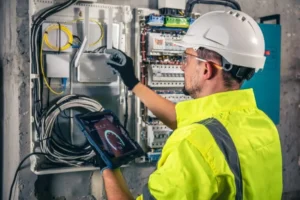
The Internet of Things (IoT) has rapidly expanded into a globally interconnected ecosystem where billions of devices exchange data autonomously. As organizations adopt IoT at scale—across manufacturing floors, smart buildings, healthcare networks, logistics chains, and consumer environments—the complexity of managing these devices multiplies. Ensuring smooth operations requires a well-defined approach to device management, robust control mechanisms, user-centric experiences, and end-to-end security frameworks.
This article provides a deep-dive into the evolving landscape of IoT device management, the frameworks that power seamless control, the modern demands of IoT UX, and the non-negotiable security pillars required to safeguard distributed ecosystems.
Understanding the IoT Device Management Landscape
IoT device management encompasses a broad suite of operational capabilities—device provisioning, configuration, monitoring, diagnostics, maintenance, and lifecycle governance. With millions of connected nodes operating simultaneously, organizations must orchestrate consistency, reliability, and visibility to keep the ecosystem stable and scalable.
Why IoT Device Management Is a Critical Foundation
The foundation of any resilient IoT deployment lies in the capability to track, manage, and optimize devices across their entire lifecycle. Key reasons include:
-
Operational Consistency: Ensuring devices communicate reliably and consistently with platforms and applications.
-
Scalability Enablement: Simplifying onboarding and management of new devices as the ecosystem grows.
-
Performance Optimization: Detecting anomalies early, resolving faults remotely, and reducing downtime.
-
Cost Efficiency: Minimizing physical interventions by enabling remote diagnostics and updates.
As IoT devices become ubiquitous across mission-critical scenarios, device management evolves from being a back-end function to a strategic necessity that drives performance, agility, and ROI.
Core Components of Effective IoT Device Management
1. Device Onboarding & Provisioning
Onboarding sets the stage for a device’s identity, policies, and communication protocols. A secure provisioning pipeline ensures that each device entering a network is authenticated, trusted, and correctly configured.
2. Remote Configuration & Control
Modern IoT ecosystems depend on dynamic configurations. Whether adjusting operating parameters, altering firmware settings, or customizing workflows, remote control prevents the need for physical handling and accelerates operational responsiveness.
3. Over-the-Air (OTA) Updates
OTA updates are vital for improving device performance, patching vulnerabilities, and deploying new features. Well-structured OTA pipelines enable seamless updates without interrupting critical processes.
4. Monitoring, Diagnostics & Insights
Continuous monitoring helps detect system anomalies, performance degradation, or hardware failure. Advanced analytics play a key role in transforming raw device data into actionable intelligence.
5. Lifecycle Management
Effective lifecycle management ensures devices remain compliant, secure, and optimized from deployment through retirement.
IoT Device Control: Orchestrating Intelligence at Scale
At its core, IoT device control establishes how devices interact with command centers, platforms, and end-user interfaces. With thousands of distributed nodes functioning simultaneously, organizations must rely on high-performance control frameworks to maintain orchestration with accuracy and speed.
Centralized vs. Decentralized Control
-
Centralized Control: Suitable for environments where governance, consistency, and compliance are top priorities.
-
Decentralized Control: Ideal for edge-driven ecosystems that require real-time decisions without relying on central cloud dependency.
Automation and Intelligent Control Loops
Modern IoT systems increasingly adopt automation through rule engines, machine learning, and edge intelligence. These control loops make decisions without human intervention—adjusting temperature, triggering alerts, optimizing machine performance, or regulating energy consumption.
Integrating Device Control with Enterprise Systems
When IoT devices integrate smoothly with ERP, CRM, supply chain systems, or predictive maintenance tools, organizations unlock new levels of efficiency and cross-functional visibility.
Crafting UX for IoT: Human-Centric Interactions in a Connected World
IoT user experience (UX) is often more complex than traditional software products, as it merges digital interactions with physical devices. Success lies in designing interfaces and workflows that are intuitive, responsive, and context-aware.
Key Principles of Effective IoT UX
1. Simplicity Over Complexity
IoT systems generate vast amounts of data, but users only need what is relevant to their workflow. The best UX frameworks focus on clarity, minimalism, and actionable insights.
2. Real-Time Feedback Loops
Users expect immediate feedback when interacting with devices—whether turning on a sensor, adjusting a parameter, or checking the status of machinery.
3. Multi-Device Experience
IoT UX spans mobile apps, dashboards, wearables, voice assistants, and embedded screens. Consistency across these touchpoints is essential.
4. Context Awareness
Contextual UX adapts based on user behavior, location, device status, or operational conditions. This creates more intelligent and personalized interactions.
5. Error Handling & Transparency
Clear alerts, troubleshooting guidance, and transparent system states reduce frustration and improve trust.
A well-crafted UX ensures that IoT deployments deliver tangible value, not just connectivity.
Security: The Non-Negotiable Backbone of IoT
IoT security remains one of the most pressing concerns in the global tech industry. Distributed nodes create an expanded attack surface, making the ecosystem vulnerable to data breaches, device manipulation, and operational disruption.
Major Security Challenges in IoT
-
Weak authentication mechanisms
-
Outdated firmware or insecure OTA processes
-
Hardcoded credentials or shared passwords
-
Data interception between devices and cloud
-
Insufficient encryption standards
-
Insecure third-party components
Strategic Pillars of IoT Security
1. Device Identity & Authentication
Every device must have a unique, verifiable identity to prevent impersonation and unauthorized access.
2. End-to-End Encryption
Encrypted communication ensures that data remains protected across the entire journey—from device to gateway to cloud.
3. Secure Boot & Firmware Integrity
Secure boot prevents tampering by verifying device authenticity during startup.
4. Zero Trust Architecture
IoT networks increasingly adopt Zero Trust, ensuring each entity is continuously verified regardless of location or role.
5. Regular Security Updates
OTA security patches play a critical role in mitigating newly discovered vulnerabilities.
Security as a Continuous Lifecycle
Security is not a one-time setup—it evolves continuously as devices grow, threats emerge, and ecosystems expand.
Integrating Specialized Solutions in IoT Ecosystems
As IoT infrastructures become more interoperable and multi-layered, organizations often extend their capabilities through platform integrations, edge computing models, data pipelines, and analytics frameworks. In many enterprise deployments, teams also rely on external experts for custom software development for iot to tailor solutions according to operational workflows, compliance requirements, and industry-specific use cases.
Such customized integrations ensure long-term scalability, seamless connectivity, and domain-aligned system intelligence.
Future Trends Shaping IoT Device Management, Control, UX & Security
1. Edge AI & Real-Time Intelligence
Edge AI allows devices to process data locally, reducing latency and enabling real-time decision-making.
2. Autonomous IoT Ecosystems
Device networks that self-adjust, self-heal, and self-optimize will redefine next-generation IoT operations.
3. Adaptive UX Powered by Predictive Intelligence
UX will evolve to become more proactive—predicting user needs and adapting in real time.
4. Unified Security Governance
Centralized threat intelligence systems will become essential for monitoring distributed device environments.
5. Massive IoT & 5G Integration
5G will fuel high-density IoT deployments by delivering ultra-low latency, large device capacity, and advanced network slicing.
Conclusion
IoT device management, control, UX, and security form the four strategic pillars that enable organizations to build resilient, scalable, and user-friendly connected ecosystems. As IoT adoption accelerates, enterprises must prioritize automation, design thinking, and robust security frameworks to transform raw connectivity into measurable business impact. A forward-looking approach—balancing operational efficiency with user trust—will define the next wave of IoT innovation and unlock enterprise-wide value.
FAQ
1. What is IoT device management?
IoT device management refers to provisioning, onboarding, monitoring, configuring, and maintaining IoT devices throughout their lifecycle. It ensures stability, security, and operational efficiency across connected ecosystems.
2. Why is security critical in IoT deployments?
Security protects devices and networks from threats such as unauthorized access, tampering, data breaches, and malware. Because IoT ecosystems are distributed, they require end-to-end protection to ensure safe operations.
3. What makes IoT UX different from regular software UX?
IoT UX merges digital interfaces with physical device interactions. It must account for real-time feedback, multi-device experiences, contextual awareness, and clarity when managing complex data.
4. How do OTA updates help IoT devices?
Over-the-air updates allow organizations to improve performance, apply security patches, and introduce new features remotely without physically interacting with devices.
5. What are the main challenges of scaling IoT deployments?
Challenges include managing large device volumes, ensuring interoperability, maintaining consistent security standards, processing high-frequency data, and handling diverse communication protocols.
6. How does device control enhance IoT performance?
Device control enables real-time configurations, automation, and operational orchestration. It ensures devices act intelligently, adapt to changing conditions, and perform reliably within distributed networks.