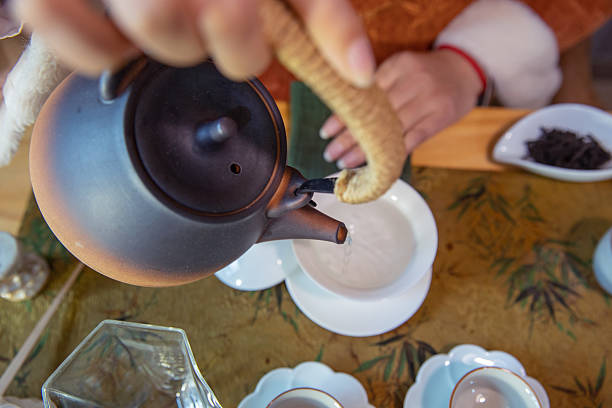
Close-up shot of tea artist pouring water from kettle into tea cups to clean the cups
Pu-erh tea, often spelled Pu’er or Puerh, is a fascinating fermented tea that has captivated tea lovers across the United States for its deep, earthy flavors and potential health benefits. Originating from China’s Yunnan Province, this post-fermented tea undergoes a unique microbial process that sets it apart from green, black, or oolong teas. Whether you’re new to Pu-erh or looking to expand your collection, understanding how to buy high-quality Pu-erh tea can elevate your daily ritual into something truly special.
The Origins and Unique Processing of Pu-erh Tea
Pu-erh tea traces its roots back over a thousand years to ancient China, where it was prized along trade routes for its ability to improve with age, much like fine wine. Traditionally made from large-leaf varieties of the Camellia sinensis plant grown in Yunnan, Pu-erh is named after the city of Pu’er, a historical trading hub.
What makes Pu-erh truly unique is its fermentation process. Unlike other teas that are oxidized through enzymatic reactions, Pu-erh involves microbial fermentation. There are two main types:
- Raw (Sheng) Pu-erh: Naturally aged over years or decades under controlled conditions, developing complex flavors gradually.
- Ripe (Shou) Pu-erh: Accelerated fermentation through a modern “wet piling” method invented in the 1970s, resulting in a smoother, darker tea ready for consumption sooner.
Pu-erh is often compressed into cakes, bricks, or nests for aging and storage, though loose-leaf versions are also available. This compression helps preserve and mature the tea, allowing flavors to evolve over time.
Types of Pu-erh Tea and Flavor Profiles
When deciding to buy Pu-erh tea, knowing the types will help you choose based on your taste preferences:
- Raw Pu-erh: Young raw versions can be brisk, floral, and slightly astringent with grassy notes, while aged ones become smoother, with woody, fruity, or camphor-like undertones.
- Ripe Pu-erh: Typically earthy, mellow, and rich, reminiscent of forest floor, mushrooms, or dark chocolate—often more approachable for beginners.
Blends also exist, combining Pu-erh with black teas, vanilla, citrus, or other elements for added complexity. Many American tea enthusiasts start with ripe Pu-erh for its forgiving nature before exploring aged raw varieties.
Experience Aged Pu-erh Tea with Backyard Brew, where their organic offerings include pure Pu-erh with potent, earthy profiles like wild mushrooms, as well as innovative blends such as Madness—a breakfast mix pairing Pu-erh with black teas, vanilla, and citrus peels for a bold, invigorating start to the day. These meticulously sourced, fermented teas deliver authentic depth and smoothness, perfect for those seeking premium quality in the US market.
Health Benefits of Pu-erh Tea
Pu-erh has long been valued in traditional Chinese medicine and is gaining popularity in the US for its potential wellness advantages. Rich in antioxidants, polyphenols, and beneficial microbes from fermentation, it may support:
- Digestion and gut health by promoting beneficial bacteria.
- Heart health through potential cholesterol management.
- Weight management, as some studies suggest it aids metabolism and fat reduction.
- Overall antioxidant protection against oxidative stress.
While not a miracle cure, moderate daily consumption—often after meals—can complement a healthy lifestyle. Many Americans enjoy it for its gentle caffeine boost without the jitters of coffee.
How to Choose and Buy Quality Pu-erh Tea
Buying Pu-erh tea requires attention to key factors for the best experience:
- Source and Origin: Look for teas from Yunnan Province, ideally single-origin or from renowned gardens.
- Organic and Ethical: Opt for 100% organic to avoid pesticides, ensuring purity.
- Age and Type: Specify if you want young raw for vibrancy, aged raw for complexity, or ripe for immediate enjoyment.
- Form: Loose-leaf for convenience, or compressed cakes for aging potential.
- Aroma and Appearance: Dry leaves should smell fresh and earthy (not musty), with whole leaves indicating higher quality.
Reputable US-based sellers offer transparent sourcing, customer reviews, and variety—making it easy to buy Pu-erh tea online with confidence.
Brewing the Perfect Cup of Pu-erh Tea
Pu-erh is forgiving and rewarding to brew, with leaves often yielding multiple infusions.
Western Style (Simple Mug Method):
- Use 1-2 teaspoons of leaves per 8 oz cup.
- Rinse leaves briefly with boiling water (discard rinse).
- Steep in 200-212°F water for 3-5 minutes.
- Re-steep 2-4 times, increasing time slightly.
Gongfu Style (Traditional, for Depth):
- Use more leaves (5-7g per 100-150ml gaiwan or small teapot).
- Quick rinse, then short infusions: 10-30 seconds, extending with each steep.
- Enjoy 10+ infusions as flavors evolve.
Always use fresh, filtered water. Pu-erh pairs well plain or with a touch of honey, and it’s excellent hot or iced.
Storing Your Pu-erh Tea
Proper storage enhances Pu-erh’s aging:
- Keep in a cool, dark, dry place with good airflow.
- For raw Pu-erh, allow gentle aging in breathable containers.
- Avoid strong odors, as Pu-erh absorbs them easily.
Ripe Pu-erh is stable and ready to drink, while raw can improve over years.
Conclusion
Pu-erh tea offers a world of depth, from its ancient origins and unique fermentation to its rich flavors and wellness potential. Buying Pu-erh tea opens the door to a versatile beverage that’s perfect for morning energy, afternoon reflection, or evening relaxation. As more Americans discover its earthy charm and benefits, it’s becoming a staple in diverse tea collections. Start with a quality organic selection, experiment with brewing, and let Pu-erh’s evolving character surprise and delight you sip after sip.
FAQs About Buying and Enjoying Pu-erh Tea
- What is the difference between raw and ripe Pu-erh?
Raw (sheng) is naturally aged and can be complex or astringent when young, mellowing over time. Ripe (shou) is accelerated-fermented for a smoother, earthier taste ready sooner.
- Is Pu-erh tea caffeinated?
Yes, it contains moderate caffeine—similar to black tea—providing a steady energy boost.
- How many times can I re-steep Pu-erh leaves?
Quality leaves yield 5-15 infusions, with flavors changing each time.
- Does Pu-erh tea help with weight loss?
Some studies suggest it may support metabolism and digestion, but it’s best paired with a balanced diet.
- Where should I buy Pu-erh tea in the US?
Look for trusted online retailers specializing in organic, ethically sourced teas for authenticity and freshness.
- Can Pu-erh tea go bad?
Properly stored, it rarely spoils and often improves with age, especially raw varieties.
- Is Pu-erh safe to drink daily?
Yes, in moderation (2-4 cups), but consult a doctor if you have caffeine sensitivity or health concerns.